
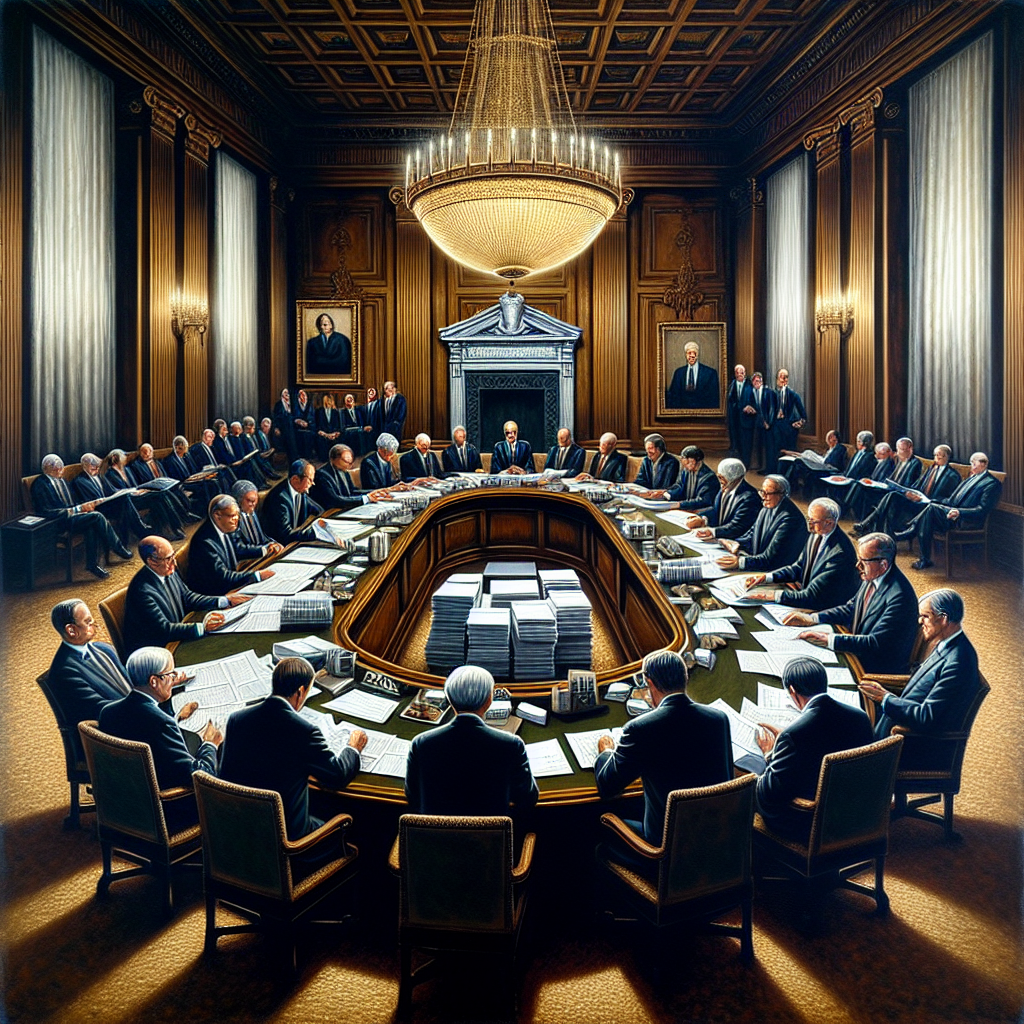
The Federal Reserve (Fed) will hold its final interest rate decision meeting of the year, despite serious internal divisions over the outlook for the U.S. economy. Investors generally expect the Fed to continue cutting interest rates by 25 basis points in December.
The Federal Open Market Committee (FOMC) of the Federal Reserve will begin a two-day monetary policy meeting on Tuesday, December 9. Most economists believe that due to concerns about a weakening labor market, the Fed will cut interest rates to lower borrowing costs.
A survey conducted by the Financial Times and the Chicago Booth School of Business showed that 85% of the 40 economists interviewed believe the Fed will cut rates, indicating a significant divergence in views among Fed officials on the direction of the U.S. economy.
During the preparation period for the December meeting, FOMC members have been debating whether to prioritize addressing the weak labor market or lowering the inflation rate. The survey results suggest that only one respondent believes all 12 voting members of the FOMC will unanimously support a rate cut, with 60% expecting at least two opposing votes and one-third anticipating three or more opposing votes. It is worth noting that since September 2019, there has not been more than two dissenting votes in an FOMC meeting, with the last occurrence of over three dissenting votes dating back to 1992.
If the Fed confirms a rate cut at next week’s meeting, it will be the third consecutive cut this year for the United States, bringing the target range for the federal funds rate to the lowest level in over three years. However, despite the rate cuts, market analysts believe that borrowing costs for American consumers remain relatively high.
Since the Fed began raising interest rates in 2022, all loan rates have significantly risen, including auto loans, mortgages, student loans, and credit card rates. The current rate cuts are relatively small compared to the price hikes, making consumer spending a burden for many. While rate-sensitive industries such as the housing market may benefit from lower borrowing costs, high housing prices, coupled with anxiety in the labor market, limit the effectiveness of rate cuts.
Statistics released by the Bureau of Labor Statistics on October 24 showed that the Consumer Price Index (CPI) rose by 0.3% in September after seasonal adjustments, compared to a 0.4% increase in August. Over the past 12 months, the unadjusted CPI increased by 3.0%, slightly higher than the 2.9% year-over-year increase ending in August. Energy prices rose by 2.8% over the past 12 months, while food prices increased by 3.1%. Excluding food and energy, the CPI also rose by 3.0%. In summary, the current inflation rate remains above 2%, placing increasing financial pressure on ordinary Americans due to rising living costs.