
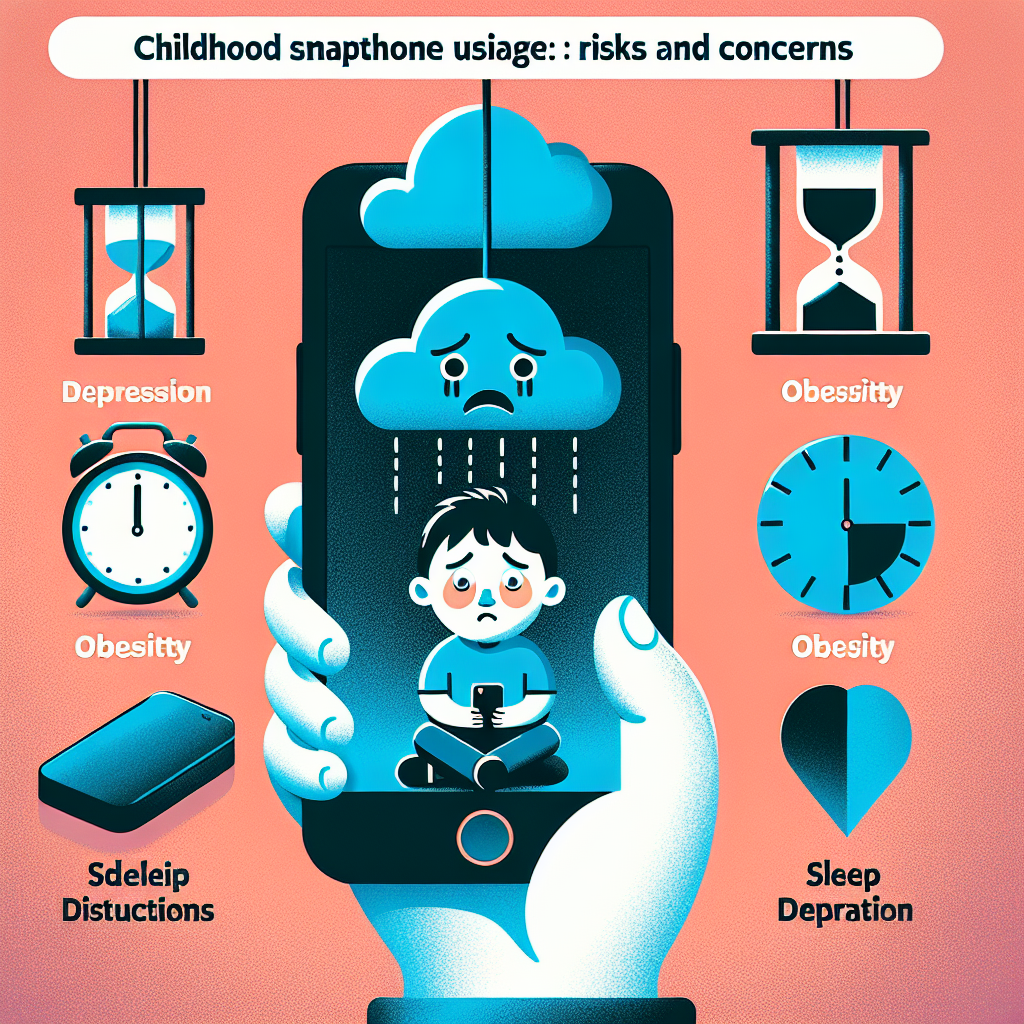
A research study set to be published soon reveals that children using smartphones before adolescence are significantly more at risk of developing depression, obesity, and sleep deprivation. This has sparked concerns about whether children should be using smartphones.
According to a report by “The Congressional Hill” on Monday, the study will be published in the January 2026 issue of the journal “Pediatrics,” with 10,588 participants from the Adolescent Brain Cognitive Development Study.
The study found that children who had smartphones at the age of 12 had a 31% higher probability of developing depression, a 40% higher risk of obesity, and a 62% higher likelihood of experiencing sleep deprivation compared to their peers who did not have smartphones.
Furthermore, the study revealed that the younger children are when they get a smartphone, the higher the risk of obesity and sleep deprivation. Specifically, for each year earlier they obtain a smartphone, the risks of obesity and sleep deprivation increase by 9% and 8% respectively.
In a follow-up study of 3,486 teenagers who did not have smartphones at the age of 12, researchers found that those who got smartphones in the past year (1,546 individuals) compared to those who did not have smartphones yet (1,940 individuals) had a 57% higher probability of developing mental health issues requiring clinical attention and a 50% higher probability of experiencing sleep deprivation, after adjusting for baseline psychological health and sleep conditions.
The research report stated, “Given our study results, it is evident that there is a need for a specific framework to provide recommendations on how children and early adolescents should use smartphones to support healthier development for teenagers.”
It is important to note that the researchers emphasized that they are not advocating for a complete restriction on smartphone use by pre-adolescent children. Instead, they suggest that children should be subjected to “special supervision” when using smartphones.
The study highlighted that this is crucial because even teenagers who do not have smartphones may face various adverse consequences and challenges, underscoring the necessity to protect these youth who require smartphones.
As this study is released, the U.S. Congress is intensifying legislation on child internet safety. The House Energy and Commerce Committee is preparing to review 19 bills related to children’s online safety and privacy protection on Tuesday, including measures to expand privacy protection and require app stores to verify user age.
At the core of this legislative work is the Kids Online Safety Act (KOSA). The bill aims to protect children from online harm, having passed the Senate last year but failing to pass the House. Amendments have been made to the bill, removing the controversial “duty of care” clause which initially required tech companies to exercise reasonable care to prevent minors from online harm.
However, the decision to remove this clause has sparked strong dissatisfaction among parents and advocates. They express being “extremely disappointed” with the decision and urge Congress to reinstate stricter requirements for tech companies.
The researchers noted that these study findings offer “key and timely insights,” providing crucial information for caregivers regarding how teenagers should use smartphones and aiding in the formulation of public policies to protect adolescents.