
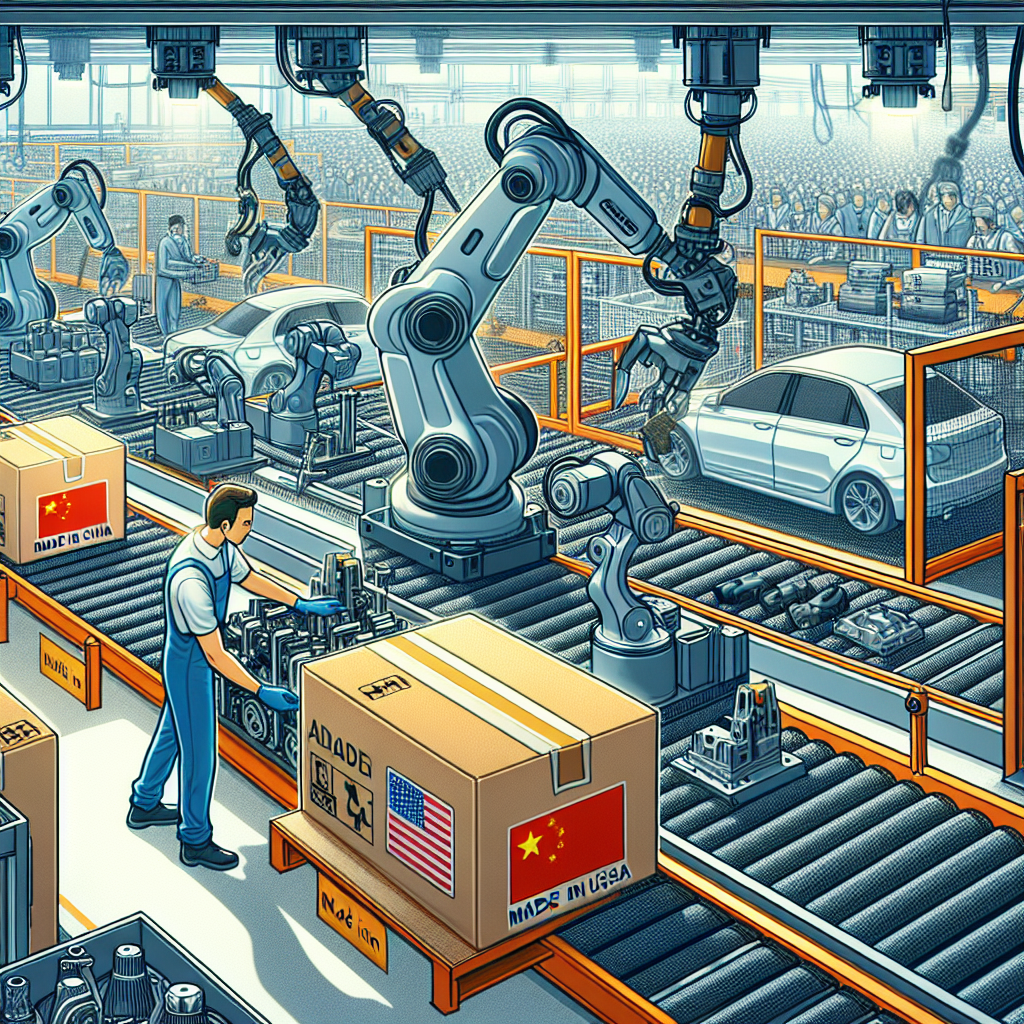
General Motors (GM) has instructed its thousands of suppliers to remove Chinese parts from their supply chains, as revealed by four informed sources. This move reflects the increasing tension in geopolitical situations, as car manufacturers are speeding up efforts to reduce dependency on “Made in China.”
According to sources speaking to Reuters, GM executives have been requesting suppliers to find alternative sources outside of China for their raw materials and parts, with the ultimate goal of completely withdrawing their supply chains from China. Some sources mentioned that GM has set a deadline of 2027 for certain suppliers to end their procurement connections with China.
The directive from GM was communicated to some suppliers at the end of 2024, but the urgency of this task escalated during the early stages of the spring when the U.S.-China trade conflict intensified. Senior officials stated that this is part of the company’s broader strategy to enhance the flexibility of its supply chain.
Amid the geopolitical tensions between the U.S. and China and the ongoing tariff wars, concerns over a rare earth bottleneck and a shortage of computer chips have prompted automobile companies to rethink their business relationships with China, a long-standing crucial source of components and raw materials.
Automakers and suppliers have begun taking initial steps in response to President Trump’s calls to invest and create jobs in the U.S., expanding production in American factories. Industry executives indicate that they can sense a long-term shift in U.S.-China relations being driven by both major parties. Some companies are starting to unwind business relations with China that have been in place for decades.
The goal of GM’s directive is to supply components and materials for vehicle manufacturing in North America, which is a major automobile production base for the company globally. Sources mentioned that GM prefers to procure parts for the region’s vehicles locally in North America but also remains open to non-U.S. supply lines outside of China.
The directive from GM also includes some other countries, like Russia and Venezuela, which face U.S. trade restrictions due to national security concerns. However, China remains the largest source of automobile components on the list so far.
General Motors has been actively reducing its reliance on Chinese battery materials and computer chips. For instance, the company has partnered with a U.S. rare earth company and invested in a lithium mine in Nevada for future electric vehicle battery materials. However, this latest move encompasses more fundamental components and materials.
Shilpan Amin, GM’s Global Procurement Chief, stated at a meeting last month that the risk of supply disruption has compelled automobile manufacturers to abandon the model of procuring solely from the lowest-cost countries.
He emphasized, “Flexibility is paramount – ensuring that you have more control over the supply chain and knowing exactly where the goods are coming from.”
While GM issues the directive, suppliers of components point out that shifting supply chains away from China is a costly and highly complex task. Collin Shaw, the head of the Motor & Equipment Manufacturers Association (MEMA), noted that these networks have been established for 20 to 30 years, and breaking them down in a few years “will not happen so quickly,” highlighting the long-term challenge of “de-risking.”