
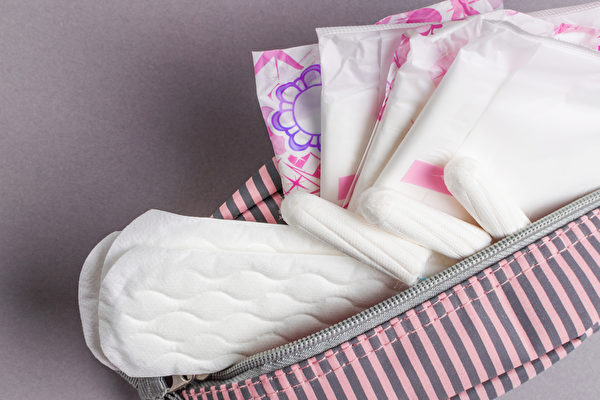
China’s famous live streaming and product sales influencer, Simba (real name Sim Youzhi), founder of the women’s hygiene product brand “Cotton Code”, has recently become embroiled in a major product safety scandal. Multiple consumers have accused the brand’s products of containing the carcinogenic substance “thiourea”, with over 30 people claiming to have developed thyroid cancer after long-term use. However, the company denies the carcinogenic allegations, sparking widespread public concern.
According to reports from the Xin Jing Bao newspaper, reports from multiple consumers who conducted tests revealed that from September 2019 to January 2025, several batches of “Cotton Code” tea oxygen night and day sanitary pads were found to have excessive levels of thiourea.
Reports from the Shanghai Fuda Testing Technology Group also showed that out of 14 samples officially tested in June this year, only one batch did not contain thiourea.
Thiourea is a sulfur-containing organic compound widely used in industrial, agricultural, and medical fields, classified as a Group 3 carcinogen by the International Agency for Research on Cancer (IARC). Experts point out that while thiourea is of low to moderate toxicity and poses minimal acute risks, long-term exposure may lead to health risks such as thyroid dysfunction, liver toxicity, reproductive toxicity, and immune abnormalities.
The “Cotton Code” products are marketed with tea polyphenol sanitary pad chips, claiming to have antioxidant effects. However, investigations revealed that the specific design area where thiourea was detected was a major concern. Industry insiders disclosed that as thiourea possesses antioxidant properties and is cost-effective, it is highly likely that it was added to the products as a substitute for tea polyphenols.
Statistics obtained by the Xin Jing Bao newspaper showed that hundreds of consumers provided feedback on their health after using the products, with over 30 individuals claiming to have developed thyroid cancer after using the brand’s sanitary pads long-term, supported by years of purchase records.
The data indicated that approximately 35% of cases involved mothers and underage daughters within the same household who had been using “Cotton Code” products long-term. Most feedback mentioned experiencing symptoms such as skin inflammation, gynecological infections, and thyroid abnormalities. Additionally, around 10 female consumers reported using the product long-term before pregnancy, only to encounter complications such as miscarriages, hydatidiform moles, and neonatal hyperthyroidism after becoming pregnant.
Regarding the potential carcinogenic risks of the products, the Xin Xuan Group, to which Simba belongs, responded by stating that the “Cotton Code” brand immediately requested the Shantou Market Supervision Department to conduct testing and affirmed that the results indicated the products were “legal, compliant, and qualified”, emphasizing that there were no “carcinogenic” issues.
As of now, there has been no final testing or investigation conclusion issued by national-level agencies regarding the products.
The “Cotton Code” brand was established by Simba in 2017 as their first self-owned brand, and since 2018, it has rapidly gained popularity through live commerce on the Kuaishou platform. According to reports from Chinese media, the brand accumulated sales totaling 3.33 billion RMB over eight years.
However, this is not the first time Simba has been involved in product controversies. Previously, they faced bans on platforms due to selling counterfeit bird’s nests, bundled steaks, and falsely promoting products’ therapeutic effects.
After each controversy, their live streaming team quickly resumed broadcasts and reached new sales peaks. During the recent 618 Shopping Festival, sales in Simba’s live streams surpassed 4 billion RMB once again.
Despite recurring product issues, Simba’s popularity in live commerce has not significantly decreased, with consumers still choosing to repurchase and support the brand. This phenomenon reflects the multi-level psychological structures and behavioral motivations within the Chinese consumer market. According to various reports, here are five observed phenomena:
Simba has successfully crafted an image of a “grassroots counterattack” and “straightforward righteousness”. Fans often regard them as a trustworthy “fellow”, leading to perceptions that controversies are either “accidental” or “set-ups”.
Professor Chen Xianhong from the School of Journalism at Renmin University of China remarked that live streamers and product influencers not only sell products but also establish “relationship constructs”, forming emotional attachments resembling a “pseudo-intimate relationship” between fans and hosts. Communication scholar Li Yanjun also acknowledged that “personal image is a part of brand assets, once established, it possesses strong adhesive and tolerance qualities”.
After an incident involving “fake bird’s nests”, Simba promptly compensated 66 million RMB, earning praise from fans as a “loyal and responsible boss”. Professor Zhang Yi from the Sociology Department at Peking University commented that the commercial logic of Chinese influencers does not rely solely on trust in products but on trust in “someone having your back”.
In each of Simba’s past controversies, they swiftly initiated an apology and compensation process, forming a closed-loop pattern of “mistake – apology – forgiveness – re-broadcasting”, further reinforcing their public image of being “responsible”. This aligns with the “Remedial Trust Theory” in psychology, where sincere and timely responses following a mistake often strengthen relationship stability.
Live commerce blends entertainment, emotions, promotion, and community interaction, leading consumers to “snap-buy” under atmosphere stimulation and time-sensitive incentives. The Financial and Economic Strategy Research Institute at the Chinese Academy of Social Sciences mentioned that live stream consumption is a form of “immersive entertainment consumption” in which decision-making processes are not primarily rational. Alibaba Research Institute noted in its 2022 “China Live E-commerce Annual Report” that the average duration of a live purchase decision is less than 30 seconds, significantly influenced by emotions.
With undefined boundaries of e-commerce responsibility and imperfect platform oversight mechanisms, consumers tend to prefer well-known anchor brand influencers. The Research Center for Consumer Law at China University of Political Science and Law pointed out that the success rate of consumer rights protection in online shopping disputes is less than 5%, with high costs for providing evidence and communication, leading consumers to seek individual anchor or MCN organizations to take responsibility.
Social researcher Gong Weigang from Wuhan University highlighted that in live commerce scenes, “anchors establish central positions through interactive rituals, allowing viewers to gain emotional energy, forming implicit trust and obedience to individuals in the absence of institutional and platform governance”.
The “2023 Consumer Rights Protection Annual Report” from the China Consumers’ Association further stated that the visibility and response willingness of anchors or their teams generally surpass those of unbranded online stores or unfamiliar e-commerce sellers.
QuestMobile’s “China Lower-tier Market Report” indicated that consumers in third-tier cities and below are most sensitive to prices, with 62% of purchase decisions being driven by “price advantages”. The “Cotton Code” brand’s emphasis on a “less than 3 RMB per pack” pricing strategy, compared to supermarket brands priced between 6 to 10 RMB per pack, holds significant appeal for price-sensitive users. For this segment of consumers, quality disputes are often viewed as “acceptable risks”.
With this prevailing consumer psyche among the masses, where does the boundary of trust lie when products involve personal safety? The ongoing saga surrounding Simba and “Cotton Code” will continue to prompt us to reflect on these matters.