
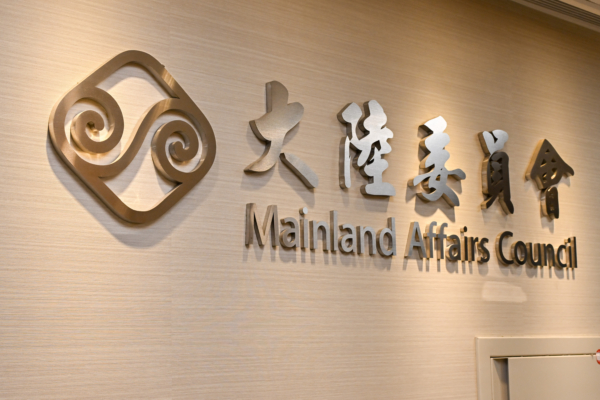
The Mainland Affairs Council of the Republic of China recently held a meeting of the Consultative Committee. Some committee members pointed out that the short video content produced by mainland Chinese video platforms undergo deliberate selection and filtering by the Chinese Communist Party, which may affect the cultural identity of Taiwanese youth and their understanding of cross-strait relations. They suggested that relevant authorities should enhance the media literacy of young people.
The Mainland Affairs Council of the Republic of China issued a press release stating that the 64th Consultative Committee meeting was held with the theme “Observation of Cross-Strait Film and Television Cultural Exchange.” During the meeting, one of the attendees, a scholar, pointed out that the Chinese Communist Party has always regarded media as an important tool for consolidating power and controlling thoughts.
Some committee members expressed that in recent years, with the passage of regulations such as the “Regulations on the Production and Management of Broadcast, Television, and Online Audiovisual Programs” and the “Digital Economy Promotion Law,” there has been further restriction on the content and digital platform control of film and television topics. This has led to increased scrutiny of artists’ speech and behavior in mainland China, forcing Taiwanese artists developing in mainland China to make political statements. The opaque nature of censorship and the prevalence of unwritten rules severely hinder Taiwanese film and television works from entering the mainland Chinese market and exacerbate the trade imbalance in the film and television industry between the two sides of the strait.
Committee members analyzed that there are significant differences in narrative aspects between cross-strait film and television works. The democratic and free creative environment in Taiwan has given rise to a variety of works reflecting democratic politics, societal issues, human rights, and other diverse topics, sparking audience reflection and discussion on democratic values and social phenomena. In contrast, Chinese Communist Party-controlled film and television works often toe the party line, focusing mainly on national interests and collectivism, while avoiding sensitive political topics and depicting the real grassroots society.
Attendees noted that with the development of internet communication technology, people can access a large amount of mainland Chinese film and television content through various video platforms, especially content that has been deliberately selected and filtered to convey biased viewpoints. This could potentially impact the cultural identity of Taiwanese youth and their perception of cross-strait relations. Relevant authorities should continue to enhance the media literacy of young students regarding information from mainland China, further improve Taiwanese people’s critical analysis and ability to discern real and fake information on the internet, and strengthen public vigilance.
Some committee members observed that the censorship measures in mainland China’s film and television industry have driven many creative professionals seeking freedom of expression to leave for overseas platforms to showcase works that cannot be shown in China. This year’s outstanding works nominated or awarded at the Golden Horse Awards reflect similar cases. These works, which cannot be screened in mainland China, address social issues such as large-scale epidemic control, demonstrating mainland creators’ desire for and commitment to free expression and profound societal insights.
Committee members emphasized that the strict censorship system and highly uncertain political environment in mainland China’s arts and culture market have disrupted international artists and content creators seeking development opportunities there, due to various complicated and unstable factors. Artists and creators who do not align with the Chinese Communist Party’s official policies and values constantly face the risk of being censored or banned, as evidenced by the heavy losses suffered by South Korean pop culture in the past. Taiwanese film and television professionals should learn from these lessons, look internationally, enhance their own capabilities, and naturally carve out a place in the international market.
One committee member noted that in recent years, with the continuous guidance from Taiwan’s Ministry of Culture, many outstanding Taiwanese works have gradually shined on the international stage, attracting the attention and resonance of mainland audiences.
Another committee member stated that while supporting and encouraging performers and creators to expand into overseas markets is important, those who collaborate with the Chinese Communist Party’s propaganda efforts for personal gain are effectively shifting the costs of their ventures to all Taiwanese, harming Taiwan’s interests and national sovereignty. This behavior is unacceptable and should be strongly condemned.
The committee member recommended that the government should take various opportunities to educate performers and content creators on the complexity and potential risks of mainland China’s film and television censorship system and present specific cases to assist those planning to work in mainland China in evaluating various risk factors.