
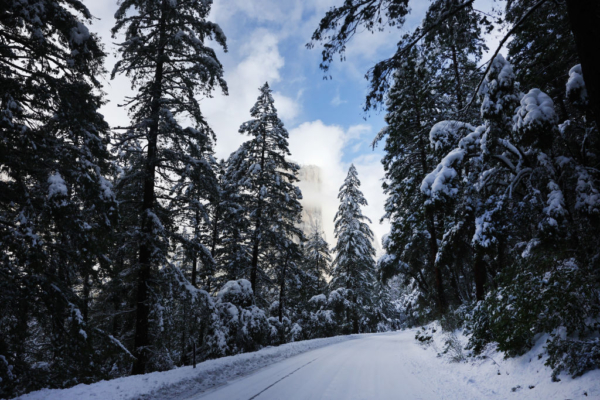
Unusual cold air flow from the Gulf of Alaska disrupted the summer weather on the West Coast last Saturday, bringing snowfall to the mountains of California and the Pacific Northwest, and leading to the closure of certain roads crossing national parks.
According to a report from the Associated Press, a section of Highway 89 passing through California’s Lassen Volcanic National Park was closed due to approximately 3 inches of snow that fell overnight.
Photos released by the National Weather Service showed a thin layer of snow covering the Minaret Vista southeast of Yosemite National Park.
Deputy Sheriff Larry Rich from Madera County expressed surprise at the unexpected snowfall at Minaret Vista in August.
The popular skiing destination Mammoth Mountain also received snow overnight, prompting a warning from the National Weather Service for hikers and campers to be prepared for slippery roads.
On the 24th, Northern California cities such as Redding, Red Bluff, and Stockton experienced record-breaking rainfall, as reported by the National Weather Service.
The report mentioned a thin layer of snow blanketing the Tioga Pass in the Sierra Nevada mountain range overnight. Forecasters noted that the region had not seen snow in August since 2003.
Tioga Pass, with an elevation exceeding 9,900 feet, serves as the eastern entrance to Yosemite and is usually closed most of the time due to winter snow, requiring one to two months for snow clearing operations.