
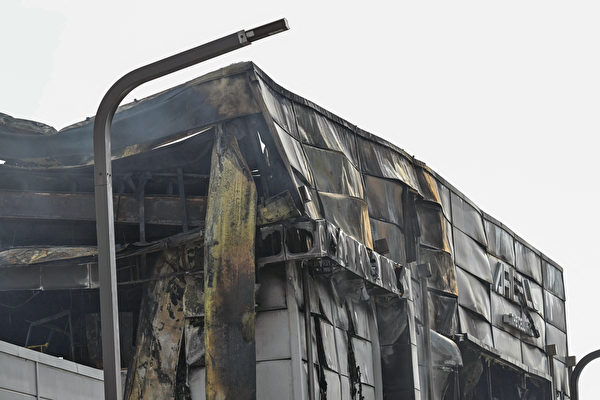
On June 24, a lithium battery factory in South Korea caught fire, resulting in the death of 22 workers, including 19 Chinese citizens. Most of the Chinese workers in the factory were ethnic Koreans from northeastern China.
The fire broke out at the Aricell battery manufacturer in Hwaseong City, Gyeonggi Province, South Korea on the morning of the 24th. According to the Gyeonggi Province Fire Disaster Headquarters, as of 5:55 pm that day, the fire had claimed the lives of 22 people, with 19 of the victims being Chinese citizens.
In a report by the “Xinjingbao” on the 25th, Jin Zheyuan (pseudonym), a worker at the battery factory involved, revealed that there were over one hundred workers in the factory, most of whom were ethnic Korean women from northeastern China, aged between 30 and 40. The majority of the victims were working in the 3 buildings of the battery factory, mainly in the packaging and battery welding workshops.
Jin Zheyuan mentioned that she was fortunate to have avoided the tragedy by taking a leave of absence that day. She learned from a coworker on the first floor after the fire broke out that the building was filled with black smoke. Several Korean clerks on the second floor jumped from the office windows to escape, resulting in broken legs.
She mentioned that the factory mainly produced military lithium batteries, with a small portion dedicated to manufacturing civilian batteries for export.
Furthermore, local firefighters stated that over 35,000 lithium battery finished products were stored in the building where the incident occurred, leading to consecutive explosions after the batteries caught fire. However, the exact cause of the fire remains unknown.
The company involved, Aricell, was established in 2020, specializing in the production of disposable lithium batteries for sensors and wireless communication devices. The latest regulatory documents show that the company has 48 employees. Regulatory filings by Aricell revealed that the company has not yet been listed on the South Korean stock market but is majority-owned by S-Connect. S-Connect is listed on the Kosdaq trading market, and its stock price closed down by 22.5% on the day of the incident.