
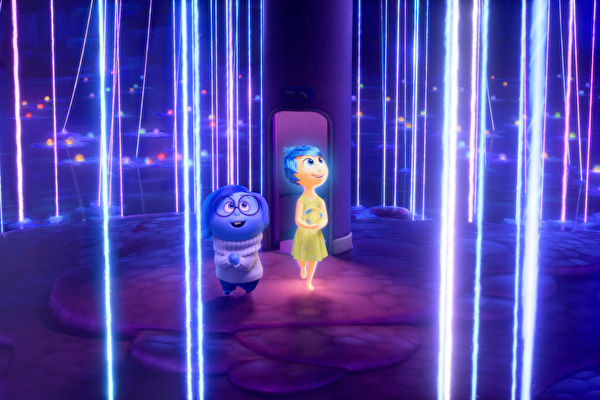
Pixar’s “Inside Out 2” premiered with box office performance exceeding expectations, igniting a summer movie craze. The studio has openly explained why the production budget for the film reached a staggering $200 million, higher than many live-action films, and also revealed the reason for choosing to create a sequel rather than an original movie.
The three-day box office earnings of “Inside Out 2” surpassed the record set by “Frozen II,” becoming the second-largest animated film in history in terms of opening weekend box office, following only Pixar’s “Incredibles 2.” According to Time, Pixar admitted they didn’t have confidence in the film’s success, and if it had failed, the studio would have had to completely rethink its business model.
Pete Docter, Pixar’s Chief Creative Officer, stated that the core content of “Inside Out 2” is profound, saying, “Therefore, if this film underperforms at the box office, I believe that means we need to think even more thoroughly about how to run our business.”
Several PG-rated films released this year performed well at the box office, such as “Kung Fu Panda 4” with a production cost of $85 million and global box office revenue surpassing $500 million. So why are there so few movies targeted towards children? Docter bluntly responded, “The production cost of good animated films is very high.”
The production budget for “Inside Out 2” is around $200 million, even higher than the production costs of live-action films like “Furiosa: A Mad Max Saga” at $168 million and “Bad Boys: Ride or Die” at $100 million.
Docter explained that extensive changes resulted in the high production cost, saying, “I think if you really want to bring production costs down, you have to come up with an idea and execute it. But if you want to do it well, you have to make significant changes and iterate, which is what we are capable of doing right now. If the box office doesn’t support it, if the economics don’t support it, we will have to make even bigger changes.”
“Inside Out 2” appeals to audiences of all ages. The character Riley in the second film is navigating through adolescence, dealing with emotions like anxiety and awkwardness, undoubtedly attracting teenage viewers. During the opening weekend, 23% of the audience was under 12 years old, 19% were aged 25-34, and 18% were aged 18-24, proving that parents are eager to take their children to watch a high-quality animated film.
Currently, there is a prevalence of anxiety among teenagers, partially due to the rise of social media. The first film helped children discuss how to manage common emotions like anger and sadness with their parents, and now the second film’s portrayal of anxiety, though more abstract, will likely facilitate family discussions between children and parents.
Next up, Pixar’s “Toy Story 5” is scheduled to be released in 2026. Why do sequel series have more allure than original films? Docter said, “It’s tough. Everyone says: why don’t they make more original stuff? When we do, people don’t watch because they’re not familiar. With sequels, people think: oh, I’ve seen this before, I know I like it. That’s the value of a sequel.”
Pixar plans for this film to run for 100 days. As of the 19th, on the sixth day of release in North America, “Inside Out 2” has already earned over $205 million in North America and $379 million globally, according to Box Office Mojo. Foreign reports suggest that this film has the potential to reach $1 billion in box office revenue this year.