
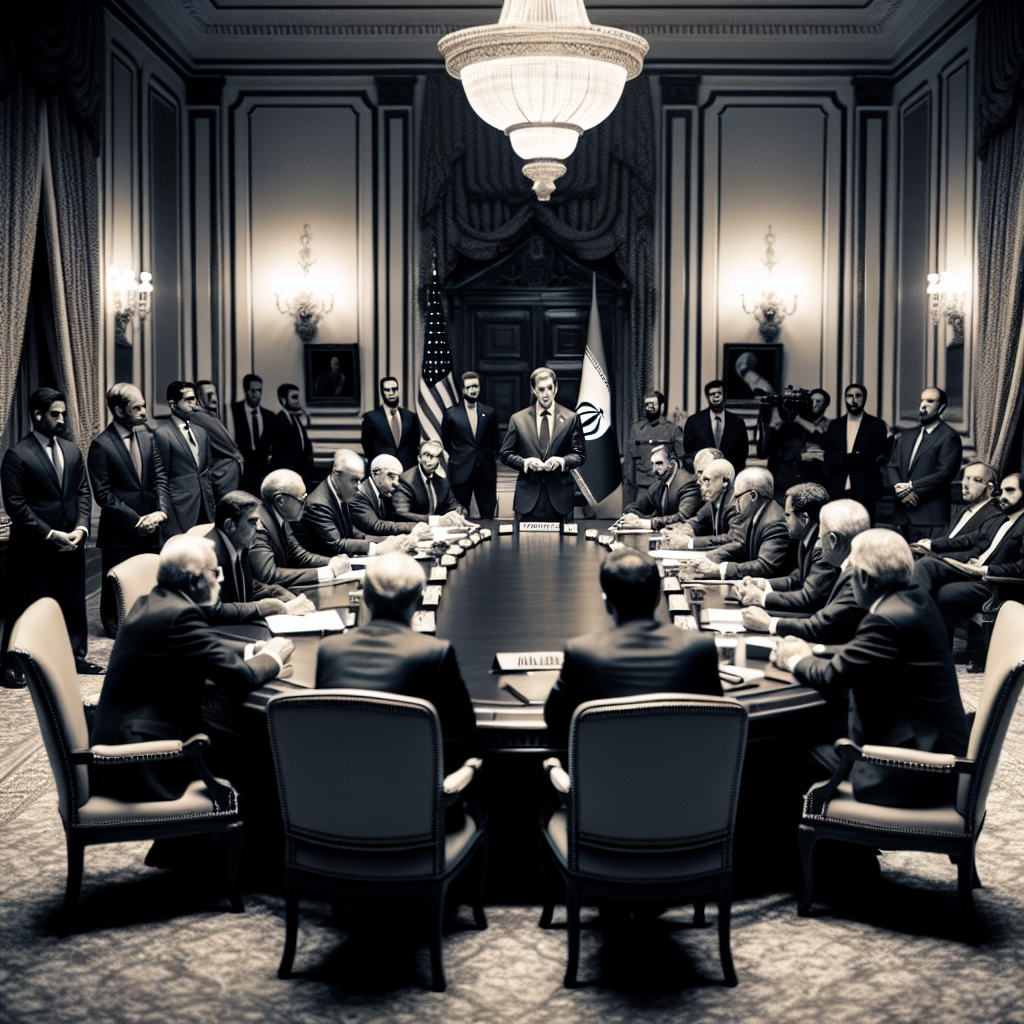
On April 11th, led by US Vice President JD Vance, a team arrived in Pakistan with the mediation of Pakistan, meeting with a delegation led by the Speaker of the Iranian Parliament for negotiations. Both sides announced that no agreements had been reached yet, with Vance delivering a speech and answering questions at a press conference.
This face-to-face meeting was a rare occasion, as Vance was accompanied by senior envoy Steve Witkoff and President Trump’s son-in-law Jared Kushner in Islamabad, Pakistan, for talks with a delegation led by Mohammad Bagher Ghalibaf of the Iranian Parliament.
The main topics of discussion at the meeting included Tehran’s control over the Hormuz Strait, the ongoing conflicts between Israel and Iranian proxies such as Hezbollah in Lebanon, and issues related to Iran’s enriched uranium stockpile.
During the press conference, Vance expressed gratitude, saying, “I want to thank Prime Minister of Pakistan as well as General Munir for being wonderful hosts. Regardless of any shortcomings in these negotiations, it is not due to them, as they have truly worked hard to help facilitate agreements and bridge divides.”
Vance stated, “We have been negotiating continuously for 21 hours and engaged in substantive discussions with the Iranian side. However, the unfortunate news is that we have not reached an agreement. I believe this is bad news for Iran, but not for the United States.”
“We are now prepared to return to the US without reaching an agreement. We have clearly outlined our ‘red lines’: we have made it as clear as possible which aspects are negotiable and which are non-negotiable, but they have chosen not to accept,” Vance added.
When questioned about the US red lines, Vance replied, “We need to see concrete commitments from them (Iran) guaranteeing they will no longer seek nuclear weapons or tools to rapidly acquire nuclear weapons. This is the core goal of the US President and what we are trying to achieve through these negotiations.”
Vance further emphasized the need for a long-term commitment from Tehran to not pursue nuclear weapons despite the destruction of Iran’s nuclear program. “What we are requesting is not just a short-term commitment of two years but a long-term one, which we have not seen yet but hope to see in the future.”
Responding to a query about frozen assets, Vance stated, “We have discussed all these issues and many more beyond that. These matters have been brought up for discussion, but once again, Iran is unwilling to accept our conditions.”
Vance quoted President Trump, saying, “You must come here with sincerity and make the maximum effort to reach an agreement.” He also added, “Unfortunately, we have not made any progress.”
Furthermore, Vance mentioned the continuous communication with the team during the negotiation process, stating, “I have had 6 to 12 consultations with President Trump on this matter. We have also had discussions with Admiral Cooper, Secretary of War Pete, Secretary of State Marco, and the entire national security team. We have also had several conversations with US Treasury Secretary Scott Bessent.”
On April 12th, Iran’s state broadcaster, IRIB, claimed that the “unreasonable demands” presented by the US during the talks obstructed negotiations between the US and Iran in Islamabad.
In a statement released on Telegram, the Iranian state broadcaster declared that the Iranian delegation engaged in intensive negotiations lasting 21 hours to “safeguard the national interests of the Iranian people.” Despite presenting various viewpoints, the “unreasonable” demands from the US hindered the negotiations, leading to their breakdown.