
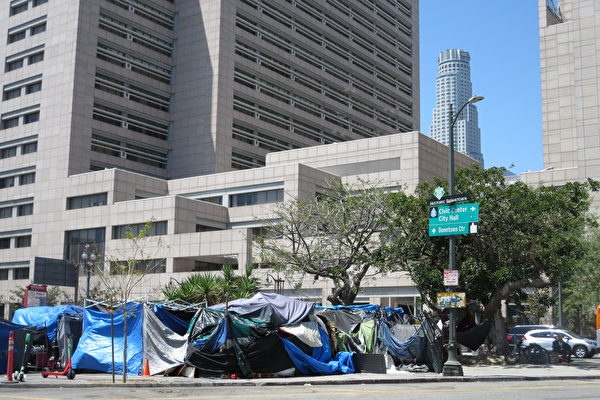
On April 8, California Governor Gavin Newsom announced the allocation of an additional $145.4 million for the Homeless Housing Assistance Program (HHAP). This follows the $419 million funding issued in January for the program, which aims to provide housing assistance for the homeless. The new funding will benefit areas such as Santa Clara County, Sacramento County, Orange County, and Riverside County, among eight other regions. San Francisco, Los Angeles, and San Diego counties had previously received the first round of funding.
Since its launch in 2019 during Newsom’s first term, the HHAP has now allocated nearly $5 billion. After rigorous review by the California Department of Housing and Community Development (HCD), all 58 counties in the state, 14 cities with populations over 300,000, and 44 organizations providing Continuums of Care (CoC) for the homeless are eligible for funding. This aims to increase the availability of temporary, transitional, and permanent housing to prevent and address homelessness.
In the 2024-25 fiscal year, California allocated a budget of $1 billion for the sixth round of the HHAP program. While the HHAP budget was cut in the 2025-26 fiscal year due to funding shortages, it is expected to receive $500 million in the 2026-27 fiscal year.
In a press release on the 8th, Governor Newsom stated, “Merely investing money is not enough – resources must be directed towards programs and local governments that can yield tangible benefits.” His office revealed that 80% of the latest funding will be used for constructing permanent and transitional housing.
Newsom emphasized in a January press release, “Without building new housing, we cannot solve the homeless crisis or the affordability crisis.” Despite criticism that the 9% reduction in the number of people sleeping on the streets in California in 2026 is attributed to recent policies of aggressive camp clearances, the Point-in-Time (PIT) counts have been criticized for potentially underestimating the numbers as volunteers find it challenging to identify people hidden in cars, abandoned buildings, or outdoor areas. Additionally, some regions in California have yet to complete their counts, potentially not reflecting the true statewide situation.
San Francisco Mayor Daniel Lurie, in a press release, acknowledged the progress made in reducing campsite numbers by 44% in December compared to 2024. However, according to PIT data released by the city, the total number of homeless individuals is still increasing (approximately 8,300 people), despite a decrease in the number of tents and campsites.
He expressed gratitude for the crucial resources provided by the state government, including funds from Proposition 1, HHAP funding, and allocations for ensuring the cleanliness of highway ramps. Proposition 1, passed in the March 2024 California primary election, aimed to issue $6.38 billion in bonds to fund housing, services, and therapy for veterans and the homeless, reforming California’s mental health system.
Approximately $1.033 billion from Proposition 1 funds can be provided to cities, counties, housing authorities, and tribal entities through the Homekey+ program for veteran services. Another $1.11 billion from Proposition 1 and HHAP funds is allocated for projects serving other target populations.
California still has the largest homeless population in the United States. According to a 2025 report from the Public Policy Institute of California (PPIC), in a specific point-in-time count in January 2024, California had about 187,000 homeless individuals, accounting for 24%-28% of the total homeless population in the country.
A state audit report in April 2024 highlighted that California had spent $24 billion in the previous five years on over thirty projects to address homelessness but failed to continuously track project effectiveness. A separate audit released in March of the previous year also revealed that Los Angeles City’s $2.3 billion expenditure on homeless services was untraceable; commissioned by U.S. District Judge David O. Carter, the audit was completed by the company A&M.
Despite California’s ongoing significant investments to tackle homelessness, a fraud case emerged in Los Angeles on January 23rd. According to a notification from the Central District of California’s U.S. Attorney’s Office, Alexander Soofer, a 42-year-old Los Angeles man, misappropriated tens of millions of public funds as the CEO of the charity organization “Abundant Blessings”, under contract with the Los Angeles Homeless Services Authority (LAHSA) to provide shelter and support services to the homeless. Instead, he used the funds to purchase luxury homes, cars, and pay for his children’s private school tuition.
The case reminded people that the company A&M, entrusted with auditing in 2025, had recommended Los Angeles to “consider appointing an independent financial manager and establishing a robust framework to review and approve invoices from service providers and cash requests from LAHSA.”
In January, San Diego County received $50.9 million in HHAP funding, San Francisco County received $39.9 million, and Los Angeles County received $328 million.
According to the Governor’s press release, the latest $145.4 million beneficiaries include:
– Santa Clara County, San Jose City, and the Santa Clara/San Jose City-County Continuum of Care (CoC) received nearly $49.9 million.
– Sacramento County, Sacramento City, and the county’s CoC received $31.7 million.
– Orange County, Anaheim City, Irvine City, Santa Ana City, and the county’s CoC received $35.1 million.
– Riverside County, Riverside City, and the county’s CoC received $20.4 million.
– Lake County and the county’s CoC received $1.4 million; Solano County and the county CoC received nearly $4.1 million; Yolo County and the county CoC received $2.2 million; Yuba County received nearly $600,000.