
The drone warfare on the battlefield between Russia and Ukraine is changing the shape of warfare, which will naturally have a profound impact on the defense posture in the Taiwan Strait.
The Chinese military has been replicating US drones, taking a step ahead of Taiwan. This means that China’s means of attacking Taiwan have increased. Meanwhile, the US and Taiwan military are both rapidly advancing low-cost drone projects to enhance defense capabilities. In general, drone warfare has increased the difficulty for China to attack Taiwan Island due to the presence of the Taiwan Strait, but it has also increased the defense difficulty for Kinmen and Matsu.
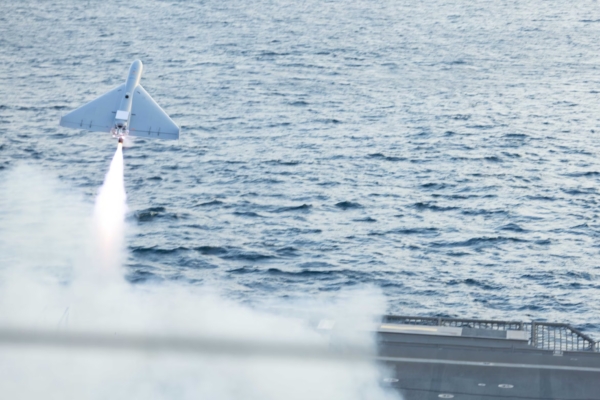
China is currently focusing on the development of drones, such as various drones displayed at the Beijing military parade, mainly imitating the US military to conduct long-distance attacks and have limited reusable payloads. The 076 amphibious assault ship that China has been promoting, equipped with an electromagnetic catapult, is likely to launch high-cost drones. However, what China truly needs for attacking Taiwan is low-cost, large quantities of disposable drones.
Mainland Chinese companies have strong capabilities in producing civil small drones, but most of them have difficulty flying over the Taiwan Strait and have limited payload. The small drones used by both sides in the frontline of Russia and Ukraine are not likely to be used by China in the Taiwan Strait; although they can be carried by individual soldiers and released when approaching Taiwan Island by boat, the quantity will be limited, and there are issues with whether personnel and ships can safely approach.
China needs a large quantity of drones similar to Iran’s Shahed, which can fly long distances and automatically seek targets. Their cost ranges from about $10,000 to $50,000, with a total weight of about 200 kilograms and a warhead weight of about 50 kilograms, while the Russian military version is claimed to have a warhead weight of about 90 kilograms. These drones are generally used together with missiles by the Russian military to distract and confuse Ukrainian anti-aircraft firepower. Ukraine also has similar medium-range drones.
China should also be developing similar low-cost drones. The 076 can carry some low-cost drones to conduct attacks on the east coast of Taiwan, but it may be difficult to achieve a large-scale attack. Moreover, operating outside the first island chain poses high risks and may likely result in a one-way mission.
China can mass-produce low-cost drones, with many components of Russian drones supplied by China. However, for the Chinese military and defense industry, similar low-cost drones may lack attractiveness due to the limited corruption opportunities and increased daily operational workload, making them labor-intensive and not very beneficial.
The Chinese military and defense enterprises prefer drones imitating the US, such as the Wing Loong and Rainbow series, which appear to be high-end projects with more funding, making it easier for corruption, easier to control quantity, and useful for propaganda.
China should understand the role of drones on the battlefield but may not necessarily promote the development of a large number of low-cost drones required for an attack on Taiwan. This is determined by China’s nature of being eager for achievements, concealment, and widespread corruption within the military.