
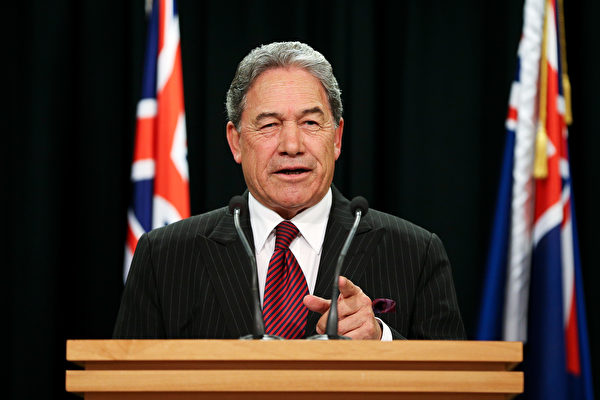
On Thursday, April 2nd, New Zealand and the Cook Islands signed a new defense and security agreement aimed at repairing tensions that arose from the frequent interactions between the Cook Islands and the Chinese Communist Party. The agreement also clarifies the mechanisms for future consultations on defense and security matters between the two parties.
The declaration states that the Cook Islands commit to safeguarding New Zealand’s defense and security interests, continuing to allow the New Zealand Defense Force access to its territory, and consulting with the New Zealand government on any defense and security requirements before engaging with other partners.
In return, New Zealand promises to remain the primary defense and security partner of the Cook Islands and enhance bilateral cooperation. The New Zealand government announced that it will unfreeze approximately NZ$29.8 million (about $17 million USD) in annual financial aid to the Cook Islands.
New Zealand’s Foreign Minister, Winston Peters, stated in the declaration that it establishes political commitments aimed at eliminating ambiguities in the special constitutional relationship between the two island nations, allowing both governments to move forward.
Peters noted that since late 2024, there have been several “serious disagreements” between the two governments, which have been no secret. One of the apparent root causes stems from the lack of consensus on the demands of the constitutional relationship. “We are very pleased to stand here today and announce the conclusion of this defense and security declaration,” Peters said.
He added, “Even relatives can have friction occasionally,” emphasizing that recent dialogues between the two countries have been “very positive.” “Now, we have resolved our family issues. This is not a victory for anyone but a victory for the diplomatic atmosphere of the Pacific region.”
Cook Islands Prime Minister Mark Brown expressed great delight at signing the declaration. He stated at a press conference that significant efforts and work were put into agreeing on the wording of the declaration, “allowing both countries to look forward with renewed confidence and new goals.”
Peters reiterated, “We are close family, woven not only tightly connected but with a relationship that goes far back.” Brown mentioned, “Our ancestors read the stars and the ocean, always choosing to move forward. It is in this spirit that we have signed this statement now.”
Although the agreement between the Cook Islands and the Chinese Communist Party remains valid, New Zealand believes that this declaration will prevent the Cook Islands from engaging in future “signing without discussion” situations. Prior to signing this agreement, the two countries had been discussing the boundaries of areas where the Cook Islands could collaborate or not collaborate with China.
The Cook Islands, comprising 15 small islands and atolls, are located between New Zealand and Hawaii, scattered across the resource-rich Pacific Ocean, with a total exclusive economic zone area of up to 2 million square kilometers.
Since 1965, the Cook Islands have maintained a “free association” with New Zealand in constitutional terms. The Cook Islands have autonomy, and residents hold New Zealand citizenship. If needed, New Zealand authorities remain responsible for providing defense support, making “trust and consultation” the core of bilateral relations.
Fractures in the relationship between the two countries began to appear in October 2024 when Cook Islands Prime Minister Brown proposed issuing independent passports to the country’s residents.
However, it was China’s intervention that caused significant rifts in the relationship. In February 2025, the Cook Islands and China reached a five-year agreement to cooperate in exploring and researching the country’s seabed mineral resources.
While Brown claimed at the time that the partnership agreement signed with China did not involve defense affairs and would not affect the Cook Islands’ relationships with New Zealand and other partners, it was found that the agreement actually included cooperation with China in maritime infrastructure and transportation.
This move quickly raised concerns from the United States, Australia, and New Zealand as China had previously signed a series of defense, trade, and financial agreements with several Pacific island nations, closely resembling its Belt and Road Initiative strategy.
At that time, Peters’ office had warned that such opaque practices could pose significant security risks.