
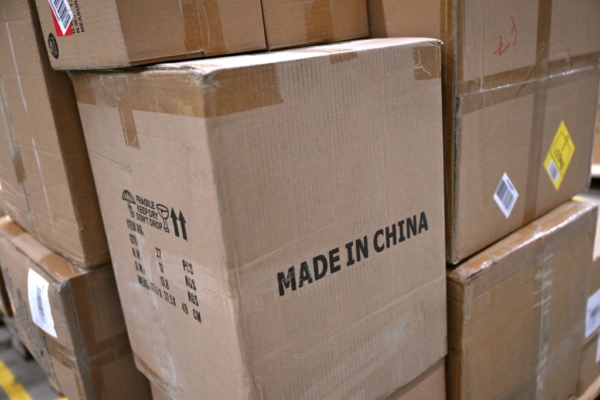
A delegation of nine European Parliament members visited Beijing and Shanghai from March 31 to April 2, representing the first European Parliament delegation to visit China in eight years. The delegation has exerted pressure on the Chinese side regarding the safety and non-compliance issues brought by the influx of cheap Chinese goods into Europe.
Meanwhile, a renowned European think tank published an article on March 31 regarding the economic relationship between the European Union and the Chinese Communist Party, stating that “the EU must learn how to defend its interests in future economic games.”
On March 31, the European Parliament member delegation visited China, led by Anna Cavazzini, Chair of the Internal Market and Consumer Protection Committee of the European Parliament. This marks the first visit to China by EU parliamentarians in eight years.
During the visit, the EU parliament members met with senior Chinese officials to discuss product safety, fair competition, online child protection, and forced labor issues.
At the same time as the delegation’s visit, the European Council on Foreign Relations (ECFR) published an article on March 31 titled “Beijing hold’em: European cards against Chinese coercion,” using the metaphor of Texas Hold’em to address China’s economic coercion tactics.
The article emphasized the need for Europe to implement measures with “deterrence” against China’s economic threats, highlighting China’s monopolization in the rare earth minerals sector and the impact on Europe’s clean energy technology and industrial core.
The European Parliament member delegation has pressed the Chinese side regarding the safety and non-compliance issues brought by the influx of cheap Chinese goods into Europe.
According to a statement released by the European Parliament delegation last week, the members visited Beijing and Shanghai to discuss challenges in the digital and e-commerce sectors and promote fair competition between China and the EU. They are scheduled to hold meetings with Chinese legislative bodies, market regulators, as well as representatives from e-commerce platforms like Shein, Alibaba, and Temu.
Recently, the EU enacted new regulations reforming its customs system to crack down on cross-border e-commerce platforms systematically violating EU laws, aiming to combat the influx of non-compliant low-priced products (mainly from China) into the European market.
With the tightening controls on small packages by the U.S., the issue of a large influx of low-value parcels into the EU has become more severe, with most originating from China; approximately 60% to 65% of sampled products (including cosmetics and protective equipment) do not meet EU safety standards.
In 2025, over 58 million low-price packages entered the EU, with over 90% originating from China. The EU believes that customs systems in various countries struggle to handle such a massive volume of parcels, posing risks to consumer safety and distorting market competition.
To address the surge of low-priced parcels from e-commerce platforms, the EU is attempting to strengthen management. The EU announced that starting July 1, it will abolish the tariff exemption for small packages (valued under €150) and impose a fixed tariff of 3 euros (approximately $3.5) on e-commerce small packages entering the EU.
A report released by the EU in August 2025, the “2024 Product Compliance Control Report,” revealed that 82% of non-compliant products rejected by EU customs in 2024 came from China, with the number of rejected Chinese shipments doubling in 2024 compared to 2023 and nearly tripling compared to 2022.