
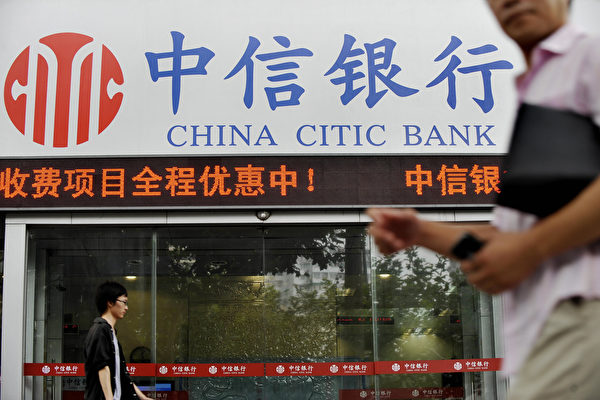
In a recent incident in Jiaozuo, Henan province, an elderly couple had accumulated nearly 100,000 yuan in a “pension savings” account at a bank, only to be informed upon withdrawal that it was actually an insurance product. If they were to cancel the policy early, they would incur a loss of about 30,000 yuan. This incident has sparked contemplation on the ongoing issue of “deposit turning into insurance” and raised the question of who is still preying on the financial resources of the elderly.
According to reports from mainland media outlet “Red Star News,” a citizen named Ms. Guo recently revealed that her parents had been depositing 500 yuan each month into a so-called “pension savings” scheme at the Jiaozuo branch of China CITIC Bank, resulting in an accumulation of nearly 100,000 yuan over several years. It was only in October 2025, when they went to the branch to handle some business, that they discovered the funds were not held as standard bank deposits but were tied to an insurance product. And should they choose to withdraw the money prematurely, it would lead to a loss exceeding 30,000 yuan.
The elderly couple had apparently started this scheme at bank branches in 2017 and 2018 respectively. Ms. Guo stated that at the time, bank staff had promoted the scheme under the names of “mandatory savings” and “pension supplementation,” emphasizing higher returns compared to regular deposits and mentioning insurance benefits, but failing to clearly disclose that it was an insurance product and the associated risks.
In response to the situation, the bank stated that the customers had purchased Jinfu Lian Universal Insurance (investment-linked) through online and mobile banking services, and that during the sales process, they had fulfilled their obligation to provide information, including clarifying that “insurance is not a deposit,” explaining payment deadlines, profit risks, and losses upon cancellation, as well as offering a 15-day cooling-off period. The bank asserted that the sales procedures complied with regulatory requirements and claimed to have communicated explanations with the customers multiple times.
Ms. Guo refuted these claims, asserting that retroactive visits could not replace the bank’s obligation to provide prior information. She argued that her parents did not make an informed decision in purchasing the product and lacked the independent ability to operate mobile banking, thus not ruling out the possibility of the staff handling the transactions on their behalf. Additionally, her father stated that he did not sign the contract himself and had not received any follow-up calls from the bank.
Although both parties had verbally agreed on compensation for the issue earlier, no concrete actions have been taken to implement it. Currently, the bank has mentioned ongoing coordination with the insurance company to address the matter.
Legal experts point out that if banks engage in activities during the sales process that confuse savings and insurance concepts, fail to fully disclose risks, or conduct transactions on behalf of customers, they might be in violation of relevant regulatory standards. Consumers have the right to seek remedies, including filing complaints with regulatory bodies or initiating legal proceedings.
In recent years, the deceptive sales tactics of “deposit turning into insurance” have been repeatedly observed in various parts of China, particularly affecting the elderly population.
An earlier report by “21jingji.com” titled “The Ten-Year Difficulty in Eradicating ‘Deposit Turning Into Insurance’ – Who is Still Targeting the Elderly’s Financial Resources?” highlighted similar modus operandi used in multiple cases across different regions. By blurring product attributes, evading liquidity risks, and leveraging gifts to gain trust, financial institutions ultimately manipulate account holders into signing long-term life insurance policies.
In an interview with a reporter from “21st Century Business Herald,” lawyer Yang Xiang from the Beijing Hongfan Law Firm stated that the underlying reasons for these irregularities lie in the distortion of incentive mechanisms driven by commercial interests and information asymmetry in financial transactions, which have continually fueled such issues. For consumers, being informed about the terms, preserving evidence, and promptly addressing concerns remain the most effective ways to safeguard their financial resources.