
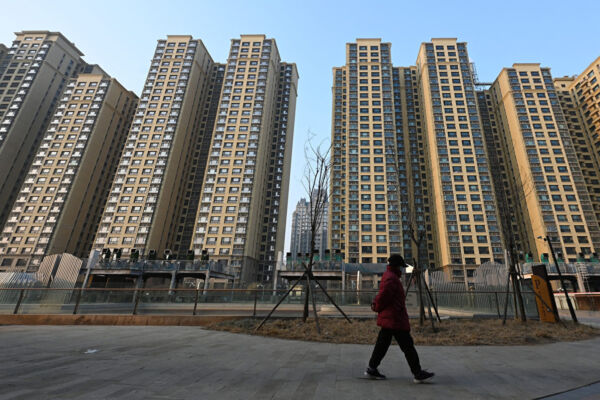
China’s real estate market continues to struggle. A report from the China Real Estate Index Research Institute shows that in March 2026, the average selling price of second-hand homes in one hundred cities in China has dropped compared to the previous year and month. So far, the prices of second-hand homes have been declining for 47 consecutive months.
On April 1st, the China Real Estate Research Institute released the Price Index for One Hundred Cities, indicating that in March, the average price of second-hand residential properties in the hundred cities was 12,792 yuan per square meter, a decrease of 8.55% compared to the same period last year and a 0.34% decrease from the previous month. This marks the 47th consecutive month of decline in second-hand residential property prices in the hundred cities.
In terms of the number of cities that experienced price changes, 7 cities saw an increase in prices, while 91 cities witnessed decreases and 2 remained stable.
In core cities, Shanghai and Hefei saw an increase in the average listing price of second-hand homes. In March, the price of second-hand homes in Shanghai increased by 0.08% compared to the previous month, while Hefei saw a 0.03% increase. However, Beijing experienced a 0.31% decrease in second-hand home prices in March.
Regarding new properties, in March, there was an increase in new property listings by real estate developers, with high-end improvement projects entering the market in cities such as Hangzhou, Shanghai, and Guangzhou, leading to a structural increase in new property prices across the hundred cities. The average price of new residential properties in the hundred cities was 17,115 yuan per square meter, rising by 0.05% compared to the previous month and 2.24% compared to the same period last year.
An analysis by “Casual Chatting Grass” pointed out that despite the price increases in some cities, the downward trend in second-hand home prices continues in the majority of cities. Many real estate agents are using the price increases in these few cities to manipulate anxieties and persuade people to buy. The article noted, “The data showing price increases in these cities actually reflect people seeking a safe haven for their money. In the past, luxury homes would heat up first, then the trend would trickle down to the lower-end market, with essential homebuyers rushing in last minute. Now, it’s completely reversed, where high-end properties are stagnant, with long transaction periods.”
“Casual Chatting Grass” further analyzed that the surge in transactions is mainly driven by low-priced “old and small” properties. The drastic price drops have made buying these properties more feasible for many. With lower mortgage rates and larger down payments due to price reductions, many find the monthly mortgage payments comparable to renting. This affordability is the primary incentive for essential buyers to make a purchase, reflecting more of a survival necessity than positive future expectations.
The analysis also shed light on the new property market, indicating that the 0.05% price increase was primarily due to developers focusing on constructing large-sized properties. By releasing high-quality properties in prime urban areas, developers have skewed the average prices higher. This phenomenon demonstrates a “structural market trend,” where data may look promising but is often disconnected from the purchasing power of ordinary people.
In conclusion, “Casual Chatting Grass” warned against being misled by macro-level data. Given the current economic climate, people’s financial reserves are fragile. While the initial down payment requirements have decreased from 30% to 15%, the actual proportion of down payment people are paying has increased. People are cautious about accumulating high levels of debt and are increasingly averse to leveraging their investments. Taking risks in the current market could lead to shouldering others’ risks. It urged people to tread carefully and avoid impulsive decisions that could potentially transfer unnecessary risks onto themselves.