
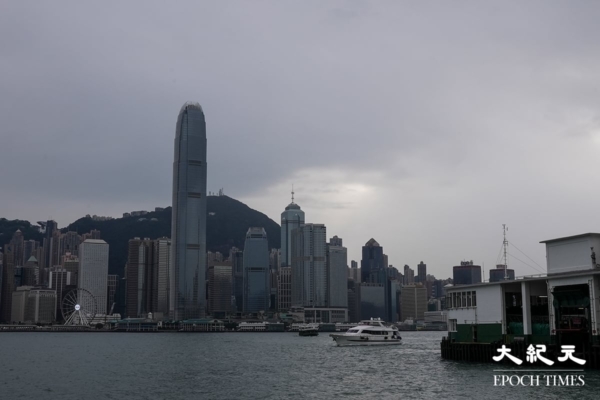
Housing issues have long plagued Hong Kong society. In recent years, with the massive changes in the political and social environment, as well as the influx of immigrants, the younger generation has adopted a pessimistic outlook on Hong Kong’s development. The lack of security has led young people to choose not to buy houses, and this sentiment is gradually spreading, leading to a continuous decline in the homeownership rate.
According to the “Hong Kong Economic Policy Green Paper 2026” released by the University of Hong Kong’s Business School, an article analyzes the housing affordability and homeownership trends in Hong Kong.
Data compiled in the article shows that for individuals born in the 1960s and 1970s, the percentage of those owning private properties at the ages of 30 to 34 was around 28%. In contrast, for the group born in the 1980s, this percentage plummeted to 22.5%, and for those born in the 1990s, it further dropped to 19.8%.
An article by BBC Chinese on April 1st reported that the overall homeownership rate in Hong Kong decreased from 54.1% in 2002 to 50.1% in 2023. This figure is significantly lower than Taiwan’s 85% and Singapore’s 90%.
In the age group of 30 to 39, the differences are particularly striking. Between 1993 and 2023, the percentage of subsidized housing owners in this age group decreased from 9.1% to 6.2%; while the percentage of private property owners dropped from 30.7% to 23.4%.
Amy, a 29-year-old high school teacher in Hong Kong, currently lives in a rented apartment by herself. She said that choosing not to own a property at the moment is mainly because “the social environment in Hong Kong makes it difficult for me to make a decision for the next few decades.”
Amy expressed that homeownership is a burden for her.
The prolonged and far-reaching anti-extradition movement in Hong Kong in 2019 had a significant impact on Amy. “When I am uncertain about what will happen in the future, whether I will still be in Hong Kong, or what will happen in Hong Kong, I feel very insecure,” Amy said. “This makes me not want to commit to owning a house, carrying a burden for a lifetime.”
Currently, the career stability of teachers is not as secure as one might think.
The Hong Kong Education Bureau is preparing to amend regulations, proposing to change the teacher’s lifelong registration system to applying for a practicing certificate every three years, requiring compliance with continuing education, no criminal records, and a declaration of adherence to the National Security Law and other legal requirements, which will raise the professional threshold.
“I don’t know how the future policies will turn out,” Amy said.
The Hong Kong Budget shows that the total education expenditure for the next fiscal year accounts for only 13.3% of the government’s overall expenditure, the lowest proportion in nearly 20 years.
Amy occasionally contemplates leaving Hong Kong, “This thought has never left my mind,” she said.
Wang Bolin, an assistant professor at the University of Hong Kong’s Business School, is one of the scholars behind the aforementioned research article.
He stated, “I am also a tenant. I definitely feel that I cannot afford to buy.” He analyzed that the post-war baby boom generation received substantial housing subsidies from the government at the time, and the availability of “homeownership” units for sale once significantly increased the homeownership rate. The government announced the halt of sales of “homeownership” units in 2002 and did not propose reconstruction until 2011.
“The result is that a generation has no subsidy channels to buy houses,” he said. Currently, there is a group of young people living with family members, some deliberately reducing their income to maintain eligibility for public housing. “You can’t buy private property in your lifetime, and when you have no choice, you have to queue up.”
Kevin, a 37-year-old freelance worker, purchased a 380-square-foot “homeownership” unit in the urban area last year. The property price is less than 4 million, with a 95% mortgage, requiring only a 5% down payment, along with miscellaneous fees of over 200,000, renovation costs of about 600,000, currently paying a monthly installment of 13,000.
Kevin lives with his wife, and despite buying an “homeownership” unit, the process was still a “soul-searching” experience that required balancing his views on society with the lifestyle he envisioned.
Like Amy, Kevin is pessimistic about Hong Kong’s development. “Infrastructure, talent, and the economy are all viewed with skepticism; but investing a considerable amount, is it a wise decision?”
Reflecting on the situation a year ago, from application, confirmation to selecting a unit, he always felt a sense of being “pushed forward.” “You think for a few days, struggle for a few days, and then you have to make a decision.”
“You can’t say that you are now buying a house, showing your confidence in Hong Kong, showing strong support for this government,” Kevin said. “When I decide not to leave, I have to think about what my daily life will be like afterward and naturally consider where I want to live.”