
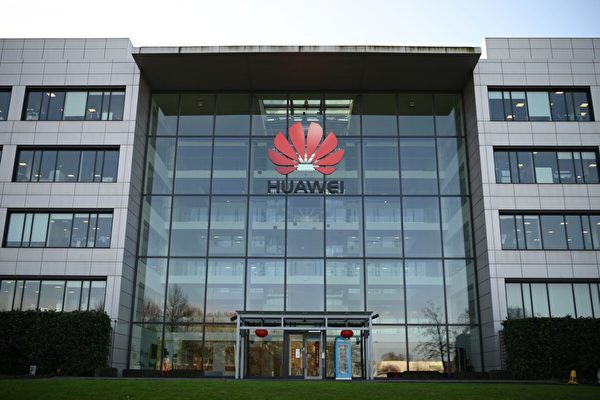
Germany’s Fraunhofer Heinrich Hertz Institute (HHI) director Martin Schell announced on LinkedIn last month that he would be stepping down from his position at HHI and taking on the role of Research and Development Director at Huawei’s UK Prague Research Center starting in March.
HHI is a subsidiary of the Fraunhofer Society, which is considered one of Germany’s top research institutions, a key applied research institution in Europe, and a center for innovation in Germany. It is also one of the world’s leading developers of photonic devices and photonic integrated circuits.
Photonics uses light instead of electric currents, with applications ranging from consumer electronics to medical imaging, high-speed fiber optic networks, and lasers. Schell previously held a professorship in Optics and Optoelectronics Integration at the Technical University of Berlin (TUB).
According to a report by Nikkei Asia, while Huawei faces strict scrutiny in many countries due to espionage and disruptive activities, Fraunhofer Institute has maintained a close relationship with Huawei. They participated in the Huawei Full Connect 2025 Technology Exhibition in Shanghai last September, showcasing the F5G OpenLab next-generation fiber optic network testing laboratory.
The Federal Office for the Protection of the Constitution (BfV) in Germany’s domestic intelligence department informed Nikkei News that Huawei has been aggressively recruiting top German talents through headhunting companies, intermediaries, and human resources representatives, offering extreme measures and lucrative compensation to attract outstanding German professionals. The HHI case illustrates the Chinese Communist Party’s focus on luring German and other Western scientists either through long-term cooperative relationships or generous salaries.
On March 19, the German government released a new “National Economic Security Strategy,” one of which is to “enhance the resilience of enterprises and academia,” without providing specific action plans. Since HHI is not involved in military confidential projects, employees switching jobs do not have to undergo stricter security clearance or wait for longer notice periods.
Some political figures have cited Schell’s case, calling on the government to strengthen supervision to prevent Chinese companies from poaching top German scientists. Roderich Kiesewetter, a member of the ruling party Christian Democratic Union and a retired senior military officer, pointed out that through such actions, China could potentially steal information or identify vulnerabilities in the German system.
Kiesewetter warned, “We all know that China is planning for the long term, embedding components into the German system, and then using them against us in the future.” He further cautioned, “If China disrupts our networks, the consequences would be dire, especially for the 5G network, which is the economic nerve center.”
Green Party member and Chairman of the Parliamentary Oversight Committee Konstantin von Notz also stressed that this case underscores the need for Germany to establish a consistent policy framework to prevent authoritarian countries from poaching senior officials who have access to sensitive information.
On the other hand, some in the German academic community believe that talent drainage in Germany is due to a lack of career advancement opportunities within the academic system. Hannes Gohli, a researcher at the University of Würzburg’s China Economic and Trade Chair, pointed out that Germany’s “Academic Fixed-Term Contract Act” stipulates that researchers who fail to secure permanent employment within six years of obtaining a doctoral degree are excluded from the German higher education system, leading to unnecessary pressure.