
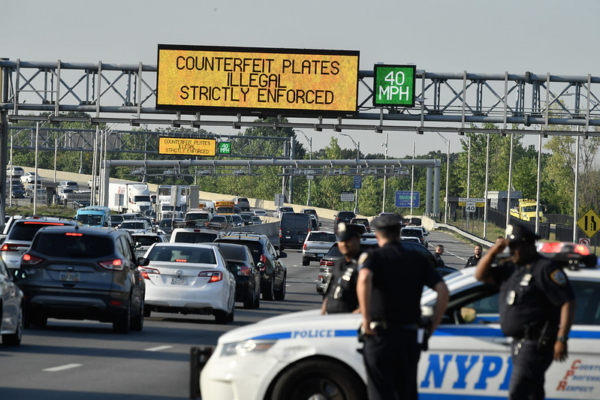
New York’s Metropolitan Transportation Authority (MTA) is ramping up enforcement against toll evasion behaviors. A recent analysis estimates that in 2025, overdue toll amounts reached approximately $350 million, doubling from three years ago. The main reason for this increase is drivers deliberately concealing their license plates and avoiding cameras.
MTA plans to push for stricter measures against toll evaders in the state legislature, including placing liens on the property of offenders and categorizing toll evasion as a criminal offense to enhance collection efforts and deter intentional violations.
Edwin King, the Deputy Vice President of MTA’s Bridges and Tunnels Division, stated during a meeting on the 23rd that in 2025, about 29,000 tickets were issued to repeat offenders, a 42% increase from 2024. These “persistent toll violators” are defined as drivers who have received at least three different violation notices within five years. Statistics show that in 2025, there were approximately 5,700 such offenders, representing a 30% increase from the previous year.
As of 2025, the accumulated overdue toll amount has reached around $350 million. These funds were originally designated for bridge and tunnel maintenance as well as investments in public transit systems. If toll evasion continues to escalate, it could impact maintenance progress and service quality, ultimately shifting the burden onto law-abiding users.
The meeting also highlighted that methods of toll evasion are becoming more systematic and technologically advanced, including obscuring or altering license plates, using fake or expired temporary plates, and exploiting loopholes in electronic toll collection systems to avoid charges. Officials believe these actions are deliberate attempts to evade payment rather than mere mistakes.
In response to the rising toll evasion, MTA has implemented several enforcement upgrades, such as enhancing cooperation with law enforcement to combat license plate violations, increasing tickets and penalties for repeat offenders, strengthening mechanisms for recovering unpaid tolls (including legal procedures and vehicle disposition), and utilizing data analysis to target high-risk violation groups for improved enforcement efficiency.
According to the meeting’s explanation, future enforcement resources will be prioritized towards repeat offenders, aiming to implement more targeted management strategies.