
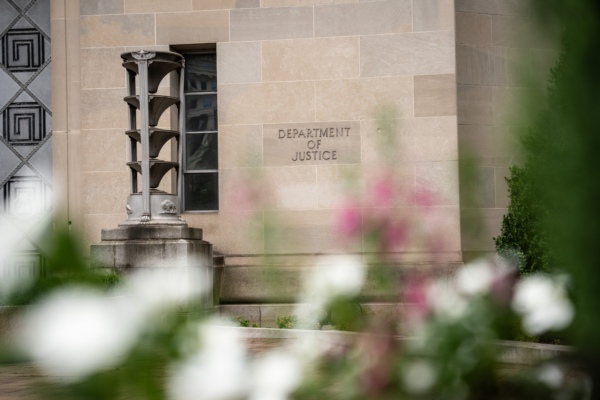
In the United States, as the government implements increasingly strict immigration laws, the Department of Justice last Thursday revoked the citizenship of two individuals with significant criminal backgrounds.
Attorney General Pam Bondi stated that American citizenship is a sacred privilege, not a cheap status that can be obtained through dishonest means. The action of stripping citizenship reflects the ongoing efforts of the Department of Justice.
One of the individuals whose citizenship was revoked is Vladimir Volgaev, who was born in Ukraine. He was involved in secret purchasing, packaging, and smuggling of firearm components to Ukraine and Italy since 2011. Additionally, he underreported assets and income when applying for federal housing benefits starting from 2013, committing housing benefit fraud. After his naturalization in 2016, he was convicted of smuggling goods from the United States, as well as theft of government funds or property.
In late September last year, the Department of Justice filed a lawsuit in a federal court in Central Florida to revoke his citizenship. On March 23 this year, the court ruled that citizenship applicants must prove good moral character, and Volgaev engaged in illegal activities before naturalization. He made false statements regarding his criminal record intentionally to conceal the facts and obtain citizenship, rendering him ineligible.
The other individual whose citizenship was revoked is Mirelys C. Diaz, born in Cuba. Diaz, residing in Florida, was found to have conspired to commit health insurance fraud before naturalizing in 2017. She was sentenced to 29 months in prison in 2019 and ordered to pay over $6 million.
From August 2011 to March 2014, Diaz recruited individuals to pay kickbacks in exchange for diverting fraudulent prescriptions to the pharmacy where she worked, resulting in the federal government reimbursing over $6 million for actual non-dispensed prescription drugs.
The federal court revoked Diaz’s citizenship because during the statutory period for naturalization (the five years before applying for citizenship until taking the oath of citizenship), she was involved in health insurance fraud and failed to prove good moral character.
According to statistics, there are approximately 26 million naturalized citizens in the United States, with around 800,000 people naturalizing annually. The standards for naturalization under the Immigration and Nationality Act (INA) include being over 18 years old, a legal permanent resident, proficient in English, knowledgeable about U.S. history and society, and displaying good moral character.
NBC News reported that Matthew Tragesser, a spokesperson for USCIS (U.S. Citizenship and Immigration Services), stated that when credible evidence indicates that someone obtained citizenship through fraud or false statements, the agency reviews the case. USCIS maintains a “zero tolerance” policy towards fraudulent activities in the naturalization process.
The process of revoking U.S. citizenship is legally demanding and often time-consuming. Most individuals whose citizenship is revoked will revert to their previous immigration status. If they did not have a prior status, deportation may be involved, which typically takes longer.
Texas immigration attorney Wei-Yu Chen shared on Facebook that the U.S. government can initiate the revocation of citizenship based on two main reasons: concealing crucial facts or making intentional misstatements during the immigration or naturalization process, which may have affected the approval at the time; or not meeting the eligibility criteria from a legal standpoint without deliberate concealment or falsehood, such as failing to meet residency requirements or lacking the required good moral character from a legal perspective.