
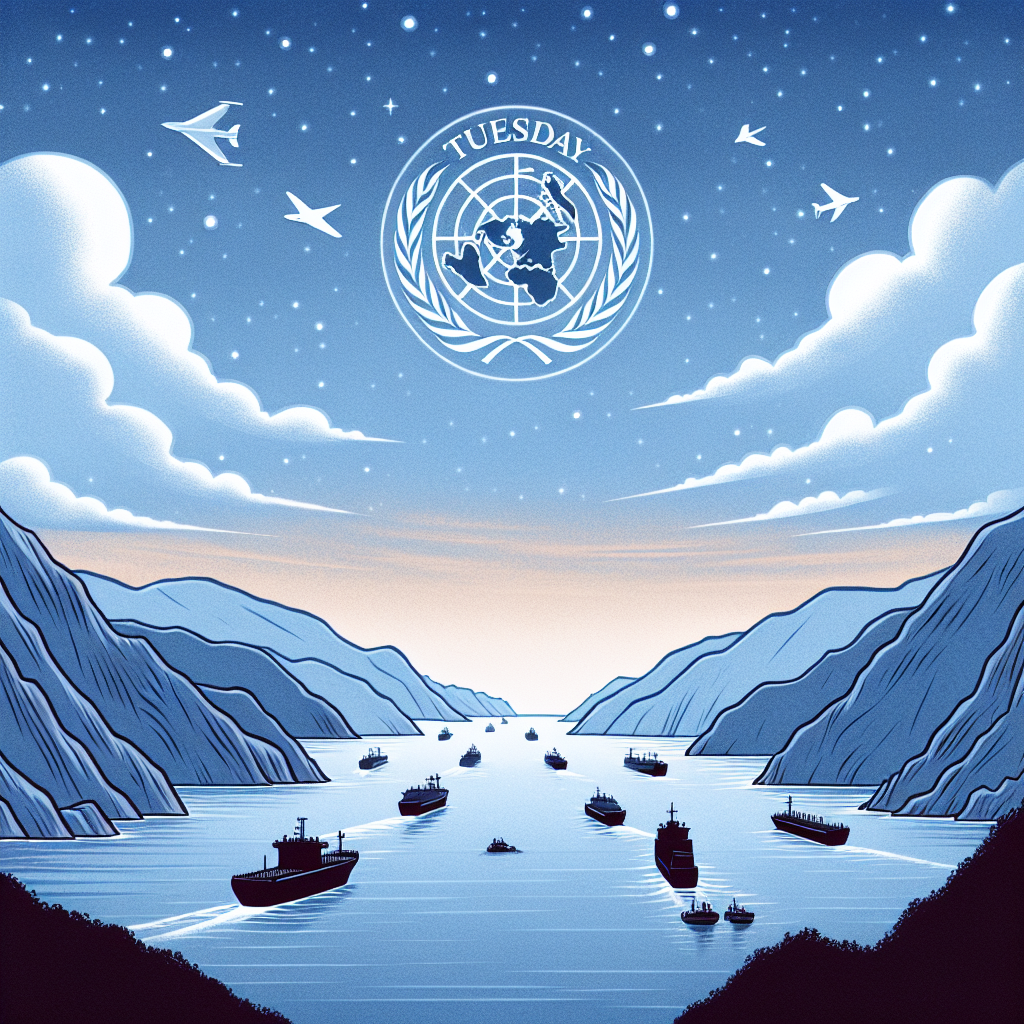
On Tuesday, March 24, Iran officially notified the United Nations Security Council (UNSC) and the International Maritime Organization (IMO) that “non-hostile ships” would be allowed to pass through the Strait of Hormuz under coordination with Iranian authorities. Previously, Iran had threatened to block this vital international waterway for energy transport, causing global economic turmoil.
According to reports from Reuters, the Financial Times, and other media outlets, Iran has issued a letter to international organizations stating that “non-hostile vessels” can transit the Strait of Hormuz under coordination with Iranian authorities.
Iran stated that “non-hostile ships, including those belonging to other countries or related to them, as long as they do not participate in or support aggression against Iran, and fully comply with the announced safety regulations, will be allowed to safely pass through the Strait of Hormuz in coordination with Iranian authorities.”
Iran also emphasized that any ships, equipment, assets belonging to the United States or Israel, and other ships involved in aggressive actions, do not qualify for safe passage through the strait.
The Strait of Hormuz is a crucial energy supply route, responsible for transporting about one-fifth of the world’s oil and liquefied natural gas. Since the outbreak of conflict on February 28, the waterway has been mostly closed.
Shipping data shows that approximately 3,200 vessels are currently trapped in the Gulf as they are unwilling to risk passing through the narrow 21-mile wide strait.
Since the conflict erupted, at least 22 ships have been attacked by Iran. According to Lloyd’s List Intelligence and a source, some ships have paid up to $2 million to Iran to ensure safe passage through the Gulf.
S.V. Anchan, CEO of the American Safesea Group, told the Financial Times, “All governments should step in and try to help resolve this situation.”
The company’s vessel Safesea Vishnu was attacked on March 11 and is currently deemed “irreparable.”
While Iran has proposed new rules for passage through the strait, diplomatic efforts on the international front have not ceased.
According to foreign reports, the United States and Israel have granted a temporary diplomatic waiver to Iranian Foreign Minister Abbas Araghchi and Speaker of Parliament Mohammad Baqer Qalibaf for five days to facilitate negotiations. The Trump administration has submitted a plan to Iran containing 15 demands, including dismantling nuclear facilities, ceasing ballistic missile development, and reopening the Strait of Hormuz in exchange for sanctions relief.
Meanwhile, the Pentagon is deploying thousands of elite soldiers from the 82nd Airborne Division to the Middle East to prepare for potential actions following a breakdown in negotiations.