
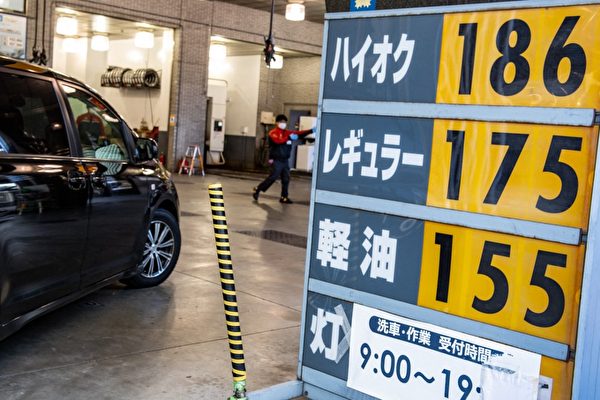
Since the outbreak of the Iran war, many countries that rely on oil supplies from Middle Eastern countries have been fiercely competing for resources. Additionally, Gulf countries reducing production due to war risks have led to a shortage in oil supply, causing oil prices to skyrocket, especially with the benchmark Dubai crude oil prices in Asia witnessing a significant surge.
According to a report by the Nikkei Asian Review on March 21, the Japanese government and private sector only have enough oil reserves to last for 254 days. Looking ahead, Japan must increase its oil procurement from regions outside the Middle East, such as the United States, Central America, and South America.
During the U.S.-Japan summit on Thursday, March 19, both sides agreed to cooperate in building the infrastructure needed to increase U.S. crude oil production. Japanese Prime Minister Sanae Takai stated post-meeting that by diversifying procurement sources, Japan and Asia can achieve stability in energy supply.
On Thursday, the spot price of Dubai benchmark crude oil surged to $169.8 per barrel, an increase of $17.9 from the previous day, marking a 12% rise. This price surge is 2.4 times higher than the $70.7 per barrel price before the U.S. bombing of Iran on February 27 and is the highest level recorded since 1986.
Simultaneously, European benchmark Brent crude oil futures and U.S. benchmark West Texas Intermediate crude oil futures have also increased by around 50% since the outbreak of the war. The price gap between Dubai crude oil and U.S. and European benchmark crude oils has widened to $60 to $70 per barrel.
Japan imports over 90% of its crude oil from the Middle East, while South Korea’s import ratio stands at 70%. Asian countries importing oil from the Middle East have refineries and other supply chain facilities established based on long-term oil supply contracts with the Middle East, making it challenging to suddenly switch to purchasing cheaper European or American crude oil. Thus, they are forced to compete for Middle Eastern oil supplies, resulting in the surge in oil prices.
The latest data from Japan’s Agency for Natural Resources and Energy (ANRE) shows that as of Monday, the retail price of regular gasoline stands at 190.8 yen per liter (approximately $1.20), reaching a historic high. On Thursday, the Japanese government reinstated subsidies for gasoline prices exceeding 170 yen per liter.
It is reported that the surge in Middle East oil prices typically takes one to two weeks to reflect in retail prices. By then, the Japanese government may face a heavier burden of oil price subsidies. Nomura Securities analysis suggests that if the price of Dubai crude oil rises to $200 per barrel, retail gasoline prices will increase to 294 yen per liter. This would lead to the Japanese government subsidizing a total of 37 billion yen daily and nearly 1.1 trillion yen in total for a month.
Citing data from the European research firm Kpler, the report mentioned that as of Friday morning Japan time, a total of 16.9 million barrels of Middle East crude oil were being transported to Japan by 10 oil tankers. The final oil tanker, the “Olympic Leopard,” carrying 1.2 million barrels of crude oil, is expected to arrive by April 6. Additionally, five oil tankers originally intended for Japan are currently stranded in the region due to war-related reasons.