
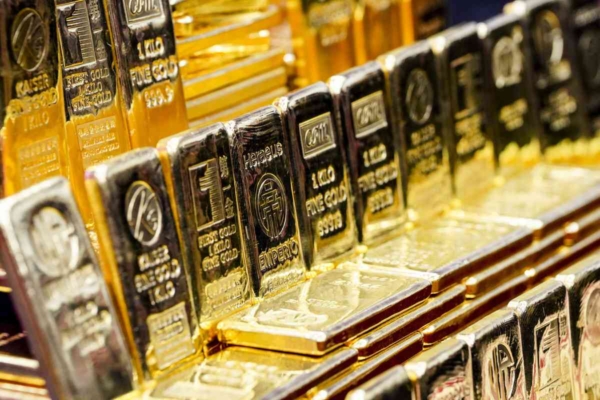
The ongoing conflict between the United States, Israel, and Iran has disrupted global oil flow, damaged energy infrastructure, and raised concerns about the prolongation of the conflict. Surprisingly, the price of gold, usually considered a safe-haven asset, continued to decline on Friday, March 20th, marking its worst weekly performance in over forty years. So, what exactly is happening?
This week witnessed an 11% drop in gold prices, marking the largest weekly decline since 1983. Since the outbreak of the Iran war, gold prices have fallen by over 14%.
Furthermore, the performance of gold this month is likely to be its worst since October 2008.
Silver futures prices fell by over 2% on Friday to $69.66 per ounce, hitting the lowest closing price since December last year. Silver prices have been on a downward trend for the third consecutive week, plummeting by over 14%.
According to CNN, during turbulent times, investors often buy gold as a hedge, betting that it will retain its value in the face of soaring inflation, currency devaluation, or crisis outbreaks. However, the surge in energy prices due to the Middle East conflict has led central banks worldwide to reassess interest rate prospects, significantly impacting the gold market. The turmoil has also triggered a rebound in the US dollar, prompting investors to reassess their asset allocations.
The volatility in the oil market, following the military actions by the United States and Israel against Iran, continues to influence global investor sentiment. On Friday, oil prices briefly surged above $112 per barrel.
The trend of the US dollar is a key factor affecting gold prices. Since the outbreak of the Iran war, the US dollar index has risen by nearly 2%, ending a months-long downward trend. The dollar’s rally may be undermining the appeal of gold.
A stronger dollar makes gold priced in dollars relatively more expensive for international investors; conversely, gold often benefits when the dollar weakens because it becomes relatively cheaper for global investors.
Traders in the market are concerned that this war may have an impact on the global economy. The demand for safe-haven assets, concerns about inflation, and expectations of rising interest rates have boosted the US dollar.
In the months leading up to the outbreak of the war, gold prices saw significant gains, but this momentum seems to be fading now. Investors may also be selling off gold to offset losses in other assets.
ING strategists pointed out in a report that the upward momentum in gold prices has weakened. Some investors are selling gold to raise cash or rebalance their investment portfolios.
In 2025, gold prices rose by 64%, marking the best annual performance since 1979. In January this year, the price of gold surpassed $5000 per ounce for the first time. However, this momentum may be waning… at least for now. On Friday, gold prices fell below $4500 per ounce, erasing the gains of the past two months.
CNN mentioned that many strategists still have a positive outlook on the future of gold. The waning momentum of the US dollar rally and ongoing geopolitical uncertainties are factors that play a role. Wall Street veteran analyst Ed Yardeni still maintains his year-end gold price target at $6000. However, Yardeni also indicated in a report that if gold prices continue to defy their predictions and fail to rise due to geopolitical tensions, rising inflation, and increasing US government debt, they may consider revising the year-end target down to $5000.
Arthur Parish, a metal and mining stock analyst at SP Angel, stated on CNBC’s “Squawk Box Europe” on Friday, before the US and Israel’s war with Iran on February 28, gold prices surged continuously. Following the outbreak of the war, prices experienced significant fluctuations.
Parish pointed out that during the gold bull market of 2025, “a large number of retail investors flooded the market, including many systematic hedge funds and individual investors.”
“Since the outbreak of the Russia-Ukraine war and the freezing of Russian assets, you have seen central banks of various countries starting to accumulate gold massively. I believe it was central banks that drove the first wave of the long gold bull market over the years, followed by short-term speculators and retail investors entering the market to profit from this momentum. They are now exiting this market, but this is likely what gold needs for the next wave of upward movement to follow.”