
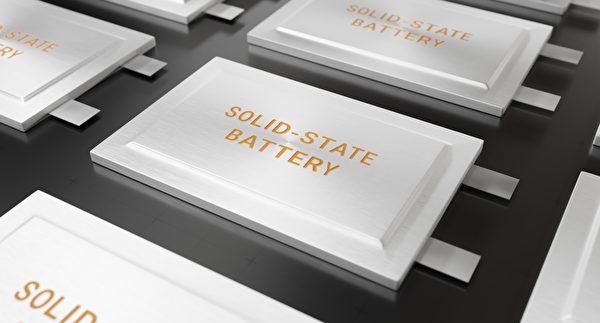
In recent years, solid-state battery technology has become increasingly popular globally, with manufacturers in China also actively releasing technological advancements. However, several industry experts have pointed out that the commercialization of solid-state batteries still faces various engineering challenges and technological bottlenecks. Wei Jianjun, Chairman of Great Wall Motors, stated on Wednesday, March 18th, that it will take at least five years for solid-state batteries to be implemented in vehicles.
Wei Jianjun, Chairman of Great Wall Motors in China, expressed through a video that the practical application of solid-state batteries in vehicles will require a minimum of five more years. Currently, Great Wall Motors is still conducting technical verifications of the technology and has not yet entered the stage of preparing for mass production.
He emphasized that as cutting-edge technology, the commercialization of solid-state batteries still faces numerous engineering challenges and technological bottlenecks, advising the industry to avoid excessive speculation and deification.
Solid-state batteries, known for their high energy density, intrinsic safety, and fast charging capabilities, are considered revolutionary technology for electric vehicles, often hailed as the “ultimate battery technology” in the field of new energy. They utilize solid-state electrolytes instead of traditional liquid electrolytes, addressing concerns regarding the range of electric vehicles and the safety risks associated with flammability. Solid-state batteries can be classified into two categories based on the content of solid electrolytes: semi-solid (liquid content > 5%-10%) and full solid (no liquid).
Previously, Wei Jianjun has criticized irregularities in the Chinese electric vehicle industry, such as zero-kilometer second-hand cars, falsification by car manufacturers, lack of core technology, and other concerns.
Not only Wei Jianjun, but Ouyang Minggao, academician of the Chinese Academy of Sciences and professor at Tsinghua University, has also cast doubt on China’s solid-state battery technology.
During a media briefing at the 2026 Intelligent Electric Vehicle Development Forum last Friday (March 13), Ouyang Minggao, an academician of the Chinese Academy of Sciences and professor at Tsinghua University, stated that it would be possible to achieve a full solid-state battery loading verification of 300-350Wh/kg within three to five years (usually requiring an additional one to three years for commercialization) and urged caution in promoting industrialization without rushing.
Ouyang Minggao also raised concerns about the common practice in China of directly translating academic discoveries into recent product releases. He highlighted that research papers often emphasize the best performance achievable by the technology, while products depend on their weakest links.
The Shanghai Securities News reported in November 2025 that this year, multiple companies like EVE Energy and Guoxuan High-Tech have entered the trial phase of solid-state batteries, with bidding and construction of trial lines showing a strong momentum. However, the industry currently faces multiple technical challenges and cost thresholds in materials, processes, and equipment.
In October 2025, Xingwanda announced the polymer full solid-state battery “Xin Bixiao,” which achieved an energy density exceeding 400Wh/kg and unveiled plans to invest in a 0.2GWh trial production line. As early as May 2024, Guoxuan High-Tech had already released the “Jinshi Battery,” claiming a 350Wh/kg energy density using full solid-state technology, surpassing mainstream lithium-ion batteries by over 40%.
Furthermore, Ouyang Minggao cautioned that the number of patents does not necessarily equate to the level of technological mastery, noting that Japanese and Korean companies led by Toyota have deeper patent reserves in basic material and sulfide electrolyte chemistry fields.
The Lithium Battery Enterprise Xingwanda’s Vice President Liang Rui expressed views on the commercialization of solid-state batteries in an article published in the China Automotive News in November 2025. Liang Rui stated: The most optimistic scenario is that small-scale production may be possible after 2030, but it is not feasible to massively replace liquid lithium batteries. The current readiness of full solid-state battery technology and industrial conditions does not appear to be fully mature yet, and there seems to be premature publicity surrounding the implementation of solid-state batteries. The current hype around solid-state batteries may be attributed to the industry’s technological advancements, but also to internal competition, profit-driven motives, and various speculative actions.
After researching the latest developments in solid-state battery technology online, it is evident that Chinese manufacturers are notably lagging behind their foreign counterparts.
On October 7, 2025, Toyota announced that solid-state batteries had officially received production approval in Japan, with mass production scheduled to start in 2026 and deployment in Lexus flagship models by 2027, achieving a breakthrough of “10-minute charging, 1200km range.”
On September 9, 2025, Mercedes-Benz announced the successful real-world long-distance road test of the pure electric EQS equipped with solid-state batteries. The test vehicle embarked on a journey from Germany through Denmark, ultimately reaching Sweden, traversing various climate conditions and complex road situations, with a range exceeding 1200 kilometers. Markus Schäfer, Chief Technology Officer of Mercedes-Benz, deemed it a “groundbreaking achievement.”
Ningde Times and BYD, two major Chinese battery manufacturers, are noticeably falling behind in progress. During the 2nd China Full Solid-State Battery Innovation Development Summit in February 2025, CTO Sun Huajun of BYD Lithium Battery Co., Ltd. mentioned that BYD plans to commence large-scale demonstration vehicle applications utilizing full solid-state batteries around 2027 and achieve mass implementation post-2030.
In May 2025, Ningde Times stated on its “Interactive Easy” platform in response to investor inquiries that small-scale production of full solid-state batteries may be possible by 2027.
The internal structure of traditional liquid lithium batteries mainly consists of four components: positive electrode material, negative electrode material, electrolyte, and separator. The working principle of solid-state batteries is similar to liquid batteries, with the primary distinction being the solid-state electrolyte instead of a liquid one, which also serves as an isolating function, eliminating the need for a separator.
With the promotion of electric vehicles, the drawbacks of traditional lithium batteries in terms of range, charging speed, and flammability have become increasingly pronounced. Compared to traditional liquid lithium batteries, solid-state batteries offer significant advantages in terms of high safety standards, energy density, longevity, and rapid charging capabilities. They replace liquid electrolytes with solid-state electrolytes, eliminating fire hazards (non-flammable and leak-proof).