
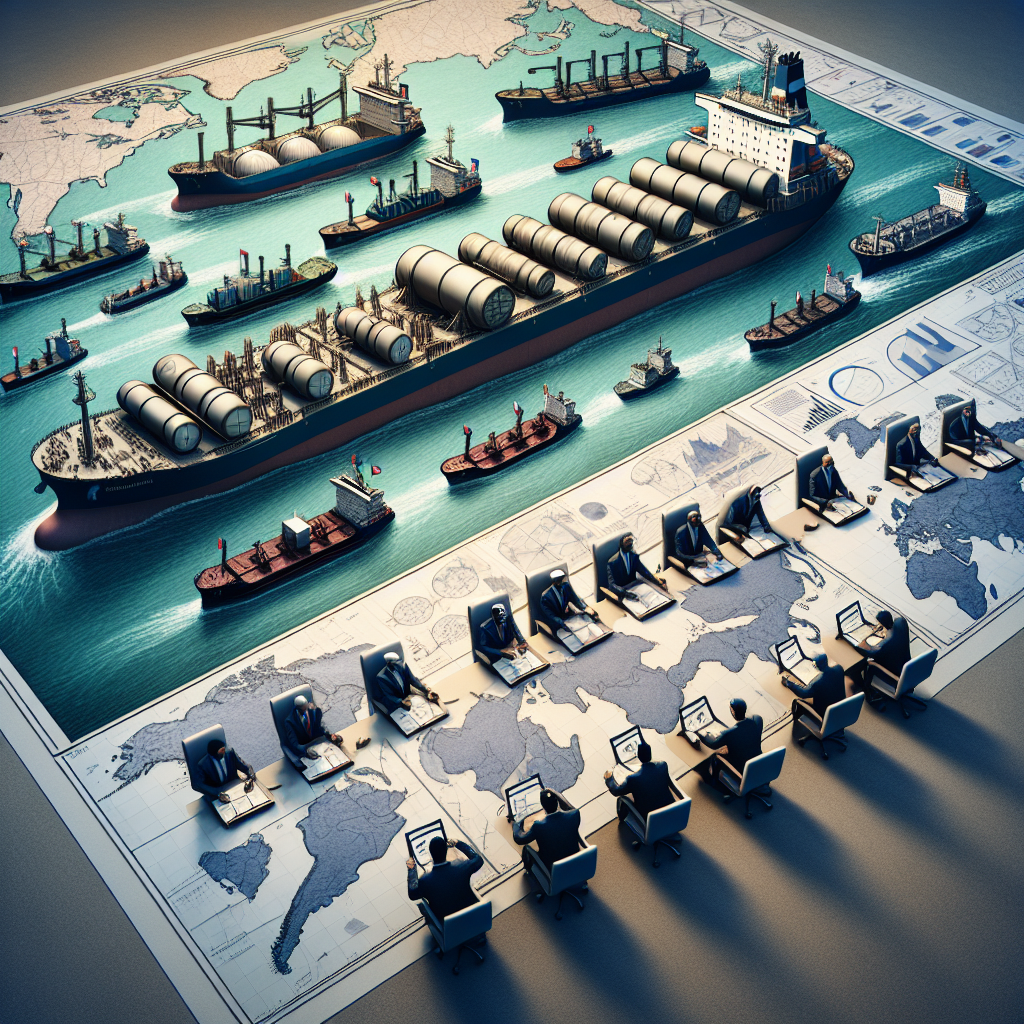
After Iran closed the essential Strait of Hormuz, which accounts for 20% of global oil and natural gas exports, the global energy market has been in turmoil. The closure has prompted concerns and discussions on the need for countries to work together to ensure the security and patrol of the strait. In an effort to urge Beijing to assist in reopening the strait, US President Trump has indicated that he may postpone the summit with Xi Jinping at the end of this month.
Trump mentioned during his return flight from Florida to Washington on Sunday that he has “requested” about seven countries highly dependent on Middle Eastern oil to join a coalition responsible for patrolling and securing the Strait of Hormuz.
The strait, which carries one-fifth of the world’s oil supply, may not be vital for the United States but is crucial for other countries, especially considering that China’s oil shipments rely on it to the extent of about 90%.
In an interview with the Financial Times on March 15, Trump issued a warning that the summit with Xi Jinping at the end of this month might be delayed due to his push for Beijing to assist in resolving the issue of the Strait of Hormuz.
“We want to know the results before the (Xi Jinping) summit. We may postpone,” Trump said, without specifying how long the postponement might be.
The day before, Trump specifically named China, France, Japan, South Korea, and the UK among the countries called upon to participate in safeguarding the Strait of Hormuz.
According to the White House’s previously announced itinerary, Trump is scheduled to visit China from March 31 to April 2 and meet with Xi Jinping.
Meanwhile, the US Secretary of Treasury, Steven Mnuchin, was in Paris meeting with Chinese officials to discuss the plans for the Trump-Xi summit scheduled to take place in Beijing at the end of March. Beijing has not shown a willingness to postpone the “Trump-Xi summit.”
Iran, a longstanding ally of China and a major oil supplier to the country, complicates matters for China in this situation. Analysts believe that Trump’s pressure on China to participate in safeguarding the Strait of Hormuz puts China in a difficult position.
Expert Wang He on China issues told Epoch Times that Trump is exerting pressure on China to involve them in the operation to open the Strait of Hormuz, aiming to force China to change its perspective on the Iran conflict. While China and the US have significant disagreements concerning Iran, they should have common interests regarding the security of the Strait of Hormuz. The current diplomatic tensions have made the uncertainty of the summit very high.
Wang He believes that China does not actually want Trump to visit China so quickly due to recently significant challenges, such as the Iran conflict and the exposure by the US Air Force University’s China Aerospace Studies Institute of China’s nuclear weapon operations. However, Xi Jinping is facing severe internal struggles and needs to maintain stable relations with the US as a significant political achievement, thus hoping for Trump’s visit. “It is currently in a dilemma, and Trump sees it clearly,” he said.
Sun Guoxiang, a Professor at Nanhua University in Taiwan, mentioned that the changing situation in the Middle East has shifted Trump’s diplomatic priorities. The most urgent matter for the US now is not just the symbolic summit with Xi Jinping but the issue of the Strait of Hormuz’s operability. Trump is using the postponement of the visit as a negotiation tactic against Beijing, indicating he does not want to give Xi Jinping a diplomatic stage without Beijing clearly expressing its stance on the Iran issue.
Sun Guoxiang believes that the US should also pay particular attention to the potential results of the summit with China. If there are not expected to be sufficient outcomes, a delay instead of a forced meeting would be more in line with Trump’s political interests.
Zhong Zidong, a researcher at the Taiwan Institute of National Defense and Security Studies, says that Trump’s desire for China to send a fleet to maintain freedom of navigation in the Strait of Hormuz may be wishful thinking, given the starkly different stances of the US and China on the US-Iran conflict. Additionally, China is also looking forward to the summit with the US.
He believes that Trump plans to use the visit to China as a means to demand that China send troops to the Strait of Hormuz, anticipating a deadlock in negotiations during the visit.
Zhong Zidong also stated that China may be banking on the hope that as the US-Iran conflict prolongs, it will lead to the weakening of US power. However, with Trump openly requesting China to send a fleet to maintain freedom of navigation in the Strait of Hormuz, failure to receive a response could become a focal point for the Trump administration to address areas such as Chinese assistance to Iran in terms of weapons, intelligence, and economy.