
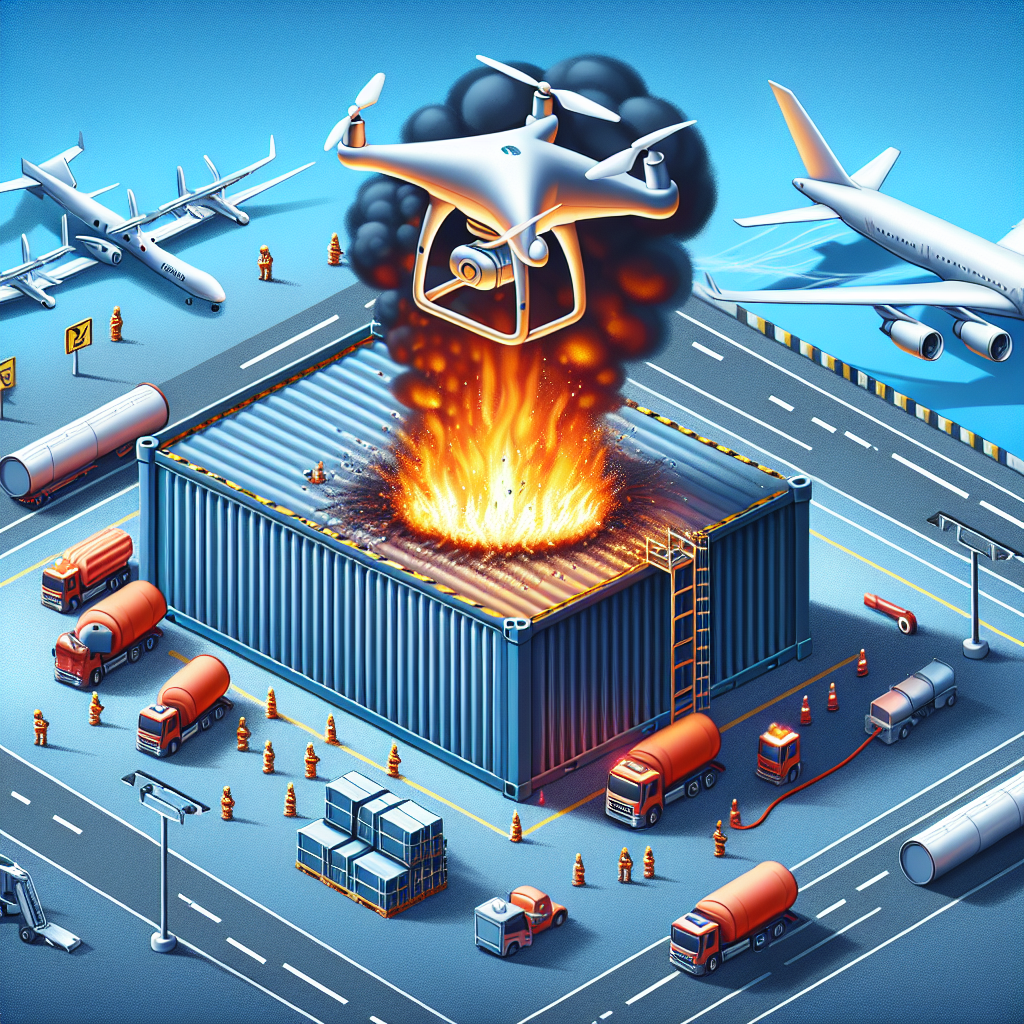
On Monday (March 16), there was a drone attack at Dubai International Airport (DXB) which caused a fire at a fuel facility near the airport and resulted in flight suspensions. Dubai Media Office confirmed that a drone hit a fuel storage tank near the airport, sparking a fire. However, the firefighting teams quickly brought the situation under control, and fortunately, there were no casualties reported at the scene.
Dubai Airport is one of the busiest international aviation hubs globally, and the Dubai Civil Aviation Authority emphasized that the flight suspensions were a precautionary measure. Following the incident, Emirates, the largest airline in the Middle East, announced the temporary suspension of flights to and from Dubai. Passengers were advised to avoid the airport until further notice.
Due to the disruption, some inbound flights were redirected to Al Maktoum International Airport (DWC) in the south after circling the airport perimeter for a period.
This is the third attack incident at Dubai Airport since the regional conflict escalated on February 28. Reports show that during this period, the Gulf nation has faced over 2,000 missile and drone attacks, with targets expanding from military bases to airports, hotels, ports, and civilian residences.
Iran has claimed that the UAE allows the United States to use its territory to attack Iran, leading to them designating related infrastructure as “legitimate targets.” However, the UAE authorities have refuted these allegations as misleading, asserting that their actions are purely defensive in nature.
In addition to targeting civilian facilities, Iran has also attacked commercial ships and oil tankers in the Persian Gulf, as well as blocked the vital international energy transit route, the Strait of Hormuz.
The disruptions in the waterway have contributed to the continuous rise in global fuel prices. In response, the Japanese government started releasing a total of 80 million barrels of oil reserves on Monday to alleviate concerns over supply shortages.
Regarding the threat posed by Iran to global shipping, US President Trump expressed on social media that maintaining the openness and security of the Strait of Hormuz is in the common interest of many countries. He stated, “Numerous countries, particularly those affected by Iran’s attempts to close the strait, will work with the US to deploy warships to ensure the strait’s openness and security.”
While some allies are considering related actions, no formal decisions have been made yet on sending warships.
Discussing the issue of negotiations with Iran, Trump revealed to the media aboard Air Force One that although Iran may not be ready to return to the negotiating table now, they are “very close.” He reiterated, “No nuclear weapons is the starting point for negotiations. Beyond that, we will demand more.”