
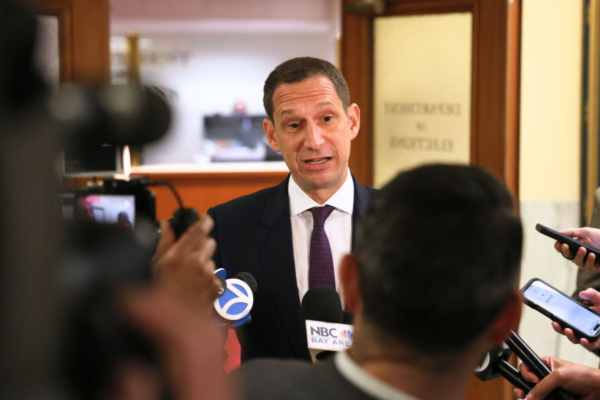
On March 11th, San Francisco Mayor Daniel Lurie submitted Notices of Intent to the Department of Elections to push for three amendments to San Francisco’s Charter. Mayor Lurie expressed that this initiative is to fulfill his campaign promise of accountability and reforming the “corrupt system” in San Francisco. He emphasized the need to establish a city hall and government that truly serve the ordinary citizens of San Francisco, moving away from a system that has only served internal interests and fostered corruption.
The reform campaign team immediately began the process of collecting signatures to ensure that there are enough to include the proposed amendments on the ballot for the general election on November 3, 2026. The team aims to reduce political interference, enhance government efficiency, and reform the public referendum system criticized for being “disordered and having low thresholds.”
The current San Francisco Charter exceeds 500 pages, making it one of the longest city charters in major U.S. cities according to the campaign team. They believe that the excessive details in the charter have led to operational rigidity, bureaucratic delays, complicated approvals, nurtured corruption, and weakened administrative accountability.
Last week, Mayor Lurie and Board of Supervisors President Rafael Mandelman jointly wrote to the City Controller Greg Wagner outlining the proposed Charter amendments. These suggestions were made after gathering extensive feedback from the Charter Reform Working Group and residents citywide.
Mandelman noted that over time, the content of the Charter has become increasingly complex, hindering the city government’s ability to respond to residents’ needs. The proposed reforms seek to modernize government operations, enhance accountability, and maintain robust checks and balances.
One significant reform involves changing the mayor’s authority to appoint and dismiss department heads within the city government.
Mayor Lurie pointed out that currently, many San Francisco residents are unaware that the mayor can directly appoint only about 6% of department heads. He highlighted the need for a more flexible and efficient government that can act swiftly if a department head fails to perform adequately.
Furthermore, the amendments allow the mayor and Board of Supervisors to remove commissioners appointed by themselves. If approved, most department heads would report directly to the mayor, who could then appoint or dismiss the majority of department heads under their supervision. The amendments also enable the mayor to appoint a deputy mayor and delegate some oversight responsibilities to streamline city department management.
Mayor Lurie reiterated that these reforms are not just for himself but for future mayors as well. Another reform focuses on the city’s contract approval system, aiming to unify the procurement processes across various departments, simplify contract approval procedures, and increase the dollar thresholds requiring approval by the Board of Supervisors.
The third reform tackles San Francisco’s public ballot proposition system, which allows a minority of council members or the mayor to unilaterally place proposals on the ballot, resulting in voters facing numerous complex and competing proposals. Mayor Lurie proposed changes such as increasing the number of council members needed to propose initiatives, canceling the mayor’s unilateral authority to put forward proposals for voting, and raising the signature requirements for public ballot propositions.
Critics have raised concerns that these reforms could expand mayoral powers and weaken oversight mechanisms. They fear that raising proposal thresholds might make it harder for ordinary people to bring issues to the ballot, thus making it easier for well-funded groups to influence politics. Additionally, some believe that concentrating more personnel powers in the hands of the mayor could diminish the supervisory role of independent commissions.
Mayor Lurie emphasized that the goal of the reforms is to align San Francisco’s system with other cities in California and not to diminish democratic participation. He stressed that the previous practices had fueled division and allowed poorly designed proposals to appear on the ballot frequently, requiring reform.
If approved by the voters, the changes could lead to government contract savings, more concise future ballots, and increased collaboration between the mayor and the Board of Supervisors. Mayor Lurie acknowledged that some changes may take one to two years to take effect.
These proposals are currently undergoing the process of collecting sufficient voter signatures before officially being included on the November 2026 ballot.