
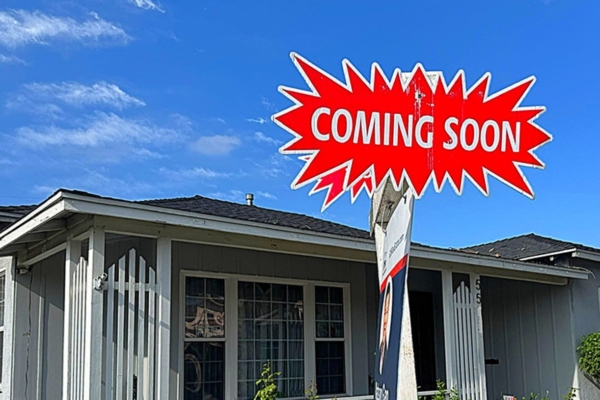
As winter transitions to spring, the first quarter of 2026 is coming to an end, how is the real estate market in Southern California faring?
Edmund Lin, a real estate broker and host of a Youtube program, “Real Estate Brother,” mentioned in a recent interview with Dajiyuan, “Last year houses were hardly selling, especially the high-priced ones. This year there is a softening trend, although it’s too early to say the market is fully open, we can see some signs of recovery.”
Reflecting on the differences between last year and this year’s real estate market, Lin pointed out that in the past, properties in Southern California would typically sell within one or two months of being listed, but last year it took about three months or even longer to make a sale. He noted that many real estate agents failed to close deals, with most seeing a decline in business volume by half or even up to 70%.
Last year, the Federal Reserve cut interest rates three times, slightly improving the purchasing power of buyers. Though interest rates fluctuated slightly, most of the time they remained above 6%. By mid-March this year, 30-year mortgage rates climbed back above 6%, leading to a slight drop in housing prices in some cities in Southern California.
According to Lin’s observations, despite layoffs at many big companies last year, there are still many buyers with money. However, having money doesn’t always mean they will make a purchase. Some are waiting for interest rates to drop a bit before entering the market, while others prefer to wait for prices to lower. This hesitation from buyers might be one of the reasons for the market’s standstill.
Moreover, the period from the end of the year to the beginning of spring is typically a slow season for the housing market. Lin mentioned that towards the end of last year, some agents reported that during open house viewings, only one or two groups of people showed up for an entire day, while sometimes there would be no buyers in sight for two days. However, this year, the Los Angeles housing market has shown signs of warming up, with over twenty people visiting one of Lin’s properties in Hollywood during an open house.
After the Chinese New Year, there was an increase in buyers looking at properties, giving a sense of market revival. Despite this, Lin believes it might be an illusion, as real estate transaction statistics in major corporations usually show a decrease in transactions from January to March.
In his analysis, many buyers are still in a wait-and-see mode, expecting interest rates to drop after the new Federal Reserve chair takes office in mid-May. This mentality has slowed down the market’s revival.
Buyer’s reluctance might also be influenced by the recent Iran conflict. Lin mentioned that while the US-Iran conflict initially impacted oil prices, people’s expectations of inflation might also be changing. Some buyers are hesitant to make a move, fearing that the uncertain situation might cause a drop in housing prices.
Regarding the attitude of potential buyers who are waiting on the sidelines, Lin stressed that buying a house requires a steady mindset. While many wish to “spend the least money to buy the best house,” the real estate market is a complex playing field with various factors to consider.
Lin used mortgage interest rates as an example. Many people hope to wait for lower rates or save more money before entering the market, but by then, housing prices could have risen significantly. He believes that it’s better to buy early: “Combatting larger market increases with limited salary growth, it’s better to buy sooner.”
On the flip side, he mentioned that currently it’s a buyer’s market, giving buyers the upper hand during negotiations. “You have more power to negotiate prices and even get the seller to repair parts of the house. In a seller’s market, who will repair things for you?” Lin explained, hinting at potential bidding wars in a seller’s market.
Concerns have also been raised about potential layoffs in the high-tech industry in the coming years, affecting housing prices and potentially causing a collapse in the housing market. Lin, however, believes that although the market will experience fluctuations, California has unique circumstances of its own.
He highlighted the shortage of housing in California over the past decade, with the millennial generation entering the workforce in large numbers, creating a demand for homeownership. In Southern California, available land for new construction is becoming scarcer. Some cities are considering converting old supermarkets into low-income housing and increasing housing density, while others permit homeowners to build ADUs (Accessory Dwelling Units) to address the housing shortage.
Considering these various factors, Lin believes that if a family’s financial situation improves and there is extra money for investment, now might be a good time to enter the market. However, he advises prospective buyers, especially those with a pressing need, to thoroughly understand the market and seek the guidance of a good agent to navigate the direction.
This article represents the views of the interviewee and serves as informational reference only. Dajiyuan does not provide investment, tax, legal, real estate planning advice, or any other personalized financial recommendations, nor does it assume any investment responsibility.