
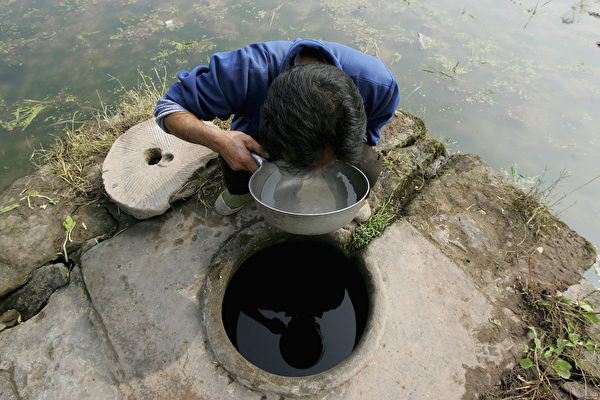
In Zhangjiakou City, Hebei Province, Xihao Lijing Community is home to tens of thousands of residents. One homeowner, Mr. Li, who received the keys to his house in 2015, only found out last November that the residents in the community have been drinking well water. He said, “No wonder there is so much scale and insect eggs. I’ve had to replace my water heaters twice and install a filter.”
On March 12, Mr. Li, a homeowner in Xihao Lijing Community in Zhangjiakou City, Hebei, voiced his hope to drink safe tap water as soon as possible. “Even in rural areas where tap water is available, the tens of thousands of residents in our community have been drinking well water for nearly ten years.” Currently, the community has over 3600 households and tens of thousands of residents.
Mr. Li received the keys to his house in 2015. Last November, while chatting with his neighbors, he learned that the residents were consuming well water. Disbelieving, he inquired at the property management company about which water company supplied the water. The staff mentioned that back when the area was undeveloped, they dug their own well water at a cost of 3.9 yuan per ton.
“No wonder there is so much scale and insect eggs. I’ve had to replace my water heaters twice and install a filter.” Concerned about water quality, Mr. Li had reported this matter to the district health committee, but the response he received was that the property had met water quality standards after double water treatment. However, he had yet to see any water quality test reports. He has raised the issue with various departments such as the Wanquan District Water Bureau and government offices, hoping to switch to tap water soon.
According to the report, staff from the property developer claim they are unsure of the well digging situation over a decade ago, as the company is currently in the final stages. Several employees from the property management company expressed that they were unaware of why tap water was not connected in the past and well water was used instead.
Staff from the Wanquan District government office mentioned that it should be possible to have tap water access this year, with the specific situation to be consulted with the district water department. Personnel from the Wanquan District Water Bureau indicated that the water supply company had commenced work earlier, and tap water is expected to be accessible by June this year.
When asked if well water supply met regulations, the aforementioned individuals mentioned that it could be considered illegal. The area used to fall under the jurisdiction of Qiaoxi District, and they were unaware of how the community was approved and accepted. Immediate closure is not feasible now, or else residents would be left without water.
After this incident gained attention on social media, the Wanquan District Comprehensive Administration and Law Enforcement Bureau reported on March 13 that the water supply capacity upgrade project for the area had already been initiated, with tap water access expected to be realized by the end of June. Since the community was established, professional organizations have been conducting annual water quality tests on well water, all of which have met national drinking water standards.
In fact, as early as June 2015, data from the “2014 China Environmental Status Bulletin” issued by the Chinese Ministry of Environmental Protection showed that nearly two-thirds of groundwater and one-third of surface water in China are not suitable for direct human contact.
In April 2016, a groundwater quality report released by the Chinese Ministry of Water Resources acknowledged that over 80% of monitored groundwater is heavily polluted, especially shallow groundwater in northern regions. These well waters, used as monitoring samples, are not suitable for drinking or domestic use.
At that time, reports from Oriental Daily indicated that the main pollutants in groundwater were “three nitrogens,” with some regions also suffering from heavy metal and toxic organic pollution. Among them, the most abundant are Category IV and Category V groundwater types that are unsuitable for drinking, totaling 691 and 994 respectively, together accounting for over 80%.