
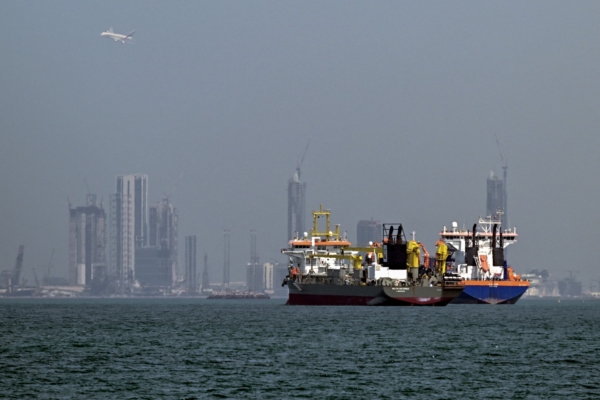
With the escalation of the Middle East conflict, the vital global energy artery of the Hormuz Strait is facing the imminent threat of blockade. However, the Chinese Communist Party (CCP) is continuing to acquire crude oil from Iran through a secret “backdoor” route via a gray trade channel, as revealed by industry insiders in Beijing. This clandestine energy route is said to lead to the Jask Port in southeastern Iran, bypassing international scrutiny.
A knowledgeable industry insider and scholar familiar with China-Iran oil trade, using the pseudonym Guo Shuqing, disclosed to journalists that “since the war between the U.S. and Iran, the Iranian crude oil arriving daily at ports in Shandong and Zhejiang has not been affected by the conflict.”
Guo emphasized that this was not a coincidence but a premeditated plan between the two parties: “Prior to the outbreak of war, Beijing had already secretly reached an agreement with senior Iranian officials on how to transport oil to China in case of a disruption through the easily blockaded Hormuz Strait. In reality, most of Iran’s exported oil ends up in the Chinese market.”
Before the U.S.-led coalition struck Iran, Guo revealed that the CCP’s foreign trade department had issued internal memos to its subordinate agencies. He said, “The instructions at that time required ‘preparedness on both fronts’: one to address the extreme situation of Iranian oil being intercepted, and the other to activate emergency plans by significantly increasing procurement quotas for Russian energy.”
Guo further disclosed that the Jask Port has become the lifeline of China-Iran energy trade: “It serves as Iran’s only lifeline outside the Hormuz Strait, where oil tankers loaded can sail directly into the Gulf of Oman, completely avoiding surveillance routes of the U.S. and its allies.”
According to the latest data from the international shipping monitoring organization, Kpler, since the conflict began, Iran has been exporting an average of 2.1 million barrels of crude oil daily, exceeding the pre-war daily average of 2 million barrels.
Guo Shuqing pointed out to journalists that a significant portion of these additional export quantities are flowing towards China through alternative routes, including the Jask Port. He stated, “Amid soaring global energy prices and numerous oil tankers taking evasive actions, only the ‘shadow fleet’ bound for China remains exceptionally active in the Gulf of Oman.”
Retired scholar Huang Lan, residing in Belgium under a pseudonym, conducted an in-depth analysis of the situation. She believed that the flow of these oil supplies was not a normal energy trade but a typical example of the CCP engaging in “political profiteering” and “taking advantage of chaos.”
Huang Lan expressed to reporters, “The continuous flow of oil to China is essentially the ‘war milk’ provided by the CCP to the authoritarian regime in Iran. While the international community attempts to contain expansion and aggression, Beijing is using the Jask Port as a ‘backdoor’ to deliver much-needed war funding to Tehran through gray trade.”
She further stated that the CCP not only seizes cheap resources amidst chaos and accumulates strategic reserves but also views Iran as a pawn to exhaust Western powers.
“Behind these 2.1 million barrels of oil hides Beijing’s ambition to establish an ‘axis of evil’ energy security network amid the turmoil in the Middle East. This behavior not only tramples on international justice but also exposes Beijing as the true beneficiary behind the scenes in this regional instability.”
An informant close to the CCP’s diplomatic system revealed that Beijing had been laying the groundwork for this contingency route several years ago. Under the China-Iran energy cooperation framework, the CCP mobilized funds and technology to promote the construction of a strategic oil pipeline stretching approximately 1000 kilometers from Goreh to Jask.
The informant disclosed, “Currently, a large volume of crude oil is bypassing the easily blockaded Hormuz Strait, directly shipping from the Gulf of Oman to Asia. This serves as the CCP’s ‘wartime backdoor’ reserved for extreme sanctions and potential conflicts.”
Indeed, this project is closely linked to the “China-Iran Comprehensive Cooperation Agreement” signed in 2021. Although the specifics of the agreement have always been deliberately concealed by both parties, numerous international media outlets have revealed that the framework involves an investment amounting to a staggering $400 billion. This massive investment deeply binds the interests of both parties, rendering Iran entirely subservient to the CCP on military and energy fronts.
According to recent maritime data tracking, since March 2026, a fleet of phantom-like “shadow ships” has appeared in the waters of the Gulf of Oman. These oil tankers employed by the CCP often deactivate their Automatic Identification Systems (AIS) when nearing the Jask Port, entering a “stealth” state, and masking the origin of oil through ship-to-ship transfers (STS) and other means.
A significant amount of whitewashed Iranian oil is evading international monitoring through this method, ultimately arriving at privately-owned refineries in Shandong and other regions. Some observers describe this as a “bloodied energy transfusion”: the CCP seizes cheap oil through warfare, while the enormous funds it pays continually transform into economic lifelines supporting Tehran’s authoritarian rule and regional military provocations.