
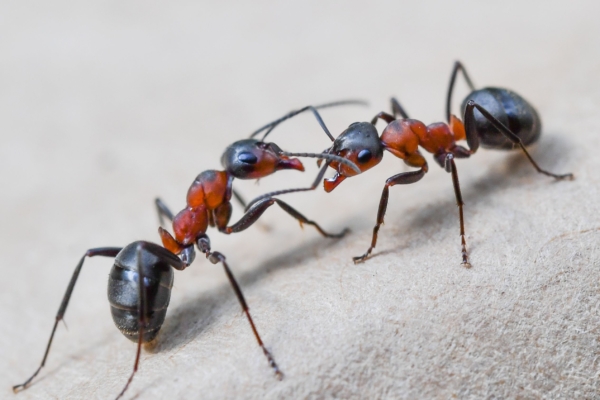
Kenyan authorities successfully intercepted a large-scale wildlife smuggling case at Jomo Kenyatta International Airport (JKIA) in the capital Nairobi this week. A 27-year-old Chinese man, Zhang Kequn, was arrested for attempting to illegally smuggle over 2,200 live “garden ants” in his luggage while preparing to depart for his home country.
On Wednesday, a state prosecutor informed the court that investigators found highly organized concealment methods in Zhang Kequn’s personal belongings the day before. Specifically, 1,948 ants were individually packed in professional test tubes, while around 300 ants were stuffed into three rolls of toilet paper in an attempt to evade detection.
The Kenya Wildlife Service (KWS) indicated that the seized ants included a significant number of “harvester ants” (scientific name: Messor cephalotes), crucial for maintaining soil health and biodiversity in ecosystems, and are strictly regulated under international biodiversity treaties.
Documents seen by Reuters on Thursday revealed that Zhang Kequn was a repeat offender. Immigration officials found an “interception order” on his passport, indicating that he had evaded arrest in Kenya last year for a similar smuggling case and reportedly used a different passport to leave the country. Prosecutor Allen Mulama pointed out in court that Zhang Kequn was the mastermind behind a transnational ant smuggling network busted last year.
According to the BBC, a landmark case in Kenya last May involved two Belgians, a Vietnamese, and a Kenyan who were sentenced to jail or hefty fines for smuggling thousands of ants. The defendants claimed to collect ants as a “hobby,” but investigations uncovered a lucrative market for exotic ants in Asia and Europe.
Ant enthusiasts are willing to pay high prices to purchase ant queens to establish transparent observation colonies called “formicariums,” as reported by Reuters. KWS official Duncan Juma stated that this case highlights a shift in biopiracy trends from traditional targets like ivory and rhino horns to less-known but ecologically critical microspecies.
The court has approved a five-day detention period for Zhang Kequn, during which law enforcement will conduct forensic examinations on his confiscated iPhone and MacBook. Additionally, similar ant parcels originating from Kenya were discovered in Bangkok on Tuesday, indicating that the smuggling network is still operational.
KWS has warned that as investigations expand to other collection sites, more individuals involved in the case are expected to be apprehended in the coming weeks.