
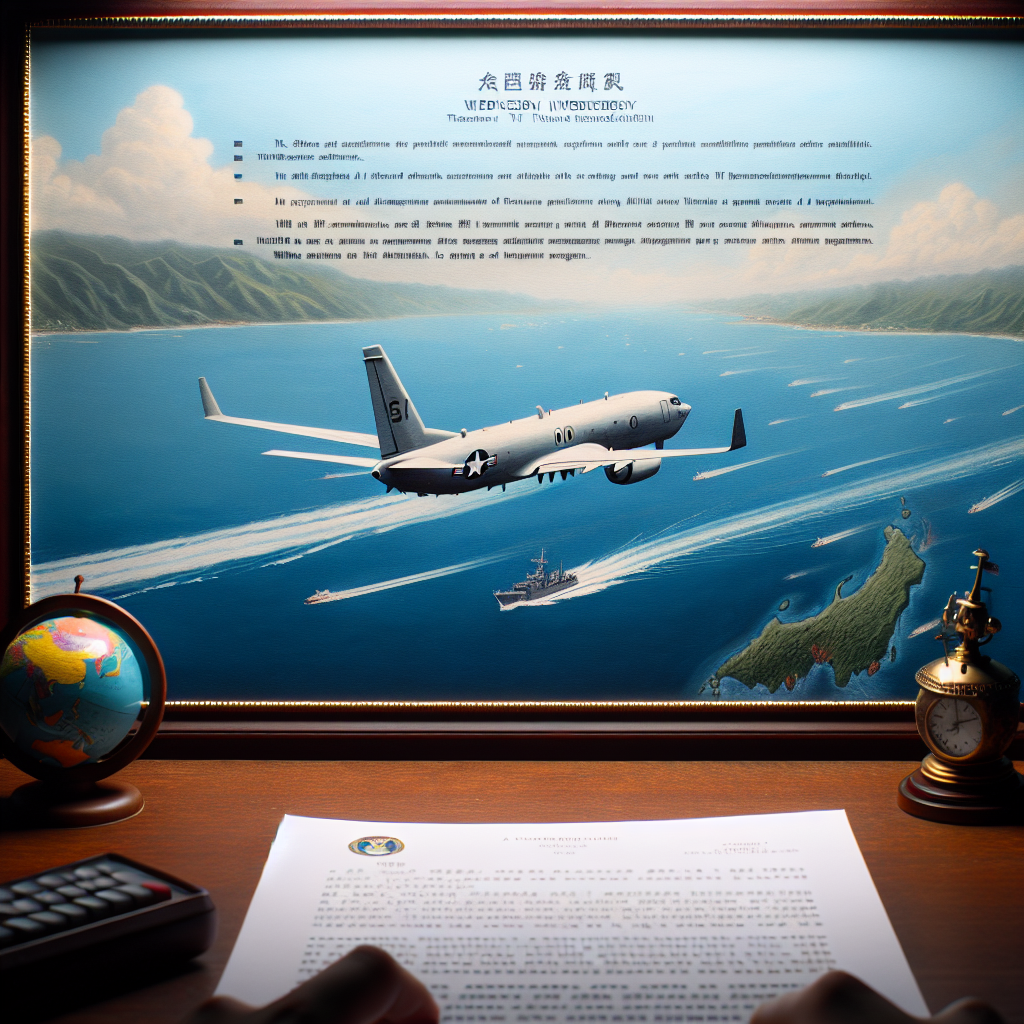
On Wednesday, March 11, a US Navy P-8A Poseidon anti-submarine patrol aircraft crossed the Taiwan Strait in international airspace.
The US Seventh Fleet issued a statement emphasizing that this mission demonstrated America’s commitment to a “free and open Indo-Pacific region,” and reiterated that the US military operates within the boundaries allowed by international law to uphold all nations’ rights to freedom of navigation.
“The US acts in the Taiwan Strait in accordance with international law, safeguarding all countries’ rights and freedoms of navigation,” the statement said. “The US military will fly, sail, and operate wherever international law permits.”
In response, Beijing immediately expressed strong dissatisfaction with the US military’s actions, with the Chinese Ministry of National Defense and the Taiwan Affairs Office reaffirming China’s jurisdiction over the Taiwan Strait, reiterating that the Taiwan issue is a “red line” that cannot be crossed in US-China relations.
At the same time, according to Reuters, there are reports citing knowledgeable diplomats and industry analysts that China is sending signals to Boeing, hinting that the finalization of a substantial aircraft order may depend on the US’s specific stance on Taiwan.
This military action comes as US President Trump plans to visit Beijing from March 31 to April 2.
Bloomberg reported that the core agenda of this visit is to negotiate a deal – China may potentially purchase up to 500 737 MAX aircraft and around 100 wide-body aircraft (787 and 777X) from Boeing. This deal is seen as a significant diplomatic success for Trump in balancing the US-China trade deficit and implementing his “America First” policy.
Despite both sides seeking stability in trade and technological restrictions, the US military’s actions in the Taiwan Strait reflect America’s dual-track strategy of “talk and fight”: promoting economic cooperation while not willing to compromise on territorial security and geopolitical principles.
While managing relations with China, Trump is concurrently leading military operations against Iran. As of March 10, “Operation Epic Fury” has entered its 11th day. US Secretary of Defense Pete Hegseth stated that the US military has targeted over 5,000 objectives, significantly reducing Iran’s missile and navy capabilities, including the destruction of more than 50 Iranian vessels.
Trump has openly warned that if Iran dares to disrupt oil shipments in the Hormuz Strait, the US will retaliate “20 times stronger.” Chinese Foreign Ministry spokesperson Guo Jiakun stated at a routine press conference on Wednesday that China “disagrees” with attacks on Gulf countries and condemns all indiscriminate attacks on civilians and non-military targets.
Analysis suggests that the dual US military presence in the Indo-Pacific and the Middle East aims to send a clear message to Beijing: the US retains the capability to maintain deterrence on multiple battlefields globally. For Beijing, the US’s resolute military strikes against Iran showcase the Trump administration’s decisiveness in the use of force, potentially heightening China’s concerns on the Taiwan Strait issue.
Additionally, Reuters’ latest analysis on Wednesday indicates that Beijing is intensifying its contacts with North Korea. With Sino-North Korean trade reaching a new high in six years, Beijing is reaffirming its influence over North Korea, which could serve as a crucial negotiating chip for China to counter US pressure during Trump’s meeting with Xi Jinping.