
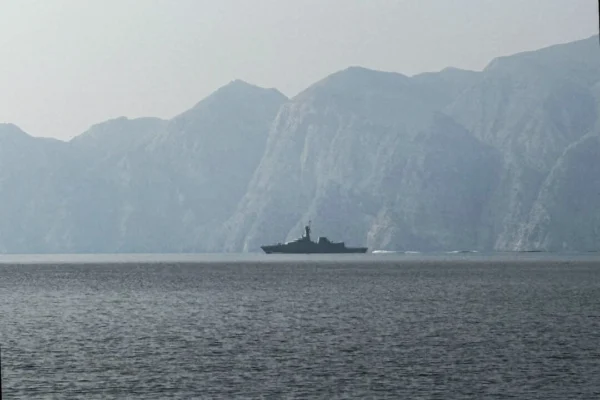
The military operations by the United States and Israel against Iran have entered the second week, resulting in a crisis in Iran that has paralyzed shipping in the Hormuz Strait and led to a global increase in oil prices. The continuous conflicts in Iran may prompt Asian energy buyers to seek alternative sources of liquefied natural gas (LNG), thereby increasing transit through the Panama Canal.
Both the United States and Israel have launched airstrikes against Iran, leading to Iran’s blockade of the Hormuz Strait. The Panama Canal Authority has been promoting the logistical capacity of the canal and planning to enhance the preparedness of the supply chain in light of the Iran crisis.
Dr. Ricaurte Vásquez, the director of the Panama Canal Authority, mentioned in an exclusive interview with Fox News Digital Channel that with the almost empty traffic in the past few days in the world’s busiest commercial route, the Hormuz Strait, the Panama Canal is anticipated to undergo improvements.
Vásquez also told Bloomberg that if the Middle East conflict continues, Asian countries may shift to U.S. LNG suppliers instead of Qatar. He further explained that U.S. shipping companies might utilize the Panama Canal to shorten their routes to Asia to offset the rising fuel costs.
“In the short term, the Asian market will have to seek alternative sources to replace the LNG imported from Qatar, depending on how long this conflict persists. We should benefit from it, and we have the capability to do so because we have enough waterways for vessels to transit,” he stated.
Predicting that the restrictions on passage through the Hormuz Strait will persist, Vásquez expects an increase in transit through the Panama Canal.
The conflicts in Iran have nearly halted shipping in the Hormuz Strait, causing the second-largest liquefied natural gas producer globally, Qatar, to cease production. Approximately 80% of Qatar’s LNG exports are destined for Asian markets, including India.
The Hormuz Strait typically sees the transit of around 20 to 21 million barrels of oil per day. Since last Friday, only four cargo ships have successfully passed through the strait, with one carrying corn.
The Panama Canal is an artificial waterway connecting the Pacific and Atlantic Oceans. It significantly shortens the voyage from the U.S. East Coast to Asia and is a crucial passageway for global trade and energy transportation.
Vásquez informed Bloomberg that the canal currently accommodates around 34 vessels daily and has the capacity to increase that to 38 vessels to meet the additional demands of LNG carriers. He also mentioned that the canal authority will initiate a $1.6 billion bid for a liquefied petroleum gas (LPG) pipeline project next month, set to be operational by 2031.
On February 23, the Panamanian government officially announced the Supreme Court’s decision to revoke the subsidiary of Hong Kong’s Hutchison Whampoa’s concession rights to operate Panama Canal’s two major strategic ports. Maersk and MSC will temporarily take over the operations of the two ports.
The Panama Maritime Authority (AMP) subsequently issued a decree to take control of all facilities at the two ports, including cranes, vehicles, computer systems, and software, to ensure continuous, secure, and efficient operations.