
In 2025, China’s automobile exports surged by about 30% compared to the previous year, reaching 99 million vehicles in December alone, a 73% year-on-year increase and a 23% increase month-on-month. The total annual exports exceeded 8.32 million vehicles, showing a growth rate of 30% compared to the previous year. Notably, the export volume of new energy vehicles from China saw a significant increase, with 420,000 vehicles exported in December 2025, marking a 174% year-on-year increase. The total annual exports of new energy vehicles reached 3.43 million, a 70% year-on-year increase, significantly higher than the 16% growth in 2024.
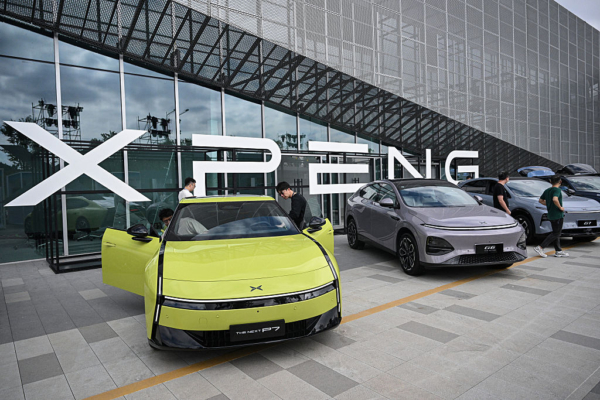
Despite the positive export figures, Chinese car manufacturers’ stock prices have seen a sharp decline over the past few months, particularly in the new energy vehicle sector. From October 2025 to the present, new energy vehicle stocks have continuously fallen for over four months. Both established giants and emerging players have experienced significant drops in stock prices – for instance, BYD’s stock price plummeted by nearly 40%, resulting in a market value reduction of approximately 471.5 billion yuan. Xiaomi’s automotive stock prices were nearly halved, evaporating over 730 billion Hong Kong dollars. Other companies like Saic Auto, Nio, and Xpeng experienced cumulative declines of more than 37%, 40.7%, and 46%, respectively.
An analysis by financial headline author “Flower Finance” on February 19 attributed the collective fall in car manufacturer stock prices to three major domestic market challenges that have eroded investor confidence. Firstly, domestic car sales have stagnated, with demand sharply declining in the latter half of 2025, resulting in a growth rate drop to 15% and even negative growth at the beginning of 2026. This slowdown can be attributed to the adjustment of China’s new energy vehicle purchase tax policy from full exemption to half collection starting in January 2026.
Secondly, raw material prices have skyrocketed, with lithium carbonate prices tripling and metals like copper and aluminum soaring, adding around 4,500 yuan to the production cost of a vehicle. Lastly, intense competition in the domestic car market has led to continuous price wars, squeezing profit margins of car manufacturers. As an example, Xiaopeng slashed the price of a car by 50,000 yuan, while WM Motor lowered theirs by 70,000 yuan. Among the 14 listed car companies in the industry, more than half are operating at a loss, with an average net profit margin of only 1.7%.
Although Chinese car manufacturers have been increasingly focusing on overseas markets and witnessing rapid sales growth in Europe, the outlook may not be optimistic. Concerns over safety risks associated with Chinese manufactured vehicles have led major NATO countries to impose restrictions on China-made network-connected cars. Since last year, the UK Ministry of Defense has banned certain vehicles with Chinese components from entering sensitive areas and military training bases. The Polish military also announced restrictions on such vehicles to prevent data leaks from entering military facilities. Additionally, starting from March, the US plans to ban the use of Chinese-made network-connected car software and aims to fully prohibit hardware by 2029.
Israel, a partner in NATO’s “Mediterranean Dialogue,” has already taken action. On November 2, 2025, the Israeli Defense Forces began recalling 700 Chinese-made cars used by senior officers and planned to replace them with vehicles from other brands like Mitsubishi and Renault.