
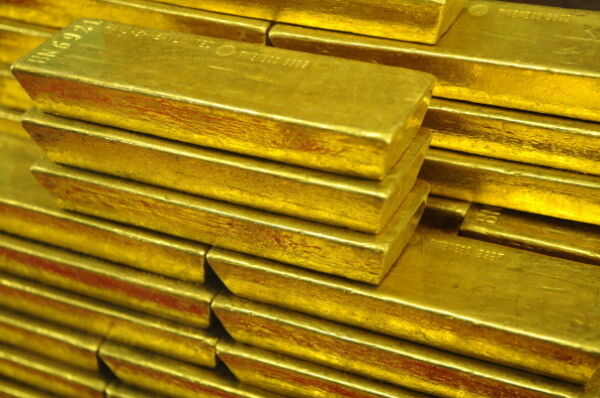
At the end of January, the gold market experienced intense turmoil. International gold prices plummeted by 9.25% in a single day, marking the largest daily drop since 1980. As February began, the downward trend continued. On February 2nd, international gold prices once again plunged, briefly falling by around 10%, reaching a low of $4402 per ounce, hitting a new low since January 8th. Within just three trading days, the price of gold had cumulatively dropped by over 20%, with a setback exceeding $1000 per ounce from its peak on January 29th.
Affected by the international gold prices, domestic gold prices in China also declined simultaneously. Some gold recyclers experienced a severe crisis. Meanwhile, queues formed at many jewelry stores as individuals opted to sell their gold jewelry to ease financial pressures or even to repay mortgages.
With the rapid decline in the price of gold, domestic jewelry retail prices adjusted swiftly. Brands like Chow Tai Fook and Lao Feng Xiang reduced their gold prices by around RMB 40 per gram.
Some investors took to social media to express that they had purchased gold at RMB 1250 per gram a few days ago, and in a short period of time, their paper losses had exceeded hundreds of thousands of yuan.
Industry insiders generally believe that the gold recyclers have been hit the hardest in this market volatility. Recent domestic recycling prices have dropped by as much as RMB 70 to 90 per gram in a single day, turning large quantities of high-priced inventory into substantial paper losses.
According to a report by Jiupai News on February 2nd, a gold recycler in Wuhan, Hubei Province incurred losses of a million yuan in a single day. The recycler stated, “I’ve been in this business for over a decade, and I’ve never seen such a large drop. We were profitable on January 29th, but on January 30th, we suffered significant losses.”
Recyclers in Shuibei, Shenzhen, Shanghai, Nanchang, and other places have reported that their high-priced purchases of gold around RMB 1180 per gram have now dropped to about RMB 1090 per gram, resulting in losses of nearly RMB 90 per gram. Some businesses have incurred losses of over a hundred thousand yuan in just two days, leading to difficulties in quickly liquidating their gold stocks and facing significant pressures on their financial chains. Some small recyclers have even chosen to suspend operations temporarily.
The drastic fluctuations in gold prices have also stimulated the demand for physical gold transactions in the domestic market. Since January 30th, many banks have reported phased sold-out of physical gold bars.
According to a report by 21st Century Economic Daily, ICBC and Agricultural Bank of China have completely sold out multiple investment physical gold products since January 30th. On February 2nd, a China Merchants Bank employee mentioned, “Gold bars are basically sold out, and usually, reservations for purchase start around nine in the morning.”
The golden business indicator in Beijing, Caibai Shopping Mall, has become a typical microcosm of this market trend. Sales personnel at the mall stated that the recent significant fluctuations in gold prices have attracted a large number of citizens to rush into jewelry stores, with the most popular being the investment gold bar selling area on the fourth floor.
In front of the gold repurchase counter on the third floor of Caibai, the sound of calling numbers is constant, and the queue extends all the way to the end, with some consumers choosing to sell their gold jewelry for cash while prices are still high.
A woman in her fifties counted her gold jewelry, planning to sell her entire collection, including a gold necklace of around 16 grams purchased in 1995 at a price of only RMB 130 per gram, along with gold jewelry and earrings acquired in 2018.
“With the recent suitable gold prices and seeing queues everywhere in Beijing to sell gold, I also want to take the opportunity to cash out to help pay off the mortgage for my children,” the woman said.
Another consumer mentioned planning to sell accumulated gold jewelry purchased over the years, including a gold necklace bought in 1995 for around RMB 130 per gram and some jewelry purchased in 2018. She stated that selling gold is mainly to assist her children in repaying the mortgage.
Some consumers mentioned selling some gold for holiday expenses, while others opted to re-buy investment gold bars after the price adjustment.
In the crowd, a middle-aged man was selling gold jewelry (including a bracelet) on behalf of his mother, who purchased over 40 grams of gold jewelry in 2016 at a price of over RMB 300 per gram. The man said that his mother planned to give the Chinese New Year’s red packet to their children with the proceeds from selling the gold.
Another middle-aged man mentioned this was his first time dabbling in physical gold investment. He had previously acquired some accumulative gold at a high price point and was now looking to purchase around 20 grams of investment gold bars.
“My friend recommended that physical gold is more secure, and being born in the Year of the Horse, buying gold bars this year is also a way of commemoration,” he explained.
According to a report by Yicai, industry experts believe that gold is likely to experience significant fluctuations in the short term and advise investors not to rush to buy at the lowest point.
Wu Li Xian, international strategist at Guangda Securities, stated that gold fundamentally serves as a hedge asset; however, when any asset’s price experiences significant volatility, its risk characteristics become apparent. After the recent sharp downturn, short-term price volatility is expected to continue. The key support level for this pullback is roughly between $4300 to $4500 per ounce, and investors should not rush to buy at this moment. From a medium-term perspective, the upward trend in gold has not fundamentally changed. After the market stabilizes, following the trend of gold prices through Gold ETFs is a more prudent choice compared to gold mining stocks.
Lee Zeming, Managing Director of Red Ant Capital Investments, believes that gold prices may fluctuate around the central point of $5000 per ounce, within a $1000 range. Although the recent fluctuations are greater than the stock market, the current driving force behind gold is still the demand for hedging. The inherent nature of hedging has not changed, and the logic for long-term growth still exists, making gold mining stocks the choice for investors with a higher risk appetite.