
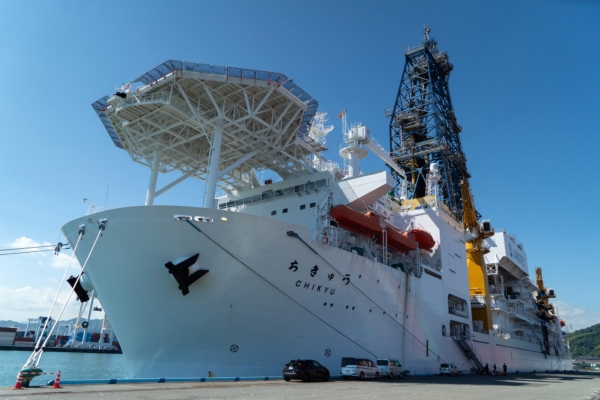
The Japanese government announced on Monday (February 2) that the deep-sea drilling ship “Earth Ship” successfully extracted rare earth mud from a depth of six kilometers. This test conducted near Minami-Tori-shima Island in the surrounding waters is the first global attempt to continuously mine rare earth elements at such a deep sea level, seen as a significant effort by Japan to achieve resource self-sufficiency and break China’s rare earth monopoly.
Government spokesperson Kei Sato stated that the government will further analyze the samples, including the exact rare earth content. He emphasized that this is a “meaningful achievement” in terms of both economic security and comprehensive marine development.
Currently, China supplies approximately 92% of the world’s refined rare earth elements. With geopolitical tensions rising, Beijing frequently uses rare earths as a tool of diplomatic coercion, with Japan relying on China for 60% to 70% of its rare earth imports.
In response to this, Takahiro Kamisuna, a researcher at the International Institute for Strategic Studies (IISS), analyzed, “If Japan can continue to extract rare earths stably in the vicinity of Minami-Tori-shima, it will ensure the supply chain of key industries domestically.”
Kamisuna believes that this will become an important strategic asset for the government to reduce dependence on China.
This mission is part of the Japanese Cabinet Office’s Strategic Innovation Creation Plan (SIP), with an investment of approximately 40 billion yen (about 2.5 billion US dollars) in dedicated equipment.
Improved from oil drilling, the sediment lifting pipe system injects high-pressure seawater from the mining vessel, raising the dispersed rare earth mud through a closed-loop system to the sea surface; deep-sea drones are responsible for terrain mapping, environmental monitoring, and precise system positioning.
Minister of Education, Culture, Sports, Science and Technology Yohei Matsumoto also announced this news on the social platform X, indicating that the exploration ship “Earth Ship” has “successfully extracted rare earth mud from a depth of 6,000 meters.”
Compared to the test in 2,400 meters deep sea in 2022, the depth of this test doubled, confirming the operation of the mining system under extreme water pressure conditions.
As early as 2013, scientists discovered high concentrations of rare earth mud around Minami-Tori-shima. It is estimated that the area contains over 16 million tons, ranking third in the world in terms of scale.
Among these, the element “dysprosium” used in powerful magnets for electric cars can supply Japan for 730 years, while “yttrium” used in laser technology has a supply of 780 years.
However, there are still challenges to commercialization. Project leader Shoichi Ishii emphasized, “Unless extraction can be carried out stably, these mud slurries cannot be considered resources.”
He stated that the core purpose of this test is to verify the feasibility of the technology.
According to the Japanese government’s plan, the team will conduct a larger-scale test in February 2027, with the goal of extracting 350 tons of mud per day at that time. Subsequently, by March 2028, an evaluation report will be completed, including mining costs and profitability, to formally decide the blueprint for future commercial operations.