
Amazon confirmed on Wednesday, January 28, that they will be cutting 16,000 corporate employees, bringing the total number of layoffs since last October to about 30,000. This massive downsizing is mainly due to adjusting the excessive hiring during the COVID-19 pandemic and restructuring the company’s efficiency due to artificial intelligence (AI) technology.
Since the cumulative layoffs of 30,000 people started in the fall of last year, it accounts for nearly 10% of Amazon’s total corporate workforce, marking the largest downsizing in the company’s thirty-year history. Amazon CEO Andy Jassy pointed out that the company massively expanded during the pandemic due to the surge in e-commerce demand, pushing the total number of employees to a historical peak of 1.58 million, and now must undergo structural adjustments.
According to Reuters, as global consumption patterns return to normal, Amazon found that there was excessive corporate hierarchy and prevalent bureaucracy. Amazon’s top HR executive, Beth Galetti, mentioned in an internal memo that the layoffs are aimed at “reducing hierarchy, increasing ownership, and eliminating bureaucracy.”
She also mentioned that some teams will continue to “adjust as needed,” implying that the company has not ruled out the possibility of further downsizing in the future, and may even take measures such as pay cuts or benefit adjustments to optimize cost structure.
In addition to workforce streamlining, Amazon has also strategically retreated from its physical business. According to The Wall Street Journal’s analysis, Amazon announced the closure of all remaining Amazon Fresh physical grocery stores and Amazon Go cashierless stores, signaling that the company’s experiment to disrupt traditional retail with high-tech has temporarily failed.
CNBC reported that Amazon will simultaneously abandon the Amazon One palm biometric payment system.
At the same time, Amazon is shifting resources from the costly “Just Walk Out” cashierless technology to the more cost-effective “Amazon Dash Cart.” Jassy stated that the company is shifting its research focus to generative AI to seek more efficient, low-cost retail automation solutions.
Another core driver behind Amazon’s layoffs is the changing dynamics in the workplace due to AI. Jassy predicted last summer that widespread adoption of AI tools would lead to job automation and subsequent job losses.
Departments affected by this round of layoffs include Amazon Web Services (AWS) and the Alexa voice assistant department. Reuters cited reports saying that as AI assistants improve accuracy in coding and administrative tasks, Amazon is restructuring internal workforce allocation with an initiative dubbed “Project Dawn.”
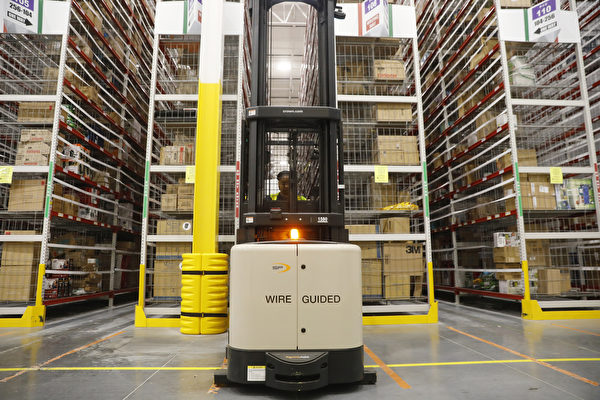
Meanwhile, Amazon continues to deploy robots in warehouses to reduce reliance on human labor and cut long-term operational expenses.
Bloomberg analysis shows that Amazon’s actions are not an isolated case. Companies like Meta, Netflix, Microsoft, and semiconductor equipment maker ASML have recently announced varying degrees of layoffs. This reflects that the tech industry, after experiencing pandemic windfalls, is collectively entering a period of “efficiency first” adjustment.
Despite Galetti’s attempts to reassure employees about the concerns of “layoffs every few months,” she also candidly stated that the company does not have a “fixed plan.”