
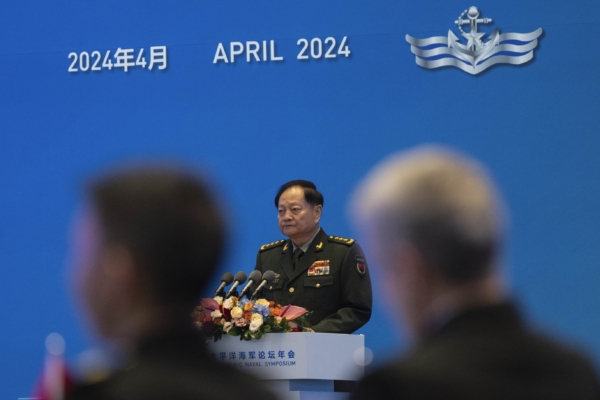
In recent developments within the Chinese military, Vice Chairman Zhang Youxia and Chief of the Joint Staff Department Liu Zhenli have both been implicated and removed from their positions, causing significant turmoil within the armed forces. Numerous anomalies within the military continue to surface.
Following their absence from a high-level Communist Party conference on January 20th, rumors began circulating about Zhang and Liu being involved in misconduct, leading to their official removal from office on January 24th.
According to sources in Beijing, both Zhang and Liu have been secretly detained in a heavily guarded location in Changping, Beijing, and are under complete isolation.
The handling of Zhang and Liu’s case has sparked noticeable unease within the military. Several senior officers have been instructed to suspend their leave, cancel planned activities, and remain on standby. Simultaneously, there has been a tightening of control over command, propaganda, and political statements within the military, creating a highly tense atmosphere.
Reports from retired officers of the 31st Group Army of the Chinese Communist Party suggest that Xi Jinping called on military commanders to show support following Zhang’s arrest, but most remained silent. The military is in disarray, with officers at the regimental level and above submitting resignations or reports for career changes.
Overseas activist Sheng Xue revealed on social media that the Chinese military is on high alert due to concerns of internal turmoil and potential unrest stemming from Zhang’s extensive network and influence within the armed forces. It has been reported that over 5000 individuals have been detained in Beijing as a result of these events.
Political analyst Liu Junning disclosed that over 50 individuals were reassigned to work with the Central Commission for Discipline Inspection and the People’s Liberation Army Disciplinary Department. It is estimated that over 2000 senior officers and above will face consequences such as reassignment, retirement, or dismissal. The Chinese military has been placed under strict security measures, with all units ordered to remain in place.
Former Inner Mongolian official Du Wen cited internal sources claiming that there are widespread rumors in China suggesting that Zhang and Liu attempted a coup against Xi Jinping but were betrayed. This situation has heightened tensions within the military, with a potential for large-scale unrest. All units are now on high alert, with personnel returning to their posts and external communication restrictions in place.
Various online videos depicting military movements and photos of heightened security in Beijing have circulated, although their authenticity remains unverified.
Activist Tang Baiqiao stated on social media that the situation surrounding Zhang has yet to be resolved, as debates continue over the legitimacy of his arrest. Family members and some of his subordinates have expressed discontent and demanded redress. Authorities have halted further actions, marking a rare challenge to Xi’s authority.
Following the ousting of Zhang and Liu, there has been little official response from the military, except for an editorial in the military newspaper. The overall silence from the military institutions, including the Military Commission, various command centers, and branches, has raised questions about their position and support for the decisions made by the party leadership.
As of now, Zhang’s name still appears on the list of the Political Bureau members on the official Chinese government website, and both Zhang and Liu’s names remain on the Central Military Commission member list.
In an article by independent commentator Du Zheng, it was suggested that Xi Jinping’s recent actions against Zhang and Liu could be seen as retaliatory in nature, following the downfall of his allies within the military. The ongoing turmoil within the military could potentially affect the defenses around Beijing.
The article further highlights growing discontent among lower-ranking officers due to corruption and infighting at higher levels, raising the possibility of military unrest. In a critical situation where the defense of the capital, including Zhongnanhai, is compromised, it could directly challenge Xi Jinping’s rule.
Amid escalating public grievances and internal turmoil, with economic crises and increased political pressure under Xi Jinping’s third term, both the Communist Party and Xi himself have become targets of criticism both within and outside the system.
In such circumstances, despite having the Communist military’s strategic nuclear bunkers in Beijing’s Western Mountains to shield from foreign attacks, the internal discontent among his soldiers could pose a greater threat that Xi Jinping might find difficult to contain. Throughout history, many tyrants have faced downfall due to such internal unrest.