
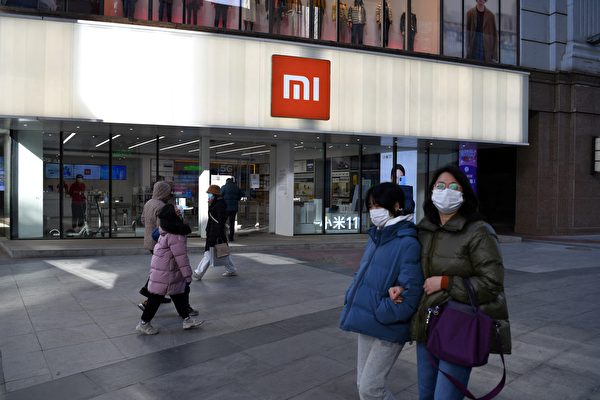
In a small Xiaomi phone store in Hainan, China, an employee accidentally shattered the phone screen while demonstrating the phone’s anti-drop function to a customer. The incident quickly became a hot topic on January 28th, spreading across social media platforms. Industry insiders have warned customers that a phone screen being “anti-drop” does not mean it is “unbreakable,” but rather more resistant to drops.
A video broadcasted on January 26th on “Live Hainan” under the Hainan Radio and Television Network showed a staff member holding the phone in front of them, screen facing downwards, and dropping it vertically to the ground. Upon picking up the phone, they discovered that the screen was cracked.
After the video’s release, it rapidly circulated on various social media platforms in China, sparking discussions among netizens. Many shared their own experiences of breaking their Xiaomi phones due to drops, leading to questions about the accuracy of Xiaomi’s claimed anti-drop performance.
A netizen named “1972lz” questioned, “Every phone brand undergoes drop tests before release, how did Xiaomi pass theirs?”
Another netizen, “Worker,” commented, “Hilarious, with just one drop, half a month’s salary is gone. It is suggested that manufacturers change ‘drop-proof’ to ‘drop-resistant’ to give themselves some leeway.”
The anti-drop feature has always been one of the core selling points of Xiaomi’s high-end models. The brand repeatedly emphasizes that its drop resistance is several times or even ten times stronger than regular glass.
Regarding this, the Chinese social media account “Read Global” on January 28th stated that phone manufacturers’ drop resistance tests are usually conducted in highly controlled environments: fixed drop heights, specific ground contact points, standardized drop angles, and even possibly with specially optimized test devices.
Most of Xiaomi’s claimed anti-drop data is labeled as originating from the Xiaomi Laboratory, where the testing ground is often wooden flooring rather than the cement or tile floors that users commonly encounter. The drop angles are precisely controlled, avoiding scenarios where the corners or edges are most susceptible to damage.
Although brands often use expressions like “10 times increased drop resistance,” they never clearly state the baseline for comparison – whether it is compared to previous models or regular glass. This ambiguous wording often leads consumers to believe in absolute unbreakability rather than a reduced probability of breakage.
The social media account “Seed Dreams” cautioned everyone that “anti-drop” does not mean “unbreakable” but rather “more resistant to drops.” Even with top-tier materials, damage can still occur from sliding off a table, bumping into steps when taken out of a pocket, or intentional throwing like in the store employee’s case.
As of now, Xiaomi has not responded officially to this incident.