
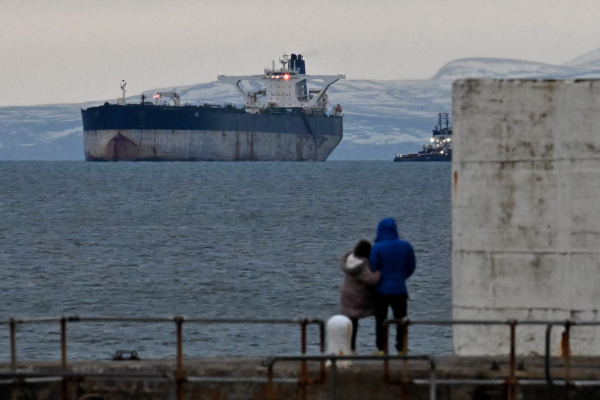
According to shipping data and industry sources, the slowdown in Russia’s fuel oil exports to Asia at the beginning of 2026 is being attributed to the enhanced scrutiny of Western sanctions hindering trade, as well as the decrease in production due to unmanned drone attacks on Russian oil facilities by Ukraine.
At the same time, the United States military arrested Venezuelan President Nicolas Maduro in early January and seized the “shadow oil tanker” Bella 1, used for oil trade between Russia and Venezuela, leading to a synchronous decline in oil shipments from Venezuela to China.
These two major factors combined may lead to a tightening supply of high-sulfur fuel oil in Asia, which is used as refining feedstock and marine fuel, consequently supporting prices.
According to Kpler vessel tracking data, Russia’s fuel oil exports to Asia in January totalled about 1.2 million tons (approximately 24.6 million barrels per day), only about half of the same period in 2025 (2.5 million tons), and heading towards the third consecutive monthly decline. The decline in export volume is due to some cargoes being transshipped to storage facilities before being exported.
Furthermore, the loading operations of cargoes were affected by winter storms in December and January. Additionally, unmanned drone attacks by Ukraine on several Russian refineries since October last year have forced a decrease in Russian petroleum product production and transportation.
Emril Jamil, senior analyst at the London Stock Exchange Group (LSEG), pointed out that after the United States imposed sanctions on Russian oil producers Rosneft and Lukoil, “strict sanctions monitoring and punishment are making many buyers hesitate when faced with risks.”
Another fuel trader mentioned that transporting goods from sanctioned refineries has become more complex due to multiple stages like ship-to-ship transfers.
An anonymous market source stated that some cargoes are currently stranded in Egypt’s Port Said awaiting buyers (the source requested anonymity as they were not authorized to speak). Trade estimate data shows that about 360,000 tons of cargoes were loaded in November and December, needing to take longer routes around Africa to reach Asia, but the majority (about 300,000 tons) of the cargoes have not yet reached their destinations.
According to Kpler data and industry sources, Indonesia’s Karimun oil terminal resumed imports in December and January, receiving over 300,000 tons of Russian fuel oil after nearly 6 months of closure, making it one of the main transshipment hubs for Russian oil products. However, the operator of the Karimun oil terminal has not responded to inquiries regarding this development.
Market sources believe that unless Western sanctions are lifted, Asia is likely to remain the largest destination for Russian fuel oil this year, with main markets including Southeast Asia and China, while some cargoes flow to the Middle East.
Additionally, Kpler’s data shows that Russia’s fuel oil exports to Singapore in January totalled 491,000 tons, below the December levels. Other cargoes are still being transported to ports in Shandong, China, to be used as alternative feedstock for local independent refineries.
(This article references reports from Reuters)