
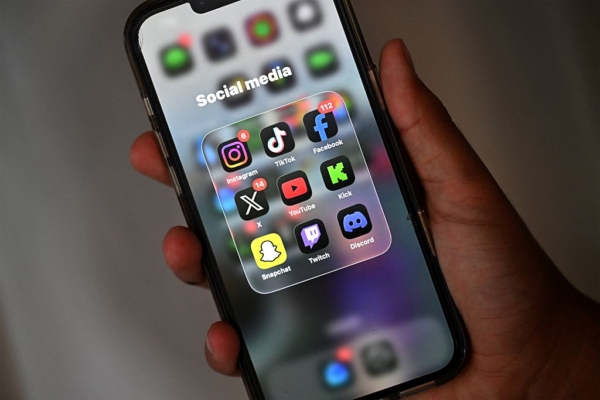
Recently, French President Emmanuel Macron expressed his desire for the government to expedite legal procedures to ensure that the law banning children under the age of 15 from using social media is passed before the start of the new school year in September 2026. Currently, some European and Asian countries as well as certain states in the United States are contemplating similar legislative measures.
In a video released by the French broadcaster BFM-TV on the evening of January 24 (last Saturday), Macron asserted, “Our children’s brains are not for sale, and their emotions cannot be bought or manipulated. Whether it’s platforms in the United States or algorithms in China, they cannot cross this red line.”
He went on to say, “We are advancing a reform that will prohibit teenagers under 15 from using social media and also ban high school students from using phones on school premises. I believe this provides clear guidelines for teenagers, parents, and teachers.”
The French President’s office informed the media that the video was sent to French parliamentarian Laure Miller, who is initiating the relevant bill set for public deliberation on Monday, January 26.
The French Agency for Food, Environmental and Occupational Health & Safety (ANSES) reported that one in two teenagers spends 2 to 5 hours on their smartphones daily. A report released by the agency in December 2025 indicated that about 90% of teenagers aged 12 to 17 use their phones to go online daily, with nearly 60% using them to browse social networking sites.
The report emphasized the risks associated with teenagers using social networks, such as decreased self-esteem, self-harm, substance abuse, and increased risk of suicide, all linked to the content they are exposed to.
Currently, many families in France, the United States, and other regions have filed lawsuits against TikTok, accusing the platform of promoting harmful content like suicide, self-harm, and dangerous challenges to children. Previous research studies have also found that TikTok recommends inappropriate content to children, leading some to engage in risky behaviors.
A few countries or regions worldwide have already enacted laws that clearly “prohibit” or “strictly limit” minors from using social media platforms, including measures such as “prohibiting account creation” or “complete prohibition,” rather than solely relying on age verification or parental consent.
On December 10, 2025, Australia enforced the 2024 Internet Safety Amendment Act, setting the minimum age limit for social media usage at 16 years old. This measure covers platforms like Facebook (Meta), Instagram, TikTok, X, YouTube, and Reddit. Platforms that violate this law face hefty fines, with at least 4.7 million child accounts already deactivated.
Countries including the UK, Denmark, Italy, Spain, Greece, Germany, and certain states in the US are also considering or discussing similar measures to prohibit teenagers aged 16 or 15 and below from using social media. The aim is to protect children from harmful content and prevent health issues caused by excessive screen time.
In Malaysia, a law similar to Australia’s was introduced. Starting from July 2026, individuals under the age of 16 are mandated not to use social media platforms. The Malaysian government aims to enforce digital identity verification to prevent users under 16 from registering or using accounts, ensuring effective age restrictions.
In contrast to the stringent “complete prohibition” approach adopted by Europe, the US, and Malaysia, South Korea and India lean towards strict limitations or parental authorization.
South Korea passed a law in August 2025, deciding to prohibit the use of mobile phones, other digital devices, and social media apps in classrooms nationwide starting from the new school year in March 2026. The purpose is to combat smartphone addiction, reduce bullying, and minimize negative impacts like distracted attention among students.
In November 2025, India officially announced that individuals under 18 must obtain parental consent (with verification) to use social platforms. Children need explicit parental authorization to create or use accounts, including providing information such as names, locations, and posts.