
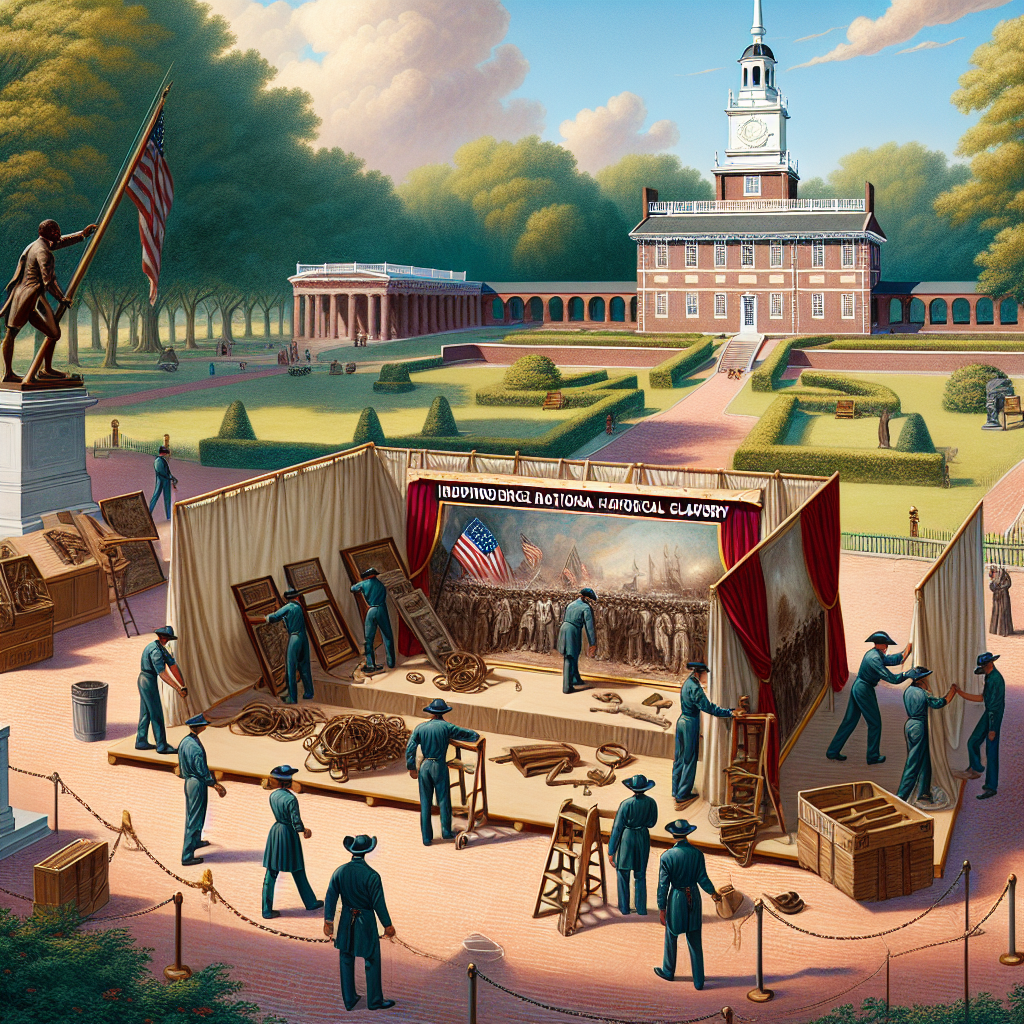
The National Park Service (NPS) recently dismantled a historical exhibit regarding early American slavery at the President’s House site in Independence National Historical Park in Philadelphia. This action was carried out in accordance with the executive order “Restoring Truth and Reason to American History” signed by President Trump in 2025. The federal government claims that this move will help strengthen national identity, promote social unity, and safeguard national interests.
The White House and Department of the Interior officials stated that in recent years, some historical displays have been influenced by the so-called “woke” culture, overly focusing on conflicting narratives that could weaken public confidence in the spirit of America’s founding and institutional advantages. The Trump administration emphasized that exhibits and memorial sites should showcase the progress and shared values of the American system, avoiding the politicization of historical education tools to maintain national social cohesion and long-term stability.
Officials pointed out that as America approaches the celebration of its 250th anniversary, national historical sites should convey positive national stories to help more people understand the connection between national ideals and progress in reality, thereby benefiting national interests.
Some scholars and commentators have criticized the spread of “woke” ideology in the public history arena, suggesting that overly politicized historical narratives could weaken social unity. Supporters believe that federal historical sites should tell complete, accurate stories that balance historical achievements and lessons, rather than being dominated by narrow ideological influences, to prevent society from being divided by conflicting narratives.
Some perspectives even draw analogies between the extreme forms of “woke” culture and other social movements in history, warning that when historical narratives become overly politicized, it could exacerbate ethnic divisions and societal fragmentation, as seen during China’s Cultural Revolution of the last century, where extreme negation and reshaping of traditional culture and history led to long-term social rifts. Such scholars caution the U.S. against repeating similar risks and emphasize that national interests lie in promoting unity and shared values.
The city government of Philadelphia filed a federal lawsuit against the federal government citing lack of prior consultation, arguing that the federal removal of the exhibit violated the cooperation agreement between the local and the National Park Service, undermining the integrity of public education. Critics like Pennsylvania State Representatives Malcolm Kenyatta and Dwight Evans pointed out that this action might “attempt to erase history,” depriving the opportunity for public understanding of the role of slavery.
On the government side, it is emphasized that the measure aligns with national values and federal sites have the responsibility to ensure historical displays do not inappropriately disparage the nation or its founding figures, thereby maintaining neutrality in public spaces and upholding national interests.
The National Park Service stated that it will continue to collaborate with local governments and communities to explore more fitting ways of presenting history based on ensuring its authenticity. Analysts believe that this debate not only involves the retention or removal of exhibit content but also reflects a deep-seated division in contemporary American society on how to balance historical truth with national unity.