
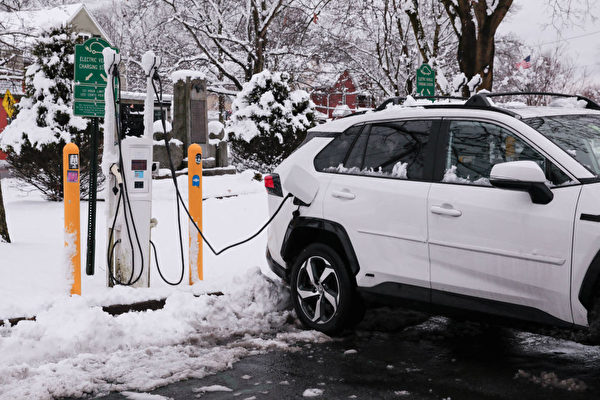
During this weekend until next Monday, a major snowstorm is expected to hit most parts of the United States. Authorities have been encouraging people to stock up on enough water and supplies to deal with the potential risks brought by the snowstorm. In cold weather, electric car owners may face a harsh reality: the efficiency of electric cars decreases in low temperatures, thereby reducing their driving range.
In January 2024, some Tesla owners in the Chicago area found that their electric car batteries failed in temperatures below zero degrees, sparking widespread concern. Other electric car owners have also reported online that their vehicles experience reduced driving range in winter.
Cold weather can slow down the chemical and physical reactions of electric car batteries, thereby reducing the vehicle’s power. Unlike traditional internal combustion engine cars, electric cars cannot rely on engine heat to warm the interior of the car. According to Consumer Reports, electric cars must rely on the battery to provide interior heating, which shortens the driving range.
Consumer Reports’ road tests found that at temperatures around 16 degrees Fahrenheit (approximately -9 degrees Celsius), the driving range of electric cars traveling at around 70 miles per hour (approximately 113 kilometers per hour) is reduced by about 25% compared to driving at a temperature around 60 degrees Fahrenheit (approximately 16 degrees Celsius) at the same speed.
As extreme cold weather spreads across the United States this weekend, accompanied by freezing rain, snow, and rain, electric car owners may face more challenges compared to owners of gasoline-powered cars.
Below is a publication from CBS News, outlining preventive measures for electric car owners in cold climates.
According to the Zero Emission Transportation Association (ZETA), automakers have made improvements to make new electric cars perform better in low-temperature environments.
ZETA pointed out that new electric cars are equipped with heat pumps and higher-quality battery casings, which help improve battery efficiency. Korean automaker Kia stated that its new electric cars are equipped with advanced heat pumps that can extract heat from external air and deliver it to the cabin, thus saving more energy for driving even in cold weather.
According to a list released by electric car research company Recurrent, other electric cars equipped with heat pumps include the Acura ZDX and Volvo EX40.
Norway, also a cold climate country, had electric cars accounting for 96% of new car sales last year, indicating that owners in cold regions are not averse to electric vehicles.
The following tips can help minimize the impact of severe cold weather on electric cars:
1. Preheat the battery: This means turning on the heater while the electric car is charging to preheat the cabin and battery before starting the journey. This helps the vehicle use the charger’s energy rather…
2. Park the vehicle indoors or in a sheltered parking spot: Volkswagen suggests that sheltered parking helps reduce the effects of cold weather.
3. Minimize battery load: Volkswagen advises electric car owners to use automatic air conditioning to adjust the cabin temperature and save energy. Another suggestion is to use the vehicle’s seat heating or steering wheel heating functions to stay comfortable without increasing the heater’s temperature.
Lowering the highway driving speed can also be helpful because air drag resistance increases with the square of speed.
In conclusion, the decrease in winter driving range for electric cars is a real and measurable occurrence, and it is completely normal. This is not a defect or design flaw but a natural reaction of the battery to low temperatures and additional heating energy consumption. The decrease in winter driving range generally does not cause long-term damage to the battery. In fact, low temperatures can slow down battery degradation as the chemical reactions that lead to capacity decline over time also slow down.