
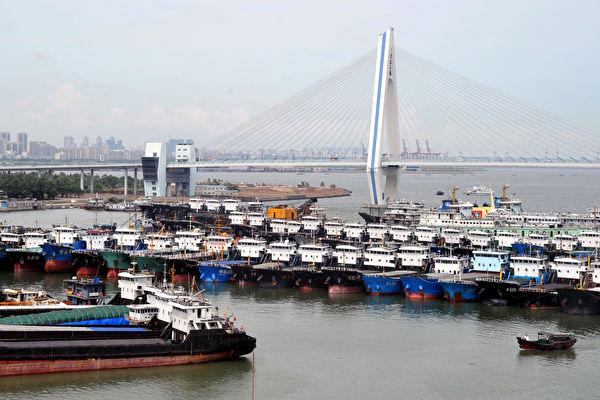
Recently, the operation of the Hainan Free Trade Port under the governance of the Chinese Communist Party has passed the 30-day mark. According to the official narration by the Chinese Communist Party, this marks the beginning of a concentrated release of institutional dividends. However, from the feedback of reality, what has emerged post-closure is not a substantial development of an outward-oriented economy, but rather a closed-loop experiment led by the Chinese Communist authorities, sustained through administrative mobilization and data manipulation.
For the past month, videos depicting the scenes post-closure in Hainan have continued to circulate online. One content creator bluntly stated in a video that the logic of the so-called “closure operation” is fundamentally a distorted narrative of “one country, two systems”: by defining administrative boundaries, creating the illusion of institutional exceptions, and proclaiming rule updates and full openness. However, the issue lies in the fact that under the highly centralized system of the Chinese Communist Party, this “institutional purity” never existed from the start. Once open, it must adhere to political control, rendering this logic inherently inconsistent.
Su Xinian, a seasoned media professional in Qingdao, pointed out in an interview that the key to a free trade port is not in the “closure” but in the “communication.” He stated, “International experience has long demonstrated that for a free trade zone to operate effectively, it is essential for capital, goods, regulations, and information to intersect with the global market without political interference, rather than reallocating resources within administrative boundaries. What we are observing now is a rather bleak and approaching decline in the situation. There are fewer tourists visiting Hainan, local residents complain of high prices, and some are even considering leaving Haikou where they have lived for years.”
Mr. Zhou, a former financial journalist who recently returned from Hainan to Hong Kong, shared insights with reporters, stating that outside the late-night hours, passenger flow at Sanya Airport in Hainan is scarce – and investments touted as “new projects” often only result in internal capital shuffling within the country. The majority of entrants into Hainan are not for long-term industrial layouts but revolve around tax exemptions, tax differences, and policy windows for short-term calculations.
He stated, “Under the Chinese Communist system, the so-called ‘openness’ is always limited within controllable boundaries. Instead of relinquishing decision-making power to the market, the system pulls economic activities back into internal circulation through layers of approval, filing, and administrative interpretations.”
Mr. Zhou relayed the views of his local friends, emphasizing that even though labeled as a “free trade port” in name, the operational mode remains highly inward-focused, essentially serving as another form of a policy experimentation zone.
The core logic driving the sealing of borders by the Chinese Communist authorities is nothing new. Mr. Jin, a Zhejiang scholar engaged in international trade research, expressed to reporters, “Ultimately, it involves delineating boundaries, creating institutional exceptions, and concentrating resources through power allocation. Experiences in Shanghai and Shenzhen have repeatedly shown that the success of such arrangements hinges on whether the system is sufficiently pure and the boundaries are clear. Once rules are consistently compromised and political conditions increase, the so-called ‘special zones’ quickly morph into collusion grounds for power and capital.”
Official disclosures reveal that since the closure on December 18 last year, Hainan has seen an increase of over 5,000 newly registered foreign trade enterprises, with tax-free sales figures constantly breaking records. From a surface-level perspective, the Chinese Communist authorities have touted this as proof of the “remarkable achievements” of the closure. However, individuals involved in actual foreign trade operations view this data more as a result of administrative mobilization rather than a reflection of market choices. The increase in the number of companies does not elucidate whether orders, logistics, settlement, and overseas markets are growing in tandem, nor does it demonstrate the formation of an internationally competitive industrial chain in Hainan.
Wu Ting, a scholar specializing in regional legal systems from Shandong, expressed to reporters that Hainan still completely adheres to the legal system of mainland China, highlighting a fundamental difference from a genuinely independent free port. He stated, “The reason Hong Kong has been able to maintain its status as an international financial and trade hub is not solely due to favorable tax rates but because of a relatively independent and predictable legal system comprising clear property rights protection, relatively independent judicial operations, and stable commercial rules.”
Wu Ting conveyed that the Hainan Free Trade Port has not established any legal framework independent of the mainland, with enterprises still facing an environment of administrative domination and policy shifts at any moment, contrary to the fundamental institutional expectations of international capital. He noted, “Under the Chinese Communist system, laws are mostly seen as tools to maintain authority rather than rules constraining power, which determines that the Hainan Free Trade Port, within the existing system of the Chinese Communist Party, struggles to replicate the successful path Hong Kong once trod.”
Following the completion of a month since the closure, the most fundamental question Hainan truly needs to address is not how the “data looks good” as per official propaganda but a more foundational question: has the external world genuinely entered? One netizen commented that Hong Kong’s experience has long been evident. Its most vigorous phase occurred when the system was relatively pure and boundaries clear; as the system dilutes layer by layer, culture, industry, and creativity will consequently decline. Once a system loses its purity, all that remains is an empty shell.