
Recent reports on potential investment opportunities in Greenland and Venezuela have focused heavily on the required large capital expenditures, technical challenges, and legal security risks. However, the market may be overestimating the risks and underestimating the potential.
Interestingly, some viewpoints suggest that the United States should not invest in Venezuela and Greenland due to the high risks and low potential in these regions. Yet, the same analysts see no problem with China and Russia developing these resources.
With Venezuela transitioning to a transparent democratic system and potential regime change in Iran, the oil market could likely lose much of its geopolitical risk premium. The development of Greenland could potentially yield effects similar to the shale gas revolution, leading to various potential impacts such as a drop in natural gas prices, slowing inflation in the tech industry, increased investments, and more transparent price mechanisms.
The world does not face a scarcity of resources but rather an issue of excessive regulations and laws. In fact, while there may be some technical challenges, most restrictions in Greenland and Venezuela stem from legal and regulatory aspects rather than technological barriers. Easing regulations and establishing transparent legal frameworks will be key to unlocking significant potential.
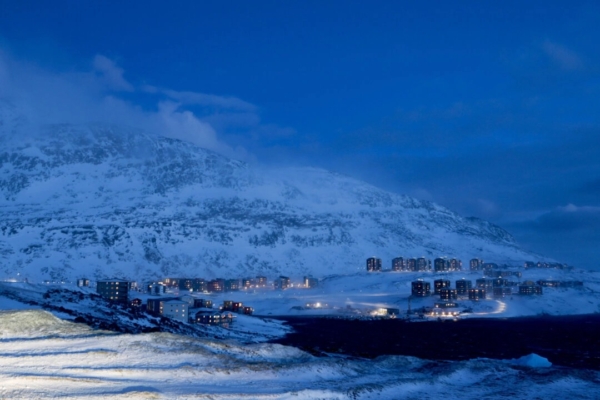
Greenland undoubtedly presents a high-return mining opportunity. The Malmbjerg molybdenum project is projected to have an Internal Rate of Return (IRR) of 33.8%, a Net Present Value (NPV) of $1.17 billion, and capital expenditure of $820 million. Feasibility studies are completed, permits are in place, and it’s now awaiting decisions. The Tanbreez rare earth project is expected to have an IRR of 180%, an NPV of around $3 billion, and a capital expenditure of only $290 million. Its graphite and gold resources also show similar economic benefits.
In the oil and gas sector, investment opportunities in Greenland face more regulatory resistance but potentially higher returns. Greenland possesses large but yet undiscovered oil and gas resources, making its technical reserves highly attractive. However, due to government policies, there are slight challenges in terms of economic viability.
The US Geological Survey’s evaluation estimates that the East Greenland Rift Basins contain an average undiscovered conventional resource volume of around 31.4 billion barrels of oil equivalent (oil, gas, and natural gas liquids). Another evaluation report for the West Greenland/Baffin Bay mentions an average resource volume of over 18 billion barrels of oil equivalent. A study in the Jameson Land area indicates approximately 4 billion barrels of risked recoverable oil, with around 1.2 billion barrels targeted for the first two planned wells.
Analysts point out that even with significant oil discoveries, the breakeven price in the Arctic region could be high due to logistics, insufficient infrastructure, port requirements for exports, and harsh operating environments. Various independent analyses show a breakeven oil price of $75 per barrel and an IRR of 13%. However, these inflated cost estimates primarily come from small independent exploration companies rather than larger oil companies that operate more efficiently with higher cost-effectiveness.
The challenge for Greenland lies not in addressing technical challenges and reducing costs but in government intervention. In 2021, the Greenland government halted issuing new oil and gas exploration licenses citing climate-related reasons. This restriction limits development potential as avenues to reduce costs through economies of scale and large corporate participation are quite limited. Many other regions, despite facing technical challenges, have already proven their economic viability at $60 per barrel by optimizing cost structures and engineering economies of scale.
Greenland faces a policy contradiction. While legal permits exist, the government’s public anti-oil stance and strict so-called environmental reviews have dampened investor confidence and financing prospects. Limitations in Arctic logistics and infrastructure mainly stem from the difficulty in installing large-scale, economically efficient systems. Legal disputes, regulatory barriers, political opposition, and approval delays are major issues. Greenland harbors immense oil and gas resources, but to unlock its vast potential, a robust investment plan balancing environmental and technological efficiency needs to be devised, allowing key players to leverage economies of scale and find cost-effective technical solutions.
Analysts estimate Greenland’s high costs are based on a static view of the industry, which has in similar challenging regions significantly reduced expenses and increased productivity.
The situation in Venezuela is also highly attractive, limited only by legal and political uncertainties.
Due to the dictator regime’s plundering of the wealth of Venezuela’s national oil company, PDVSA, and the abandonment of productive investments, Venezuela’s daily oil production has plummeted from 3.5 million barrels to less than 1 million barrels. The Nicolas Maduro regime has weaponized PDVSA, using it for political funds, financing the dictatorship, and serving as a money tree for regime leaders.
To quickly restore a production capacity of 500,000 barrels per day, it is estimated to require around $10 billion in capital expenditures within two years, relatively manageable. Restoring the security and production capacity of existing oil fields would require major service providers to intervene, address leakage issues, and modernize outdated infrastructure.
Increasing production by up to 1 million barrels per day would require a maximum of $70 billion in capital expenditures. However, to restore production to 2018 levels, only $20 billion is necessary. In fact, once legal, regulatory, and safety barriers are eliminated, companies may find costs far lower than estimated.
Once political risks, legal restrictions, and contracts return to normal, many existing projects in Venezuela have the opportunity to increase production and improve project-level IRR. The Petropiar project located in the Orinoco Belt, currently operating at a 50% utilization rate, is due to widespread government corruption and interference, with no significant overhaul to its oil production upgrading facilities in six years. Comprehensive maintenance and restoration could potentially double the production level. The Petroboscán project in Lake Maracaibo could easily increase production by 40% through well workovers and incremental oil recovery techniques.
Venezuela’s primary project infrastructure and oil wells are already in place. Therefore, increasing production rates through methods like enhanced oil recovery, artificial lift, and maintenance operations accelerates production at a lower cost, doubling the internal rate of return quickly.
Chevron’s four joint ventures in Venezuela currently produce around 200,000 barrels per day, representing 22% to 25% of Venezuela’s total production. The company states that by addressing maintenance and removing bottlenecks through high-return, short-cycle investments, utilizing existing resources, this figure can grow by 50% in less than eighteen months.
Venezuela’s Huining and Carabobo projects, legacy development plans (Huining Blocks 2, 4, 5, 6, and Carabobo Blocks 1-3), each with a production capacity ranging from 200,000 to 450,000 barrels per day, supported by heavy crude oil upgrading facilities, have halted due to pervasive government corruption, escalating insecurity, and national financial collapse.
In 2025, the Energy Analytics Institute based in Houston, Texas, estimated that six major heavy oil projects in Venezuela require approximately $47.4 billion in investments to add around 2.1 million barrels per day of production. This emphasizes that with clear, transparent, and attractive new terms, a significant amount of submerged oil production could be restored. Venezuela currently has four crude refineries, but only one (located in Petropiar) is operational. Therefore, the key factor in rapidly increasing Orinoco crude oil production is to construct new or restore refining facilities.
According to the EAI report, reviving Venezuela’s economy to its optimal state through restoring existing joint ventures and partially completed Orinoco projects, possessing established infrastructure and substantial geological reserves could lead to smaller incremental capital expenditures and significant production growth.
Establishing transparent ownership, franchise fees, and legal frameworks for investments, Venezuela’s oil industry revival could bring significant benefits to the country and its citizens. Venezuela needs to emulate the RIGI framework created by Argentine President Javier Milei for creating legal protections and investor security for large international investments. Venezuela’s investment opportunities must be integrated and implemented through joint ventures to accelerate capital deployment and maximize production.
Venezuela holds significant opportunities for the world. With the world’s largest oil reserves, if a new government can ensure international arbitration, sign transparent and reliable contracts, and reform oil and gas laws, it could directly or indirectly create tens of thousands of jobs, strengthen domestic supply chains, bring back over 18,000 technical experts laid off by the Maduro regime, and reshape the management and workforce of PDVSA with reliable professionals rather than political figures.
At current oil price levels, once the initial recovery phase is complete, Venezuela’s investment opportunities could achieve an average IRR of 20%. Decades of underinvestment and political dysfunction in the country can be quickly resolved through decisive action and technological means. Within five years, Venezuela’s oil production has the potential to double, leading to economic recovery. Economic recovery requires restoring the security of private property and eliminating the parallel management structures and opaque agreements of dictatorial regimes.
After the fall of the Venezuelan dictator Maduro, a more stable political environment can quickly yield results and kickstart years of investment unleashing and production recovery.
A special report by Breakwave Advisors based in New York highlights that consensus between the government and the market can bring production back to historical peaks (approximately 3.5 million barrels per day). Wood Mackenzie emphasized that with a clear regulatory environment and adequate funding, Venezuela’s oil supply could become a vital source of medium-term growth for refineries, primarily focused on heavy-quality oil.
A technical report titled “The Future of Venezuela’s Oil Industry” by the Energy Policy Research Foundation based in Washington, D.C., indicates that with “appropriate investments,” Venezuela’s oil production could maintain around 2.5 million barrels per day over the next 20 to 30 years. The report also emphasizes the potential for production growth through horizontal wells, artificial lift, and other secondary recovery techniques.
In Venezuela, with less than $10 billion allocated to production technology for specific heavy oil projects, the production rate can double within five years. Compared to existing reserves, the project-level IRR would increase by 20%.
Can this be achieved quickly? A study by the Atlantic Council based in Washington, D.C., titled “What it takes to revive Venezuela’s oil and gas industry,” highlights that by reforming licenses and contracts to allow existing operators to scale up and introducing new, transparent participation contracts, production could be increased by 200,000 to 300,000 barrels per day within 12-18 months.
Analysts believe the only challenge that seems insurmountable at present is the difficulty in believing that legal and investor security frameworks will undergo a complete change, transforming into a system friendly to investments and solution-oriented rather than problem-causing.
The examples of Greenland and Venezuela demonstrate that significant resources and development opportunities may face technical challenges, but once legal and regulatory frameworks shift from Venezuela’s corrupt and unstable system or Greenland’s interventionist system, focused on promoting investments and seeking solutions rather than creating problems, these challenges become easily overcome.
Once politics no longer intervene, investments flourish. If we aim for environmental respect, economic development, and sustainability, trust should be placed in engineers rather than politicians.