
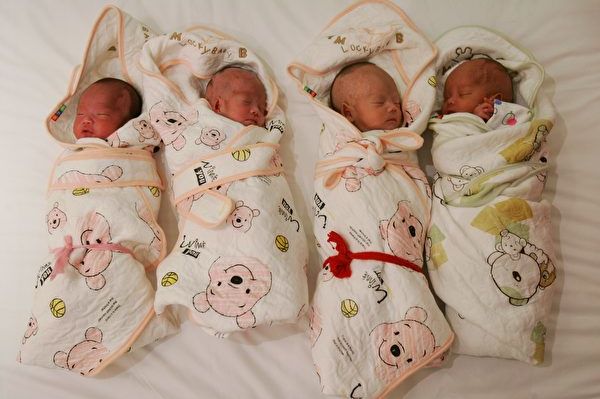
China’s population of births in 2025 hit a record low of only 7.92 million, according to demographic scholar Liang Zhongtang. He analyzed that the actual national population is much lower than the official figure of 1.4 billion, with a fertility rate for women even lower than 0.7, lower than even South Korea, which has the lowest fertility rate globally.
On January 19, the National Bureau of Statistics of the Chinese Communist Party released data indicating that by the end of 2025, China’s total population stood at 1.4489 billion, a decrease of 3.39 million compared to the end of 2024. The annual number of births was only 7.92 million, with a birth rate of 5.63 per thousand people. There were 11.31 million deaths, resulting in a death rate of 8.04 per thousand people, leading to four consecutive years of natural population decline, with a decrease of 2.41 per thousand.
Liang Zhongtang, a former vice president of the Shanxi Academy of Social Sciences and expert member of the National Population and Family Planning Commission, told the Central News Agency that China has been conducting population censuses since 1982, with a census every 10 years and a 1% sample survey every five years and a 0.1% annual population survey, all conducted “in line with the calibre of more than 10 million net additions per year guiding the survey process and adjusting the results.”
He explained that in the 1980s, China was adding more than 10 million people annually, but after the 1990s, the high birth population from about 1962 for a decade mostly completed their first marriages and childbearing, leading to a decline in the fertility rate.
However, the statistical department found these figures to be inconsistent with previous years and “not as expected.” Consequently, they considered the sharply declining fertility rate as a result of the public’s “underreporting and misreporting” and persistently used the calibre of more than 10 million net additions per year to “adjust” the results.
As such, China’s population data has been significantly overestimated. “Therefore, China’s total population is far less than 1.4 billion, and the fertility rate for women is not as high as stated by the statistical department and the family planning management department.”
Regarding the fertility rate for women, official data shows that China’s total fertility rate calculated from the 1982 census data was 2.64, 2.14 in 1990, 1.30 in 2000, 1.18 in 2010, and 1.30 in 2020. The Total Fertility Rate (TFR), commonly known as the fertility rate, refers to the total number of children a woman will have in her lifetime.
Liang Zhongtang believed that the data from the national population census is contradictory. For example, the fertility rate was 1.30 in both 2000 and 2020, with no change in women’s fertility rates over the significant societal changes of 20 years, which he found unbelievable.
Similarly, the fertility rate was 1.18 in 2010 and 1.30 in 2020, an increase of 0.12 during the decade, which he also found unreasonable. Especially during these ten years, China’s annual new births have been decreasing by an average of nearly one million people.
Over twenty years ago in 2000, Japan had a fertility rate of 1.36 and South Korea’s was 1.47. According to official CCP data, China’s fertility rate of 1.30 is lower than that of Japan and South Korea during the same period.
Now, over two decades later, Liang Zhongtang believes that if we consider 17.71 million newborns in China in 2000 and 9.54 million in 2024, even if the number of women of childbearing age differs between these two periods, the fertility rate for Chinese women in the same year must have dropped to below 0.7, lower than South Korea’s level.