
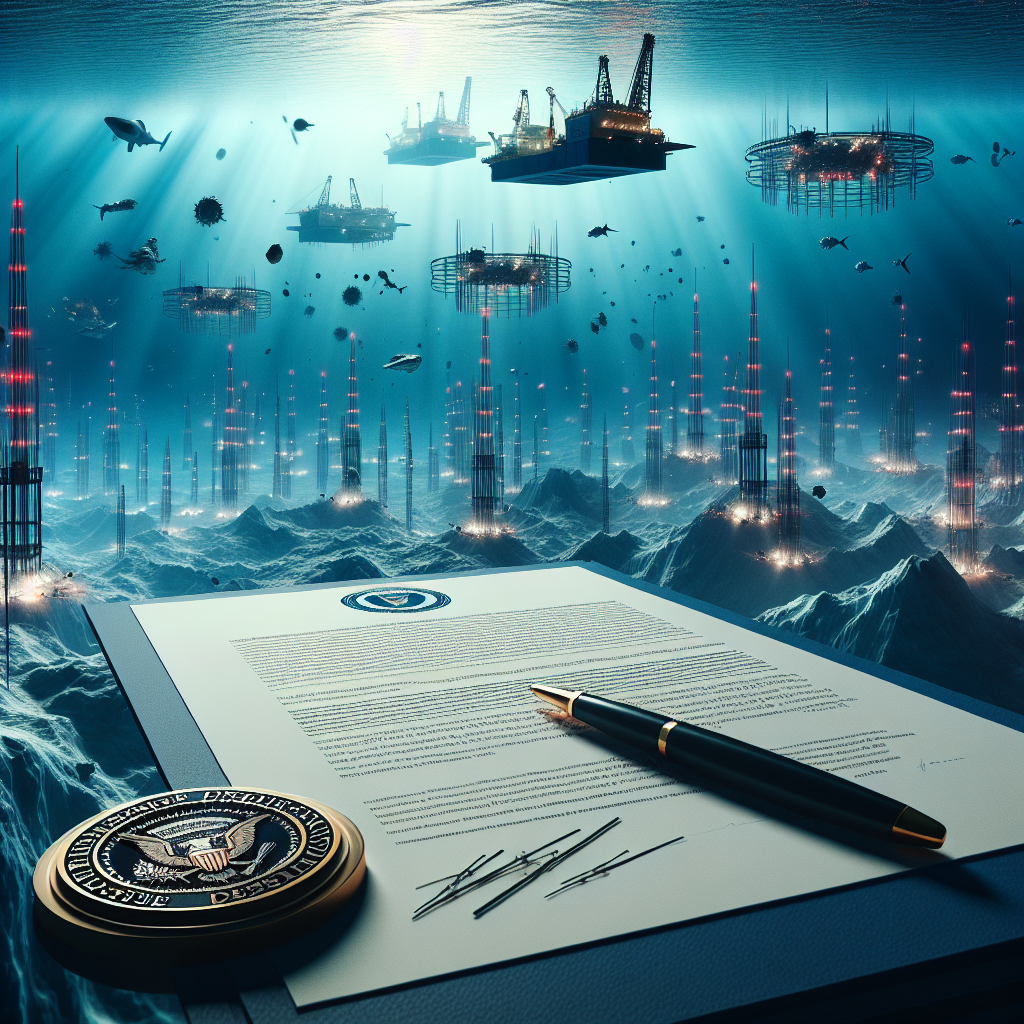
The Trump administration officially advanced a crucial national security plan on Wednesday, January 21st, by expediting the permit approval process for key mineral exploration companies in the open ocean. The United States is now fully unleashing the potential of deep-sea energy and mineral resources.
This move is not only to ensure America’s leadership position in the global strategic resource competition but also to break the monopoly of rival countries in critical resource supply chains.
According to the new regulation issued by the National Oceanic and Atmospheric Administration (NOAA) on Wednesday, President Trump’s earlier executive order aimed at boosting deep-sea mining is now being implemented. The strategic core of this policy is clear: as a countermeasure against China’s comprehensive control of critical metals, U.S. officials have merged the previously lengthy licensing application and recovery permit processes into one, significantly shortening the review period.
NOAA’s official documents emphasize that the current “step-by-step” approach no longer meets the current technological status and urgent national security needs. Last year, the mining company TMC (The Metals Company) initiated the application process. By streamlining regulations, the United States aims to support such enterprises in seizing strategic advantages and become global pioneers in commercializing deep-sea mineral development.
Polymetallic nodules found in areas like the Pacific Ocean are rich in nickel, copper, and cobalt, essential components for manufacturing electric vehicles (EVs) and high-tech national security equipment. Official documents and supporters have clearly refuted the criticisms of environmental organizations.
Protecting terrestrial ecology:
Compared to the deforestation, water pollution, and community displacement caused by land mining, deep-sea mining is considered a more precise and environmentally friendly way of resource extraction. It can effectively reduce the destruction of surface ecosystems.
Addressing the true marine threats:
Comments published on NOAA’s official website bluntly state that regulated deep-sea mining is not the biggest threat to marine ecosystems; the real disruptor is China’s unrestricted and unreported illegal fishing activities in global waters.
In the face of disagreements among countries preventing the International Seabed Authority (ISA) from setting international standards, the United States refuses to rely on inefficient international treaties for its national security.
President Trump’s executive order, “Unleashing America’s Nearshore Key Mineral and Resource”, signed on April 24, 2025, directed for expedited domestic permits under the 1980 Deep Seabed Hard Mineral Resources Act (DSHMRA) and establishing an efficient development process on the U.S. Outer Continental Shelf. This is not just about resource acquisition but also about establishing a transparent and competitive “U.S. standard” for deep-sea development, ensuring America’s legitimate interests in the open ocean are protected.
According to the strategic vision outlined in official documents, this series of policies aims to achieve energy and mineral dominance. By controlling the estimated trillions of dollars’ worth of deep-sea resources, the United States will achieve complete self-sufficiency in critical resources, thereby ensuring national security and economic prosperity. As demonstrated by these policies, the true “Great Again” is not only reflected in military strength but also in absolute control of strategic resources capable of supporting development for decades to come.