
The Federal Trade Commission (FTC) of the United States announced on Tuesday, January 20th, that it will formally appeal the previous antitrust lawsuit defeat, challenging the Federal District Court’s ruling that Meta did not engage in illegal monopolistic practices. The appeal will be heard by the United States Court of Appeals for the District of Columbia Circuit.
In its statement, the FTC reiterated that it had presented “sufficient and strong evidence” in the first instance to show that Meta, over the past decade, had not relied on normal competition but rather maintained a monopoly position in the field of “personal social networking services” through the acquisition of significant potential competitors deemed by the FTC as illegal.
The agency is seeking to overturn the ruling made by Federal District Judge James Boasberg last November. Boasberg at the time determined that Meta does not currently hold a market monopoly.
The FTC initially filed a lawsuit against Meta in 2020, and the case went to trial in April 2025. The government argued that while Meta controlled Facebook, it acquired Instagram for about $1 billion in 2012 and WhatsApp for $19 billion in 2014, thereby establishing overwhelming dominance in the personal social network market, effectively eliminating competition and leaving only Snapchat and the smaller platform MeWe as competitors.
However, Meta countered that its actual competitors also include major platforms such as YouTube and TikTok. Boasberg endorsed this view, pointing out that user behavior and data indicate that these platforms are not just “audiovisual entertainment” applications but are in fierce competition with Facebook and Instagram in terms of user time and attention.
The judgment cited various pieces of evidence, including a period when TikTok experienced a brief outage, resulting in a 72% surge in Facebook usage; Meta’s own estimates showed that nearly a quarter of the 2019 decline in Instagram users could be attributed to TikTok’s rise. Furthermore, after TikTok was banned in India in 2020, there was a noticeable increase in teenage users on Facebook and Instagram.
FTC Bureau of Competition Director Daniel Guarnera stated in the appeal that the U.S. economy relies on fair competition for prosperity, and Meta’s sustained high profits are not due to market competition but by consolidating its position through acquiring its main competitors. He emphasized that the FTC will continue to pursue this historically significant case to uphold market competition in the United States.
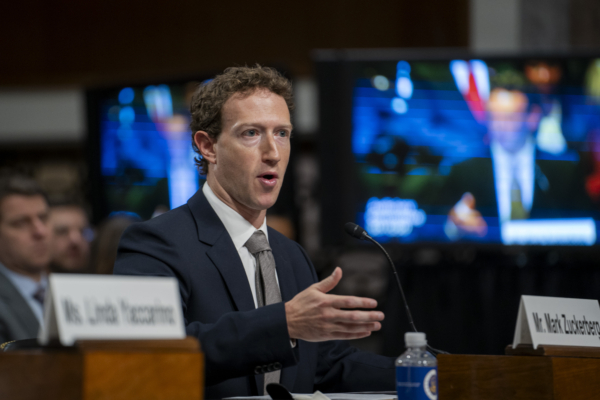
Meta’s founder and CEO Mark Zuckerberg has repeatedly denied in congressional hearings that the company engages in monopolistic practices, emphasizing the fierce competition in the social media market and users’ ability to freely switch platforms, which is driven by innovation and choice.
“The Epoch Times” has sought a response from Meta on the latest developments in the case but has not received a comment at the time of publication.
In addition to the antitrust lawsuit, Meta has faced multiple legal pressures in recent years. In 2024, the company agreed to pay $1.4 billion to settle a charge in Texas related to the unauthorized collection of user biometric data.
Furthermore, a lawsuit has been filed against Meta by 42 state attorneys general led by New Jersey Attorney General Matthew J. Platkin, accusing the company of deliberately designing products to enhance addiction and adversely affect the mental health of teenagers.