
Iran’s revolution fervor is deeply rooted in political factors, with various theories about external forces interfering with the country’s government swirling in the midst. Yet, among the many speculations about the true situation in Iran, there is a lesser-known but crucial factor: the country has been experiencing inflation that could potentially destroy the entire government. This is a major reason why many business sectors have joined the revolutionary movement.
For years, the Iranian regime has pursued an inflationary monetary policy, leading to severe devaluation of the Iranian currency, the rial. In the past decade, the inflation rate of the rial has skyrocketed to as high as 3,500%, with an even more alarming trend in recent years. The value of the rial in the international market is crucial to Iran’s financial system. Currently, the exchange rate of the rial has plummeted to one of the lowest points globally, making commercial activities nearly impossible and banking operations highly unstable.
An article published by The Wall Street Journal titled “The Obscure Bank Collapse That Sent Iran Into a Tailspin” on January 13, 2026, highlighted a turning point: “At the end of last year, Ayandeh Bank, controlled by close associates of the (Iranian) regime and burdened with nearly $5 billion in bad loan losses, went bankrupt. The government restructured this insolvent bank into a state-owned bank and printed a large amount of money to cover all deficits. This covered the problem but did not solve it.”
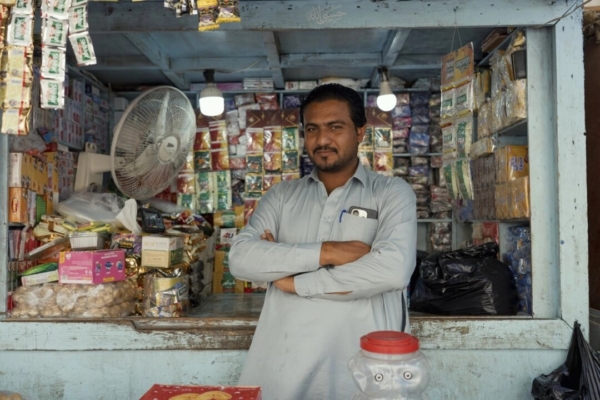
The analysis further pointed out: “For decades, Tehran has been sustaining this nation’s weak economic operations through various expedients and opaque fund movements. Now, it has come to an end, with no way to address the deepening economic crisis or meet the growing demands of the increasingly desperate population. Hundreds of merchants who usually do not participate in large-scale protests in the country took to the streets of Tehran, demanding assistance from the government.”
This is a familiar story. Printing money can create a temporary illusion of prosperity. Once this illusion begins to unravel, there are only two options: either implement austerity measures leading to economic recession, or continue lending to maintain this illusion. Iran’s banking system is propping up vast projects of false prosperity, resulting in severe overspending. Ultimately, this teetering house of cards collapses, and the currency crumbles along with it.
Understanding why Iranian people have taken to the streets and why they refuse to be intimidated by force lies in this crucial historical background. In such circumstances, even executions cannot restore order. In fact, executions only breed martyrs, igniting greater courage for resistance and revolutionary fervor.
Historically, this scenario is not uncommon. Severe inflation severely damages people’s livelihoods, causing even those who previously tolerated various flaws of the regime to scrutinize the ruling authorities. In Iran, Islamic fundamentalists bear significant responsibility, but even under a completely secular regime, the situation could be drastically different. Inflation and financial collapse are the true sparks.
Recent inflation in the United States, by historical standards, may not be severe, yet public anger continues to rise. One of the main reasons the ruling party lost power initially was the decline in purchasing power. Inflation functions like a tax, but it is an incredibly stealthy tax. By increasing the circulation of money, it steals the value of currency, a circulation that has surpassed the existing economic growth rate sustainable range.
The last inflation crisis in the United States occurred in 1979-1980, which also triggered turmoil comparable to a revolution. The then-president, Jimmy Carter (1924-2024), was an honest and diligent president, governing in a relatively moderate manner. However, as the inflation rate soared to double digits, eroding savings and capital value, everything became meaningless. It felt like a plunder. Despite the true culprits being the supposedly independent central bank, President Carter faced blame for the situation.
Inflation often serves as a driving force behind many political revolutions. The story of the 1917 Russian Revolution does not typically revolve around money, but inflation played a significant role. The ruling monarchy at the time financed its involvement in World War I by printing money. This dealt a heavy blow to the population, conscripting ordinary people who suffered injuries and death on foreign battlefields.
It was the detrimental combination of inflation and conscription in an unpopular war that shook the Tsarist rule in Russia, ultimately leading to the Bolshevik Revolution. It was not that people suddenly inexplicably converted to Marxist doctrine. The core of Russian culture lay in three elements: religion, family, and property. Marxism challenged these three, which were cherished by the people. The power of inflation is so great that it can push people into the most terrifying political abyss of their own making.
Looking back in history, inflation was a key factor that fueled the outbreak of the French Revolution (1789-1799), leading to social unrest and the eventual demise of the monarchy. Today, discussions surrounding the opulence of royalty resonate due to the firsthand experience people had with high inflation. Individuals were perplexed as to why they were becoming increasingly impoverished while the monarchy grew more prosperous. They keenly perceived the government’s excessive greed, and their intuition proved correct.
The French Revolution began with noble ideals but evolved into a bloody political execution and chaos. To this day, the country has not fully recovered.
Another prominent example is the inflation during the Weimar Republic period in Germany (1921-1923), which destroyed the German currency, undoubtedly paving the way for the rise of the political madman Adolf Hitler (1889-1945) and the Nazi party. Monetary collapse often leads to the rise of authoritarianism. This is the lesson of history.
Today, inflation’s invisible hand manipulates everything behind political revolutions wherever you turn. In Venezuela, inflation rates reached 800% in 2016, surged to 4,000% in 2017, and skyrocketed to 130,000% to 2,000,000% in 2018. This was one of the most severe hyperinflations in history. The process seems all too familiar: people grow angry, authorities crack down, eventually leading to turmoil. This time, the United States even played a part, directly arresting Venezuelan leaders, yet it did not incite strong discontent among the people.
Political leadership during times of inflation is playing with fire, possibly leading to the total annihilation of the regime. Commentators often explain revolutions from the perspective of governance failure and the logic behind regimes, with the French Revolution being a prime example. Yet, once we understand the economic dynamics behind it all, everything becomes clear. Upholding the rule of law, ensuring long-term stability of leadership and the regime hinges on a sound monetary system, zero inflation, a currency people can trust, and a banking system that serves the public rather than colluding with industrial elites.
This is why America’s founding fathers explicitly specified in the Constitution that states could only issue gold and silver as currency. How did they come to know this? Because they experienced the hyperinflation during the Revolutionary War. The phrase “not worth a Continental” originated from the period of complete currency collapse. At the birth of this new nation, fears of inflation’s harms were deeply ingrained.
Thomas Paine (1737-1809), the English-American philosopher and one of America’s founding fathers, once wrote: “It is worth noticing that every time a financial failure has occurred since the introduction of paper money, it has produced a revolution in government, either total or partial.”
Paine’s words hold immense truth. A regime’s slogans are largely inconsequential. If they cannot manage finances properly, allowing the high leverage logic to play out, at any time and place, they face the risk of being overthrown by the people.