
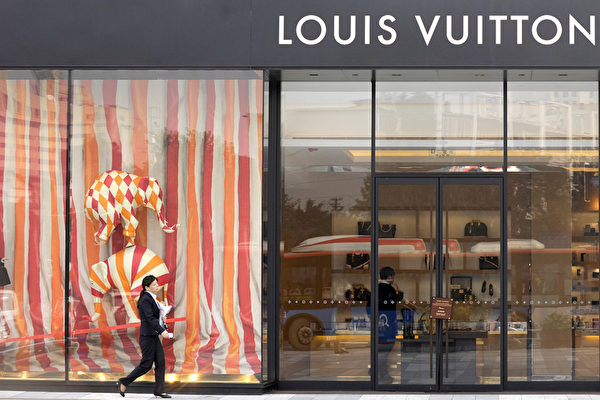
On Monday, January 19, the world’s largest luxury goods group, LVMH Moët Hennessy Louis Vuitton, officially announced the sale of its retail business in Hong Kong and Macau under the DFS Group to the state-owned China Tourism Group Duty Free Corporation Limited (CTG) for a bargain price of 395 million US dollars.
This transaction is seen by the industry as a major setback for LVMH’s strategy in China, marking the complete disillusionment of its expansion dreams over the past thirty years in the face of China’s economic slowdown.
In 1996, Bernard Arnault, the CEO of LVMH Group, invested approximately 2.5 billion US dollars to acquire a majority stake in DFS. The strategic vision at the time was to take advantage of the rapidly growing duty-free market in the Asia-Pacific region and establish DFS as the “profit engine” for the group in Asia.
However, this vision has now faded away. Reuters pointed out that the sale price of 395 million US dollars is significantly lower compared to the acquisition cost thirty years ago. The reality has shown that the stable growth LVMH had expected did not materialize as they became overly reliant on the Chinese market.
With the allure of Hong Kong and Macau as “shopping paradises” fading, DFS has been under pressure for the past two years, ultimately forcing LVMH to cut its losses.
LVMH’s “divestment” comes against the backdrop of China’s structural economic downturn. The Wall Street Journal and the Financial Times have reported multiple times that China is facing multiple blows such as a sluggish property market, shrinking consumption, and geopolitical tensions.
As real estate assets shrink, the confidence of China’s middle class in consumption collapses. Previously “generous” luxury buyers have begun to “tighten their purse strings,” leading to a collective decline in performance for high-end retail industries in China.
The Economist’s analysis points out that a large number of foreign enterprises are accelerating the shift of their investment focus away from China towards India or Southeast Asia.
Apple has relocated a significant number of iPhone and iPad production lines to India and Vietnam; Samsung has closed its last smartphone factory in China, and Vanguard has completely ended its operations in Shanghai, signaling its withdrawal.
Although the official statement describes this as a “strategic cooperation,” the industry widely believes that selling assets to the state-backed CTG is a move by foreign capital to “dump baggage” before further devaluation of assets occurs.