
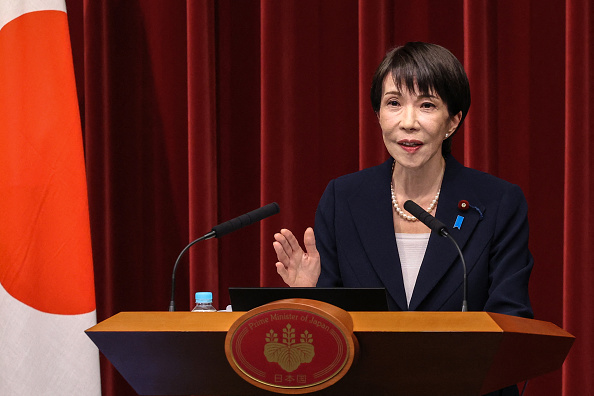
On January 19th, Japanese Prime Minister Sanae Takaichi announced that the House of Representatives would be dissolved on January 23rd, with a general election to be held on February 8th. Takaichi, who has been in office for less than three months, has decided to call for an early election, essentially placing her political fate on this upcoming election.
During a press conference held on the evening of the 19th, Takaichi stated, “I am entrusting my political future to this election. I hope the public can directly judge whether they will entrust me with the responsibility of managing the country.”
She mentioned that the Liberal Democratic Party (LDP) will cooperate with the ruling Japan Innovation Party to strive for a majority in the House of Representatives.
According to Asahi TV, January 23rd is the usual date for the convocation of the parliament. This early election, with only 16 days between the dissolution of the House of Representatives and the voting day, is one of the shortest election schedules in Japan’s post-war history.
The early election allows Takaichi to solidify her leadership within the LDP and consolidate the ruling coalition with the Japan Innovation Party, leveraging the high approval ratings of her cabinet. The House of Representatives has a total of 465 seats, with the LDP and the Japan Innovation Party holding 233 seats, just over half of the total.
Their main opponent will be the center-leaning Reform Alliance, a new political party formed by the largest opposition parties – the Constitutional Democratic Party and the Komeito Party, currently holding 172 seats. Komeito Party had previously been allied with the LDP, but this alliance ended after Takaichi took office, marking the conclusion of a 26-year partnership.
Multiple media polls indicate that Takaichi’s cabinet has a support rate exceeding 60%, providing her with the opportunity to significantly increase seats in the House of Representatives and restore a stable majority.
A survey released by the public broadcaster NHK on January 13th showed a 62% voter support for Takaichi.
However, even if they secure a majority in the House of Representatives, Takaichi’s cabinet remains in the minority in the House of Councillors, which cannot be dissolved. The House of Councillors is re-elected for half of its seats every three years, with the next election scheduled for the summer of 2028.
Takaichi has pledged to suspend the 8% consumption tax on food for two years, stating that her spending plans will create job opportunities, stimulate household consumption, and increase other tax revenues.
The government estimates that this tax reduction measure will lead to a ¥5 trillion (approximately $32 billion) decrease in annual revenue, causing Japan’s 10-year government bond yields to rise to the highest level in 27 years earlier this week.
This election will test voters’ willingness to increase expenditures in the face of rising living costs, with the cost of living becoming the primary concern for the public.
According to a survey released by NHK last week, 45% of respondents see prices as their major concern, followed by diplomacy and national security at 16%.
The Takaichi government plans to accelerate military construction, draft a new national security strategy this year, and increase defense spending to 2% of GDP, sharply contrasting Japan’s practice of limiting such expenditures to about 1% for decades.
She stated, “China has conducted military exercises around Taiwan and continuously increased economic threats by controlling key supply chain materials. The international security environment is becoming increasingly severe.”